
Tag

Slider

Browsing

From Gibeon to State House: Lucia Witbooi’s Remarkable Journey
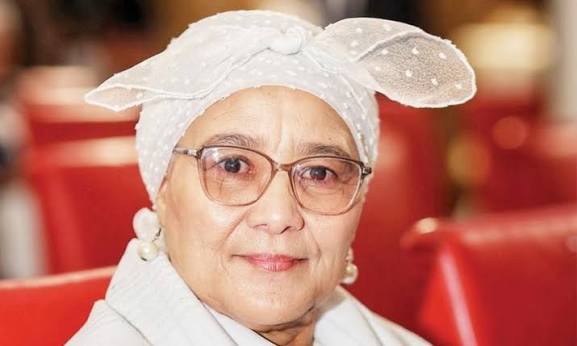
By Blossom Ukoha “Leadership does not always begin in a boardroom, parliament or presidential office. Sometimes, it begins in a classroom.” For Lucia Witbooi, those words reflect more than a belief about leadership. They describe her own journey, from a rural Namibian classroom, where she spent nearly three decades shaping young minds, to the country’s second-highest political office. On 22 March 2025, President Netumbo Nandi-Ndaitwah appointed Witbooi as Namibia’s Vice President, creating a historic female leadership pairing at the top of the country’s government. For the first time in Namibia’s history, the presidency and vice presidency were simultaneously occupied by women. But Witbooi’s significance extends beyond the symbolism of her appointment. Her journey from a rural teacher to a senior national leader offers a compelling portrait of how education, community service and parliamentary experience can evolve into political leadership. From ǂGabes to the Classroom Witbooi was born on 21 March…

Why 7,000 Steps May Matter More Than 10,000: What New Research Says

Janet Coin At 8:30 on a Tuesday evening, a busy professional glanced at her fitness tracker and sighed. 6,247 steps. She had spent the day moving between meetings, answering calls, rushing through errands and climbing stairs, yet the number on her wrist made the day feel strangely incomplete. She had not reached 10,000. So, despite being tired, she considered going back outside for another walk, not because she wanted to, but because she had been taught that anything less somehow did not count. But what if 6,000 steps was already doing far more for her health than she thought? For years, 10,000 steps has been treated almost like a daily health examination. Fitness watches celebrate it. Walking challenges are built around it. People compare their numbers and feel a small sense of victory when the screen turns over to five digits. But the origin of that famous number is far…

Jollof, Biryani, Feijoada: One Global Rice Dish, Three Regional Shortcuts

Blossom Ukoha Imagine three women, miles apart, preparing dinner after a long day. In Lagos, one stirs a deeply seasoned tomato base before folding in rice. In Hyderabad, another layers fragrant rice with spiced chicken and seals the pot so the steam can do its work. In Rio de Janeiro, a third prepares a pot of black beans and meat to serve alongside steaming white rice, greens, farofa and orange. Their kitchens look different. Their spices tell different stories. Their traditions come from different continents. Yet, at the centre of each meal is the same humble idea: take a simple staple, build flavour around it, and turn dinner into something much bigger than food. Rice is one of the world’s great culinary connectors. More than 3.5 billion people rely on it as a significant part of their daily diet, and it contributes roughly one-fifth of global calories. Across Asia, Africa…

Love in the Age of Ambition: Can a Relationship Survive Two Big Careers?

Blossom Ukoha What happens when two people fall in love, but neither is willing to make their career the smaller dream? “The more you win, the more I lose” is the familiar fear that can quietly enter a relationship when both partners are ambitious. But research on dual-career couples suggests that love and ambition do not have to operate as a zero-sum game. Jennifer Petriglieri, an associate professor at INSEAD who has studied highly educated couples with demanding professional goals, argues that thriving couples can move beyond the idea that one partner’s success must come at the other’s expense. That shift matters because dual-career relationships are no longer unusual. According to McKinsey research involving more than 35,000 workers with spouses or live-in partners, 89% of women and 70% of men were part of dual-career couples. The numbers tell a story about modern ambition: for millions of couples, both partners are…

The Rise of Women in Finance: 9 Lessons from the United Kingdom

By Blossom Ukoha For decades, women have been an important part of the financial services workforce, yet their presence has not always translated into equal access to senior leadership. The United Kingdom offers a compelling case study of what can happen when gender representation becomes a measurable business priority. Over the past decade, voluntary targets, public reporting and sustained institutional pressure have helped move more women into senior roles. But the progress is measured rather than complete. The latest HM Treasury Women in Finance Charter Annual Review, published in March 2026, and the FTSE Women Leaders Review 2026 show both the gains achieved and the gaps that remain. Here are nine lessons from the UK experience. Voluntary Targets Can Deliver Steady Progress The Women in Finance Charter, launched in 2016, has demonstrated that voluntary commitments can produce measurable results when they are backed by transparency and accountability. According to HM…

How Women Entrepreneurs Are Reshaping Singapore’s Business Landscape

By Blossom Ukoha Singapore’s entrepreneurial landscape is undergoing a significant transformation, and women are increasingly at the centre of it. What was once a smaller segment of the business community has grown into a substantial economic force, creating companies, generating billions in revenue and employing hundreds of thousands of people. The growth is not simply anecdotal. Singapore Department of Statistics data, released in 2024 and subsequently cited by Singapore government officials, provides a clear picture of how far women’s entrepreneurship has advanced. At the same time, data from ACCA, OCBC and HSBC shows that the next challenge is no longer simply encouraging women to start businesses, but helping more of them scale. A Growing Force in Singapore’s Economy The most striking evidence is the number of women-owned companies. According to the Singapore Department of Statistics, the number of women-owned companies more than doubled from 16,300 in 2010 to 36,000 in…

12 Industries Where Women Entrepreneurs Are Creating New Opportunities

What happens when women stop waiting for opportunities and start building the industries of tomorrow? Across the world, women entrepreneurs are answering that question through businesses that are transforming healthcare, education, technology, finance, consumer products, construction and sustainability. Their growing presence is not simply about starting more companies; it is about identifying unmet needs, creating new markets and bringing different perspectives into sectors that have traditionally overlooked them. In the United States, women accounted for a significant share of new business formation in recent years, while younger women are increasingly embracing entrepreneurship. At the same time, women continue to receive a disproportionately small share of venture capital, showing that entrepreneurial ambition is rising faster than access to growth capital. From healthcare and education to artificial intelligence and construction, here are 12 industries where women entrepreneurs are creating new opportunities. Healthcare, Social Assistance and FemTech Healthcare and social assistance remain among…