

Laura Jones
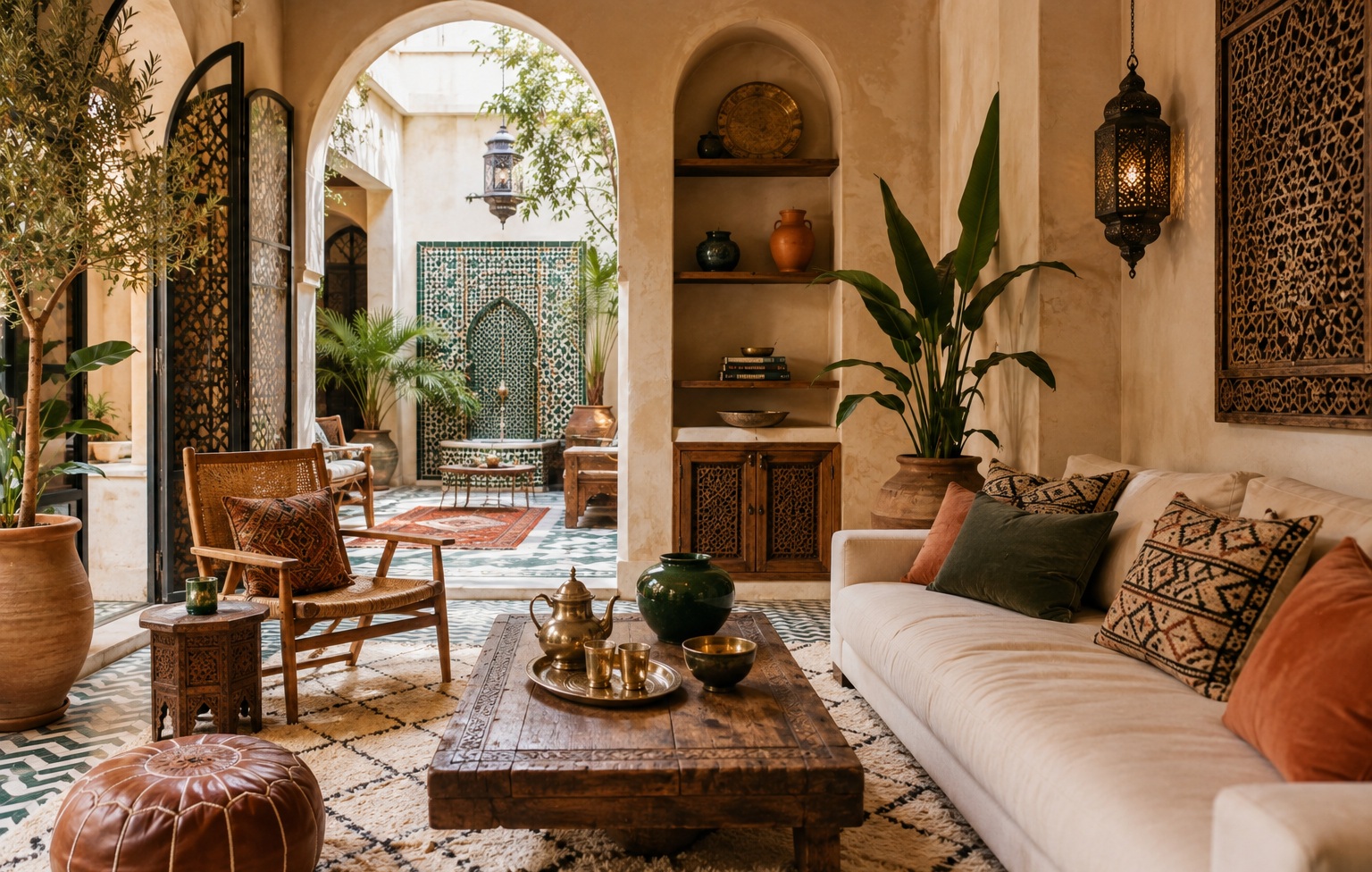
Step into a traditional riad in Marrakech and the first thing you notice is not how much furniture fills the space, but how effortlessly everything feels connected. Sunlight filters through an arched doorway, patterned tiles catch the light, a brass lantern creates a warm glow, and handmade textiles bring softness to the room. Nothing feels rushed or overly polished. The beauty comes from the balance between craftsmanship, texture, colour and simplicity.
That distinctive atmosphere is increasingly finding its way into modern homes around the world. Moroccan design, rooted in centuries of craftsmanship and cultural exchange, is being reinterpreted for contemporary interiors that value warmth, character and authenticity.
Why Moroccan Design Remains Timeless
Moroccan interiors have never depended on passing trends. Their appeal comes from traditional materials, handmade details and a strong relationship between architecture and everyday living.
From Marrakech riads to homes in Casablanca and Fez, Moroccan design often combines geometric patterns, carved wood, textured walls, woven fabrics and decorative metalwork. These elements create interiors that feel layered without necessarily feeling crowded.
Today, designers are adapting these traditional features for modern homes. Instead of recreating an entire Moroccan interior, homeowners are choosing individual elements that can add warmth and personality to contemporary spaces.
The Beauty of Natural Materials
Natural materials are at the heart of Moroccan design. Wood, clay, stone, leather, wool and metal are used to create depth and texture.
A carved wooden table can soften a minimalist living room, while a leather pouf can introduce warmth without overwhelming the space. Terracotta pots, woven baskets and handmade ceramics can also bring an organic quality to otherwise modern interiors.
The growing interest in sustainable and handcrafted products has made this approach particularly relevant today. Rather than filling a home with mass produced decorations, Moroccan design encourages the use of pieces that feel tactile, authentic and built to last.
Zellige: The Tile That Defines Moroccan Style
Few features are more recognisable than Moroccan zellige tiles. Traditionally handmade and glazed, these small tiles are known for their irregular shapes, subtle variations and rich colours.
Zellige has moved beyond traditional riads and is now appearing in contemporary kitchens, bathrooms, fireplaces and feature walls. Designers often use it sparingly, allowing the natural imperfections of the tiles to become part of the design.
The result is a space that feels sophisticated without being overly uniform.
Tadelakt and Textured Walls
Another important feature of Moroccan interiors is tadelakt, a traditional lime based plaster known for its smooth, slightly reflective finish.
Modern interpretations of textured plaster are increasingly popular because they create depth without relying on wallpaper or elaborate decoration. Soft plaster walls in shades of cream, beige, sand and terracotta can make a room feel calm and architectural.
This is one of the simplest ways to introduce Moroccan influence without turning a contemporary home into a themed space.
Earthy Colours and Warm Lighting
Moroccan interiors often draw inspiration from the landscape. Terracotta, sand, clay, olive green, deep blue and warm neutrals create an earthy palette that feels welcoming.
Lighting is equally important. Decorative brass lanterns, pendant lights and candlelight can transform a room, creating the warm atmosphere associated with traditional Moroccan homes.
For modern interiors, even one statement lantern can introduce this sense of warmth and craftsmanship.
Texture Over Clutter
One of the most valuable lessons from Moroccan design is the importance of texture. Instead of depending on large amounts of furniture or decoration, Moroccan interiors create interest through layered materials.
A neutral sofa can become more inviting with woven cushions and a textured throw. A simple room can gain character through a patterned rug, handmade pottery or a carved wooden accent.
The goal is not to fill every corner. It is to create visual and tactile interest through carefully chosen pieces.
Bringing the Riad Into the Modern Home
The traditional Moroccan riad offers another important source of inspiration. Built around an interior courtyard, riads create a sense of privacy, openness and connection with nature.
Modern homes can reinterpret this concept through indoor plants, courtyards, balconies, large windows and open spaces. Even without a traditional courtyard, incorporating greenery and natural light can create a similar sense of calm.
What Modern Homeowners Can Learn From Moroccan Design
The enduring appeal of Moroccan design offers several lessons for contemporary living. First, homes do not have to be perfectly coordinated to feel beautiful. Combining different textures, materials and handcrafted objects can create greater personality.
Second, craftsmanship matters. A handmade object often carries a sense of history and individuality that mass produced décor cannot easily reproduce.
Finally, comfort should be part of good design. Moroccan interiors are designed not only to be admired but also to be lived in. Low seating, soft textiles, warm lighting and inviting communal spaces all encourage people to slow down and connect.
A Heritage That Still Feels Modern
Moroccan design continues to influence contemporary interiors because it offers something that many modern spaces lack: warmth with character.
Its appeal is not simply about colourful tiles or decorative lanterns. It is about creating homes that feel welcoming, tactile and personal. As homeowners increasingly look for authenticity, natural materials and meaningful craftsmanship, the principles of Moroccan design are likely to remain influential.
From a Marrakech riad to a modern apartment thousands of miles away, the message is remarkably simple: a beautiful home does not need to be perfect. It needs to feel lived in, connected and uniquely its own.





Comments are closed.