
By Janet Coin
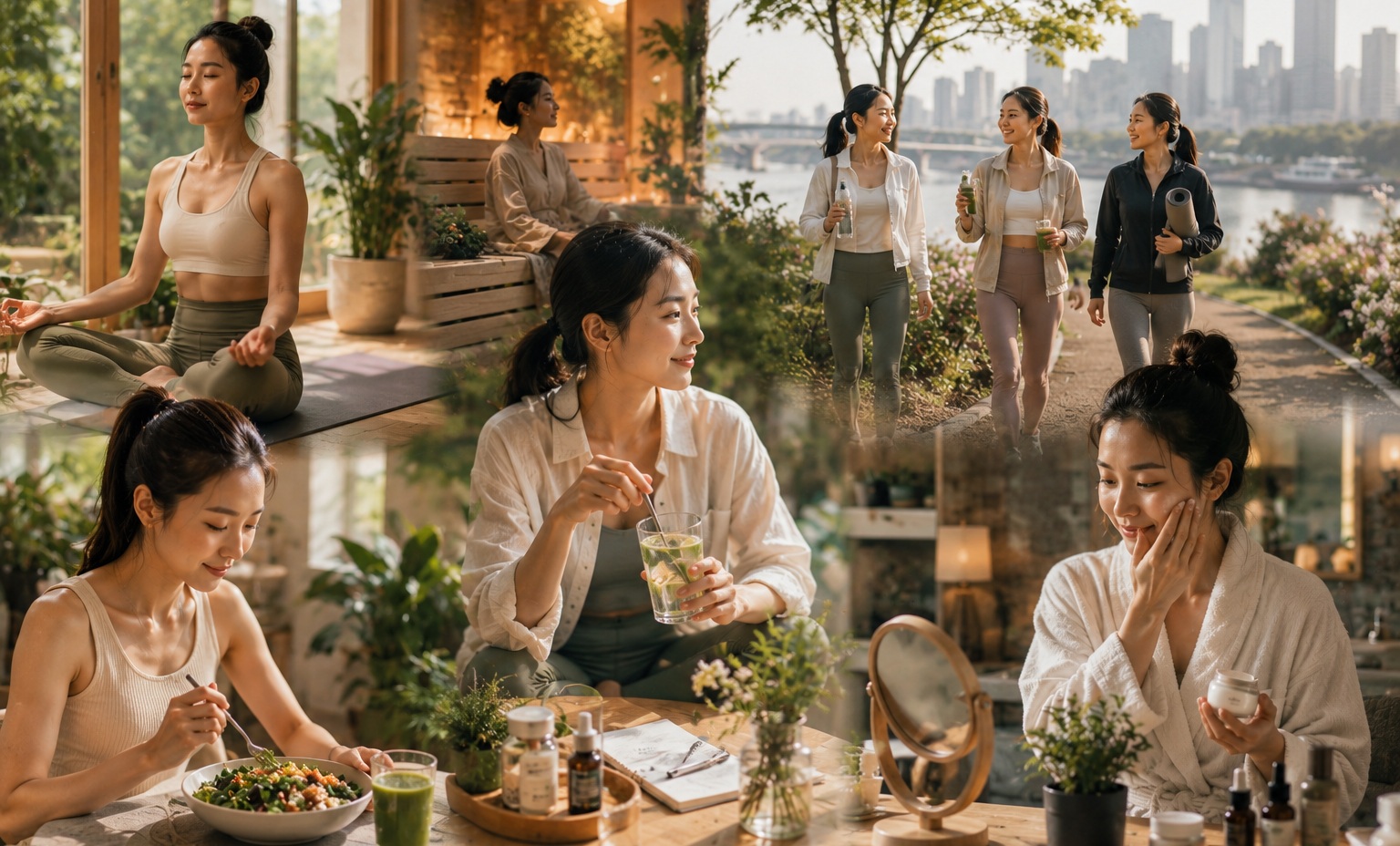
On a weekday morning in Seoul, a young professional finishes a Pilates session before heading to work. Later that evening, she stops at a wellness store for a functional drink and a product designed around a specific health need. Before bed, she sets aside her phone and prepares for sleep. None of these actions feels unusual. They are simply part of her routine.
This is the changing face of wellness in South Korea.
The country that introduced the world to K-beauty is moving beyond skincare and cosmetics towards a broader culture of wellbeing. Beauty remains important, but it increasingly sits alongside nutrition, fitness, mental health, sleep, preventive care and recovery.
For Korean women, particularly younger women and working professionals, wellness is becoming less about occasional pampering and more about maintaining the whole self.
From K-Beauty to K-Wellness
South Korea’s global beauty influence has long been associated with structured skincare routines, innovative products and healthy looking skin. But the definition of beauty is changing.
Consumers are increasingly connecting external appearance with internal health. Attention is moving towards digestion, sleep, stress, nutrition, energy and hormonal wellbeing alongside traditional skincare.
Collagen gummies, probiotics, functional drinks and wellness shots now exist within the same consumer environment as serums, masks and moisturisers.
Major retailers have recognised this shift. Olive Young, South Korea’s leading health and beauty retailer, has expanded into wellness through its Olive Better concept, bringing together products focused on nutrition, sleep, exercise and mental wellbeing.
The message is clear: looking well and feeling well are no longer separate goals.
Health as an Investment
One of the strongest lessons from South Korea’s wellness culture is its emphasis on prevention.
Rather than thinking about health only when something goes wrong, consumers are increasingly taking small steps every day to protect their future wellbeing. Sleep, movement, nutrition, stress management and personal care are becoming part of a long term approach to health.
For women balancing careers, family responsibilities and social expectations, this mindset is particularly valuable.
Wellness does not necessarily require an expensive retreat or elaborate routine. It can mean getting enough sleep, walking regularly, preparing nourishing meals, exercising consistently or recognising when the body needs rest.
The principle is simple: health deserves attention before there is a crisis.
When Beauty Meets Inner Health
South Korea’s inner beauty movement has further blurred the line between beauty and nutrition.
Consumers are increasingly interested in products designed around specific needs such as skin health, digestion, hydration and recovery. Convenient formats including gummies, powders, sticks and drinks have also made wellness easier to incorporate into busy schedules.
The important lesson, however, is not about buying more products.
Women do not have to choose between caring for their appearance and caring for their health. Skincare can exist alongside good nutrition, physical activity, adequate sleep and emotional wellbeing.
Wellness products should also not be confused with medical treatment. Supplements may have a role for some people, but they cannot replace professional healthcare, balanced nutrition, or evidence-based treatment.
The real lesson is integration, not consumption.
Women’s Health Takes Centre Stage
Another important development is the growing attention to women’s specific health needs.
For years, areas such as menstrual health, fertility and menopause received less attention than they deserved. The growing femtech sector is helping change that by encouraging investment in technology, products and services designed around women’s experiences.
Menstrual care, reproductive health, menopause and personalised health management are increasingly entering mainstream conversations.
This matters because women’s health cannot always be addressed through generic solutions. Women need research that reflects female biology, healthcare that recognises different stages of life and products designed around their specific needs.
South Korea’s experience offers an important lesson: women should help shape the future of women’s healthcare, not simply consume it.
Fitness Without the Punishment
Walk through Seoul and it is easy to see how exercise has become part of urban life.
Pilates studios, personal training centres, running groups and fitness applications are increasingly popular, particularly among younger women. Running has also developed into a social culture, with communities forming around clubs, routes and events.
What makes this significant is the changing conversation around fitness.
Exercise is increasingly associated with strength, energy, mobility and mental wellbeing rather than simply achieving a smaller body.
Women have often been taught to exercise primarily to change their appearance. A healthier perspective is to see movement as a way to build a body capable of supporting the life a woman wants to live.
The goal is not punishment. It is strength.
Rest Is Part of Wellness
In a culture known for demanding work schedules and fast-paced urban life, South Korea’s renewed interest in recovery is particularly revealing.
Traditional jjimjilbang, Korean bathhouses and sauna complexes, are attracting younger generations, while meditation, healing programmes and other quiet experiences are gaining popularity.
There is also growing interest in disconnecting from technology and creating space to slow down.
This may be one of the most valuable lessons for women everywhere.
Modern life often rewards women for being constantly available. Work, family responsibilities and digital communication can make stopping difficult.
But exhaustion should not be the price of ambition.
Rest is not wasted time. Recovery is part of performance.
A woman who protects her sleep, mental space and recovery is not doing less. She is creating the capacity to sustain more.
Personalised Wellness Is the New Luxury
Another defining feature of South Korea’s wellness culture is personalisation.
Consumers are becoming less interested in buying products simply because they are fashionable. They increasingly want solutions designed around particular needs, whether that involves sleep, digestion, skin health, energy or recovery.
The same principle applies to lifestyle.
There is no universal wellness routine. A young professional, a mother raising children and a woman navigating menopause may have completely different needs.
Wellness becomes more meaningful when women learn to understand their bodies and build routines that fit their lives.
The goal is not to copy another woman’s routine. It is to create one that works for you.
Seoul Is Turning Wellness Into an Experience
South Korea’s wellness culture is also changing how cities are experienced.
Seoul has increasingly promoted destinations that combine rest, food, beauty, nature, culture and healing. Its Seoul Wellness 100 initiative highlights selected destinations designed around different aspects of well-being.
This demonstrates how far the wellness movement has travelled.
It is no longer confined to gyms, beauty counters or health clinics. Wellness is becoming part of tourism, hospitality, retail and urban experiences.
For women entrepreneurs, this creates opportunities across fitness, nutrition, mental wellbeing, beauty, travel, technology and women’s health.
What Women Can Learn From South Korea’s Wellness Culture
South Korea’s experience offers practical lessons for women everywhere.
Make wellness preventive. Do not wait for exhaustion or illness before paying attention to your health. Small, consistent habits can create a stronger foundation for the future.
Look beyond appearance. Beauty can be part of self-care, but genuine well-being also requires sleep, nutrition, movement, emotional health and recovery.
Personalise your approach. Your needs will change with age, lifestyle and different stages of life. Build routines around what genuinely supports you.
Make healthy choices convenient. The best routine is one you can maintain. Simple habits are often more sustainable than complicated programmes.
Treat rest as essential. Sleep, quiet time and digital breaks are necessary for sustainable performance.
Prioritise women’s health. Support research, technology and businesses that address women’s specific health needs, from reproductive health to menopause.
Most importantly, do not confuse wellness with perfection.
The wellness industry can create another form of pressure through ideal bodies, expensive products and complicated routines. The real value of wellness is not doing everything perfectly. It is understanding your needs and making choices that improve your quality of life.
Beyond the Trend
South Korea’s wellness boom is more than the next chapter of K-beauty. It reflects a wider shift in how women think about health, beauty and everyday living.
Beauty is increasingly connected to nutrition, fitness to mental wellbeing, and rest to productivity. Women’s health is also becoming a growing area of innovation and investment.
The biggest lesson is simple: self-care should not be something women turn to only after everything else is done. It should be part of everyday life.
South Korea is showing that wellness can become a lifestyle supported by culture, technology, business and public policy.
For women everywhere, the invitation is not simply to look better. It is to live healthier, recover better and build a life that can be sustained for the long term.




Comments are closed.