By Blossom Ukoha
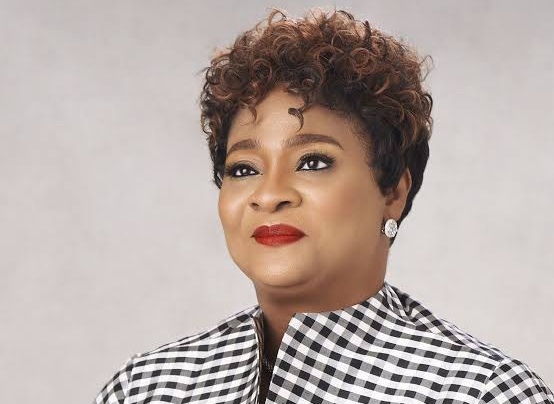
On 23 January 2025, Arunma Oteh stood at Saïd Business School, University of Oxford, to launch All Hands on Deck, the book she wrote about how world-class capital markets can help nations, companies and individuals create lasting prosperity. The occasion was part of a two-day celebration of her 60th birthday, which she marked on 24 January.
It was a fitting setting for a woman whose career has been defined by capital, institutions and economic development. From Nigeria’s financial markets to the African Development Bank, from the Securities and Exchange Commission to the World Bank Treasury, Oteh has spent decades operating at some of the most consequential levels of African and international finance.
Yet her journey to those rooms began without a powerful title. It began with a young Nigerian woman choosing computer science at a time when relatively few women were entering the field and developing the confidence to pursue opportunities beyond conventional expectations.
Years later, that determination would take her to Harvard Business School, the leadership of Nigeria’s capital-market regulator and ultimately the World Bank, where she served as Vice President and Treasurer from 2015 to 2018.
Her story is therefore more than a tale of professional advancement. It is a story of expertise, courage and an enduring belief in Africa’s economic potential.
Choosing an Unusual Path
Oteh earned a First Class Honours degree in Computer Science from the University of Nigeria, Nsukka, in 1984 before pursuing an MBA at Harvard Business School.
Her choice of computer science was significant in an era when the discipline was far from a conventional path for many young Nigerian women. Her family’s encouragement gave her the confidence to enter a field where women were underrepresented, while her Harvard education added finance, management and strategic decision-making to her technical foundation.
That combination would later become one of the defining strengths of her career: the ability to understand both systems and institutions, technology and finance, numbers and people.
Building a Career in Development Finance
Oteh began her professional career in 1985 at Centre Point Investments Limited in Nigeria, working in corporate finance, teaching and research.
In 1992, she joined the African Development Bank, beginning a nearly two-decade journey through investment, capital markets, treasury and institutional management. In 2001, she became Group Treasurer, responsible for fundraising and investment activities in international capital markets. She later became Group Vice President for Corporate Services, overseeing functions including human resources, information and communications technology and institutional procurement.
The experience gave her an unusually broad understanding of how financial institutions operate and, more importantly, how capital can be connected to development.
That experience would become crucial when she returned to Nigeria.
Taking on Nigeria’s Capital Market
In 2010, Oteh became Director General of Nigeria’s Securities and Exchange Commission at a difficult moment for the country’s financial markets. The global financial crisis had damaged investor confidence, while Nigeria’s capital market needed stronger regulation, transparency and governance.
Oteh entered the role with an ambitious vision. In a 2014 interview with ForbesWoman Africa, she recalled that the initial ambition at the SEC was to make it the best regulator in Africa. Her response was that Nigeria should aim to have the best regulator in the world.
That statement captured her approach to leadership: African institutions, in her view, should not be measured against lower expectations simply because they are African.
Her tenure involved efforts to strengthen market supervision, enforcement and investor confidence. She also served on the board of the International Organization of Securities Commissions and chaired its Africa and Middle East Regional Committee.
The period was not without controversy. Her leadership attracted intense scrutiny and institutional resistance, including allegations that were later examined by an independent PwC investigation, which cleared her of the allegations.
The experience reinforced a leadership philosophy she has often described through the Four Cs: Character, Compassion, Competence and Courage. For Oteh, leadership requires integrity, empathy, expertise and the courage to act when circumstances are difficult.
The World Bank’s Top Financial Table
In July 2015, the World Bank announced Oteh’s appointment as Vice President and Treasurer. She assumed the position in September, moving from Nigeria’s capital-market regulator to one of the most senior financial roles within a major global development institution.
The scale of the responsibility was formidable. As Treasurer, she led a global team responsible for managing approximately US$200 billion in assets for the World Bank Group and around 60 central banks, sovereign wealth funds and other official-sector clients. She also oversaw the institution’s borrowing programme across more than 50 currencies.
For an African woman to occupy such a position was symbolically significant. But Oteh’s appointment was not simply about representation. She arrived with decades of technical experience across African and international financial institutions.
She understood emerging markets because she had worked within them. She understood regulation because she had been a regulator. She understood development finance because of her years at the African Development Bank. And she understood global capital markets because she had operated at their highest levels.
Her seat at the table was earned through expertise.
Making Capital Work for Development
For Oteh, finance has never been merely about balance sheets and transactions. She has consistently argued that well-regulated capital markets can become powerful engines of economic development.
This philosophy informed her work at the World Bank Treasury, where she supported innovative approaches to development finance and sustainable investment.
Her perspective remains especially relevant to Africa. The continent has enormous natural and human resources, yet many African economies continue to struggle to access affordable, long-term capital. The challenge is therefore not simply how to attract money, but how to build credible institutions and markets capable of directing capital towards productive economic activity.
In that sense, strengthening capital markets is not merely a financial-sector objective. It is part of the architecture of economic transformation.
From Global Finance to Oxford
Oteh left the World Bank Treasury in November 2018, but her work did not end there. She subsequently became an Academic Scholar at St Antony’s College and an Executive-in-Residence at Saïd Business School, University of Oxford, where her work has continued to explore capital markets, economic development and financial technology.
She also remained deeply engaged with Africa. In 2021, she became Chair of the Royal African Society, succeeding journalist and broadcaster Zeinab Badawi.
Her transition from global finance into academia, thought leadership and African advocacy represents another dimension of her influence. Having spent decades managing institutions and capital, she now contributes to shaping the ideas and leaders that will influence the next generation.
Writing the Case for Prosperity
In 2025, Oteh added author to her professional accomplishments with All Hands on Deck: Unleash Prosperity Through World-Class Capital Markets.
The book distils lessons from her career and makes the case for stronger capital markets as a foundation for prosperity. Its central message reflects much of Oteh’s professional journey: economic transformation cannot be achieved by governments, financial institutions or businesses working in isolation.
It requires institutions that inspire confidence, markets that work efficiently and leaders who understand that capital ultimately has to serve people and productive economies.
For Africa, that argument is particularly important. Development is not only about possessing resources; it is about creating the financial systems capable of converting those resources into opportunity.
The Four Cs of Leadership
Perhaps the most enduring lesson from Oteh’s career is her emphasis on the Four Cs: Character, Compassion, Competence and Courage.
They offer a useful framework for understanding the woman behind the titles.
Character is about doing what is right. Compassion recognises the human consequences of leadership decisions. Competence demands preparation and excellence. Courage gives a leader the willingness to act when doing so is uncomfortable or unpopular.
Together, they explain much about Oteh’s approach to leadership and why her career has extended far beyond individual positions.
A Legacy Beyond the Title
Arunma Oteh’s journey stretches from a First Class Computer Science graduate in Nigeria to Harvard Business School; from corporate finance to the African Development Bank; from the AfDB Treasury to Nigeria’s Securities and Exchange Commission; from Nigeria’s capital markets to the World Bank Treasury; and from global finance to Oxford, authorship and African advocacy.
What makes the journey remarkable is not simply how many doors she entered, but what she brought with her when she entered them.
Oteh’s career challenges the assumption that African women must wait for institutions to become ready for them. It demonstrates the power of preparation, expertise and the courage to occupy spaces where women, and particularly African women have historically been underrepresented.
She has shown that African women can lead national institutions, manage global capital, influence international financial thinking and shape conversations about Africa’s future.
Arunma Oteh did not simply earn a seat at the World Bank’s top financial table. She brought with her an African perspective, decades of expertise and a conviction that capital should ultimately serve development.
And perhaps that is the most important lesson of her career: the value of a seat at the table is measured not only by who occupies it, but by what that person does with the opportunity.





Comments are closed.