





















Extent and Effects of Maternal Employment During the past few decades the proportion of women in labor force has increased dramatically in all industrialized societies. In the United States, the married mothers’ employment rate increased from 39.7 percent in 1970 to 70.1 percent in 1999 (U.S. Bureau of Labor Statistics, 2000). Among mothers of children aged six to seventeen, 49.2 percent and 77.1 percent were employed in 1970 and 1999, respectively. Among mothers with children under the age of six, their employment rate doubled from 1970 (30.3%) to 1999 (61.8%). The increasing trend of maternal employment is seen in other industrialized countries such as Japan and Canada. The above figures indicate that the majority of mothers in the United States experience dual roles of being a parent and a paid worker. A number of studies also show that women still bear more responsibility for childcare than their male counterparts (e.g.,…

When the Prime Minister of Canada, Justin Trudeau came into office in 2015, he formed the first gender-balanced cabinet in Canadian history. In announcing…

By Lahnee Pavlovich I am a big believer in gender equality and passionate about equal rights, equal pay and equal recognition, not only when…

Women are leaders everywhere you look, from a CEO to a housewife that holds together a home. Our country was built by women who…

Eloke-Young Splendor As the summer breaks rush in, there is a tendency for mothers to have butterflies in their stomach. This is true considering…

By Miracle Nwankwo On the 10th of September 1982, Kansas City witnessed the birth of a gifted ballerina born by a single mother Sylvia…
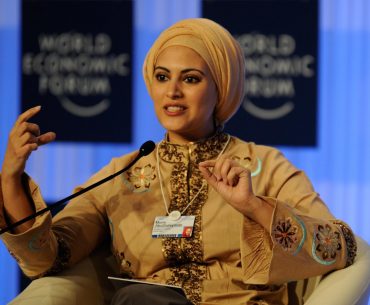
The impact inspire category for this week centers on the philanthropic strides of an amazon in Arab who believes that “When you change women’s…

The Assembly of the Republic of Mozambique approved here on Monday a law on the prevention of early marriages. The head of the Commission…

The four US congresswomen attacked by US President Donald Trump in tweets widely called racist have dismissed his remarks as a distraction. Representatives Alexandria…

If your actions create a legacy that inspires others to dream more, learn more, do more and become more, then, you are an excellent…

A Moscow-based newspaper has published an open letter challenging statements derogatory to women’s intelligence made by a top official in the Russian Orthodox Church.…

The recent idea of establishing universities specifically for women in Turkey, which was suggested by President Recep Tayyip Erdoğan, received full support from scholars,…
