
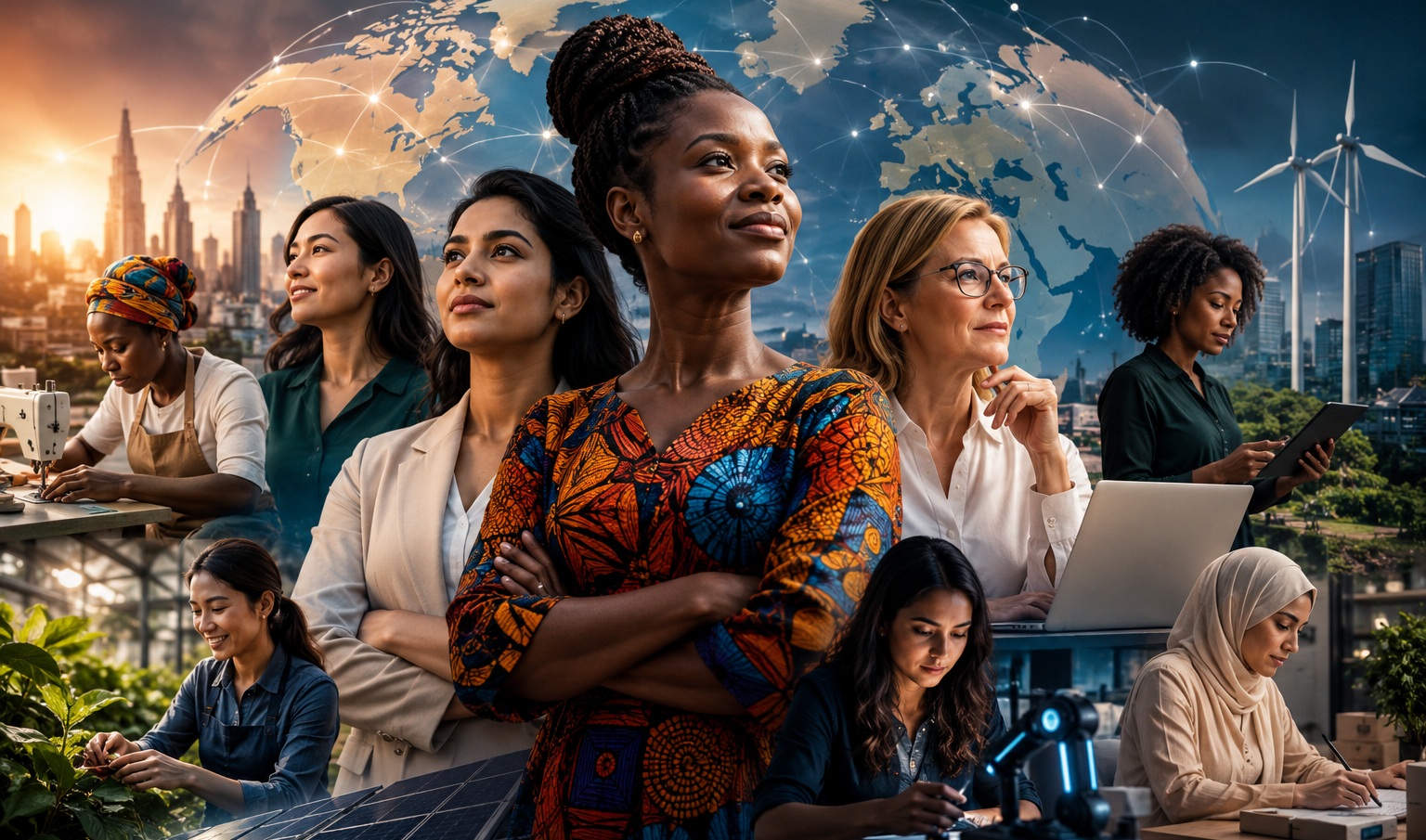
The small bakery opened just after sunrise. Its founder had started with little more than a family recipe, a secondhand oven and a dream of giving her children a better future. Thousands of miles away, another woman was pitching an artificial intelligence start-up to investors in London. In Brazil, a fashion entrepreneur was shipping handmade products to customers across Europe. In Kenya, a fintech founder was helping thousands of women access digital financial services for the first time.
Their stories are different. Their industries are different. Their cultures are different.
Yet they are connected by one remarkable truth: women everywhere are no longer waiting for opportunities to come to them. They are creating those opportunities themselves.
Across every continent, women are turning bold ideas into thriving enterprises, transforming local communities into global markets and proving that entrepreneurship is one of the most powerful tools for economic growth, innovation and social progress.
For decades, entrepreneurship was viewed largely as a man’s world. Access to capital, leadership positions and business networks often favoured men, while women faced cultural, financial and legal barriers that limited their economic participation.
That narrative has changed dramatically.
From Silicon Valley to Singapore, from Nairobi to New York, from São Paulo to Stockholm, women are building companies that are transforming industries, creating millions of jobs and driving innovation at an unprecedented pace. They are leading technology start-ups, manufacturing firms, financial services companies, healthcare enterprises, creative industries and green businesses that are reshaping the global economy.
According to the Global Entrepreneurship Monitor (GEM) Women’s Entrepreneurship Report, women represent one of the fastest-growing groups of entrepreneurs worldwide. At the same time, the World Bank estimates that closing gender gaps in employment and entrepreneurship could increase global Gross Domestic Product by more than 20 percent, representing trillions of dollars in additional economic output.
The rise of women entrepreneurs is not accidental. It is being driven by powerful global trends that are changing the future of business.
Women Are More Educated and Better Equipped Than Ever
Education has become one of the strongest foundations of women’s entrepreneurial success. Across the world, more women are earning university degrees, professional certifications and digital skills than at any other time in history. This expanding knowledge base has empowered millions to establish businesses in sectors ranging from biotechnology and artificial intelligence to agriculture, finance and renewable energy.
Today’s women entrepreneurs are entering the marketplace with stronger technical expertise, broader professional networks and greater confidence than previous generations.
Technology Has Levelled the Playing Field
The digital revolution has transformed entrepreneurship forever.
E-commerce platforms, artificial intelligence, cloud computing, digital payment systems and social media have dramatically lowered the barriers to starting and scaling businesses. A woman can now launch an online store from Accra, develop software in Bangalore or provide consulting services from Toronto to clients around the world with relatively little capital.
Technology has made entrepreneurship more accessible, more affordable and more global than ever before.
Women Understand the World’s Largest Consumer Market
Women influence an estimated 70 to 80 percent of global consumer purchasing decisions.
This gives women entrepreneurs a unique advantage in understanding customer behaviour and identifying market opportunities. Whether designing financial products, healthcare solutions, beauty brands, educational services or digital platforms, women are creating businesses that respond directly to the evolving needs of consumers.
Understanding the customer has become one of their greatest competitive strengths.
Women Are Building Businesses That Solve Real Problems
Modern entrepreneurship is increasingly driven by purpose.
Around the world, women are launching businesses that address climate change, healthcare accessibility, financial inclusion, clean energy, education, food security and sustainable agriculture. Rather than focusing solely on profit, many are building enterprises that generate measurable social and environmental impact alongside financial success.
This purpose-driven approach resonates strongly with today’s consumers and investors.
Investment in Women Entrepreneurs Is Growing
Although women continue to receive a relatively small share of global venture capital funding, attitudes are changing.
Governments, development finance institutions and private investors are establishing dedicated venture funds, grant programmes and accelerator initiatives specifically for women-led businesses. Organisations such as the World Bank and the International Finance Corporation continue to expand programmes that improve women’s access to finance because evidence consistently shows that investing in women strengthens entire economies.
While challenges remain, opportunities are steadily increasing.
Women Are Creating Jobs and Expanding Economies
Women-owned businesses are no longer limited to microenterprises.
Many have evolved into high-growth companies employing hundreds and even thousands of people. According to the World Bank, unlocking women’s full economic participation could generate trillions of dollars in additional global output, making women entrepreneurs one of the world’s greatest untapped engines of employment, productivity and economic growth.
Every successful business creates opportunities not only for its founder but also for countless employees, suppliers and communities.
Women Lead Businesses with a Different Perspective
Research increasingly suggests that women often embrace collaborative leadership, long-term thinking and inclusive decision-making.
Many prioritise innovation, employee wellbeing, diversity, adaptability and sustainable growth over short-term gains. These leadership qualities have become particularly valuable in today’s rapidly changing global economy, where organisations must constantly adapt to technological disruption and shifting consumer expectations.
Strong leadership has become one of women’s defining competitive advantages.
Global Networks Are Opening New Doors
Twenty years ago, many women entrepreneurs built businesses in isolation.
Today, international business networks, women’s chambers of commerce, incubators, accelerators, mentorship programmes and global leadership forums provide access to partnerships, investors, export markets and invaluable business expertise.
These expanding ecosystems are helping women move from local success stories to globally competitive enterprises.
Governments Now Recognise Women’s Entrepreneurship as an Economic Priority
Supporting women entrepreneurs is no longer viewed simply as a gender equality issue.
It has become an economic imperative. According to the World Bank’s Women, Business and the Law 2026 Report, women globally still enjoy only 67 per cent of the legal rights available to men, highlighting the enormous economic potential that remains untapped. As governments continue removing legal, financial and institutional barriers, more women are entering business and contributing to national prosperity.
Inclusive policies are proving to be smart economics.
Inclusive Leadership Is Shaping the Economy of Tomorrow
Perhaps the greatest reason women-owned businesses are becoming the world’s fastest-growing economic force is that they embody the future of leadership itself.
Women entrepreneurs are building organisations that value innovation, sustainability, collaboration, technology, ethical governance and long-term value creation. Their companies demonstrate that business success is measured not only by financial returns but also by positive impact on employees, customers, communities and the environment.
The entrepreneurs shaping tomorrow’s economy are not asking for permission to participate.
They are defining what the future of business looks like.
What Must Happen Next
The rise of women-owned businesses is not merely a trend to applaud. It is a global opportunity that demands action.
Governments must continue removing legal and financial barriers that restrict women’s participation in business. Financial institutions should expand access to affordable financing. Investors must commit more capital to women-led enterprises, while corporations should intentionally include women-owned businesses within their supply chains and procurement strategies.
Experienced entrepreneurs also have a responsibility to mentor emerging business leaders, opening doors that were once closed to them. Equally, young women should be encouraged to view entrepreneurship not simply as an alternative career path but as a powerful platform for innovation, wealth creation, leadership and lasting impact.
When women succeed in business, entire economies become stronger.
Behind every successful woman-owned business is more than an entrepreneur. There is a visionary solving problems, creating opportunities and inspiring others to believe that meaningful change often begins with one courageous idea.
The remarkable rise of women entrepreneurs reminds us that economic transformation is no longer driven solely by governments or multinational corporations. It is increasingly powered by women who dare to innovate, invest and lead. The world’s fastest-growing economic force is not a single industry, technology or market.
It is the extraordinary rise of women who are building businesses that are shaping the future of the global economy.





Comments are closed.