

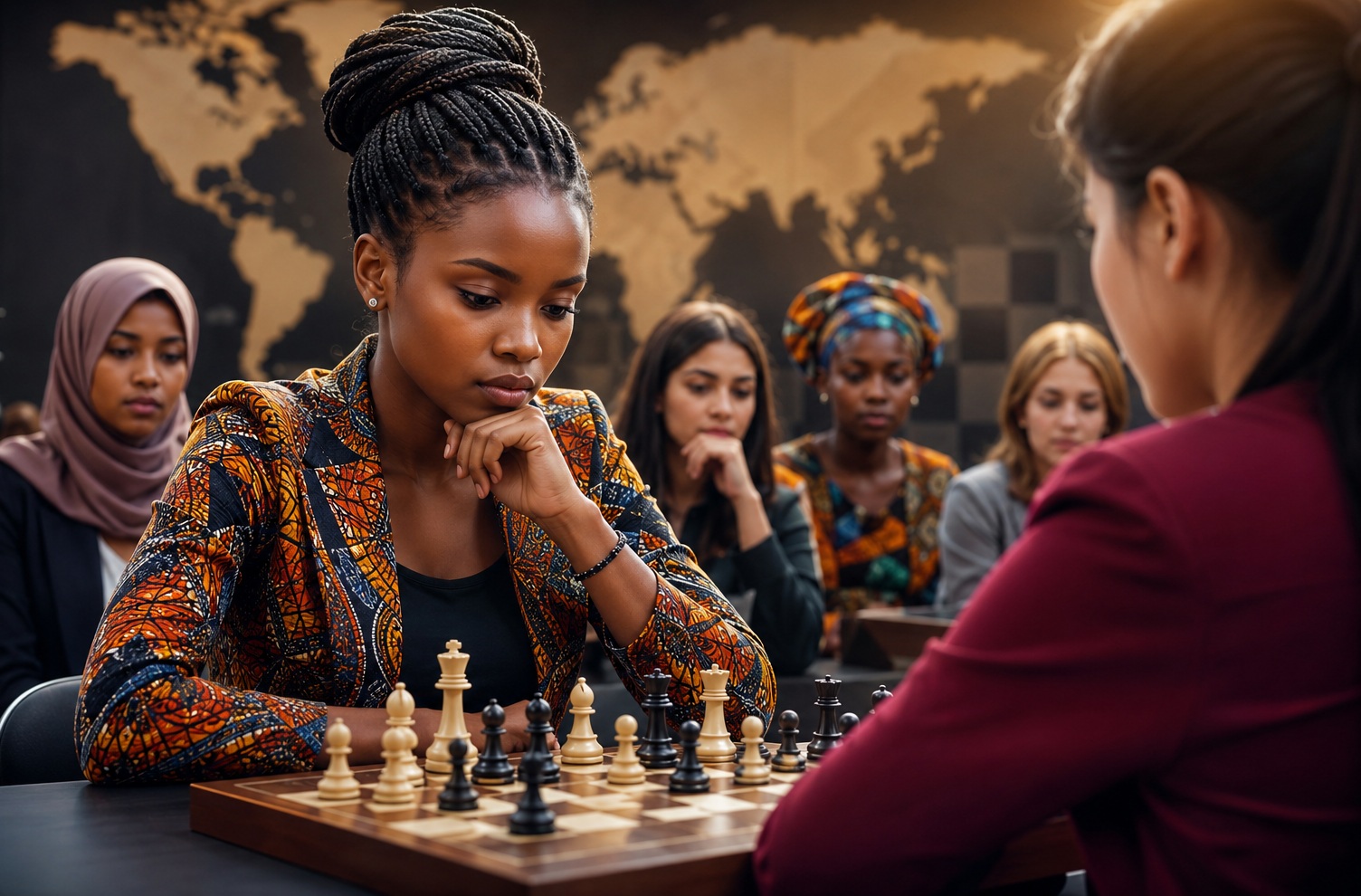
A young girl sits quietly before a chessboard, her eyes fixed on sixty-four black and white squares. Around her, the room is filled with anticipation. She is the only girl in the competition, facing an opponent with years more experience. She pauses, studies the board and makes her move. It is bold, calculated, and unexpected. Minutes later, she wins.
That victory is about far more than chess. It is about confidence overcoming doubt, preparation defeating fear and strategy triumphing over stereotypes. It is a reminder that every woman who dares to think differently has the power to change not only the outcome of a game, but the course of her own life.
Every year on 20 July, the world celebrates International Chess Day, marking the founding of the International Chess Federation (FIDE) in 1924. Officially proclaimed by the United Nations General Assembly in 2019, the observance recognises chess as a universal game that promotes education, dialogue, peace and inclusion.
In 2026, as nations invest in innovation, artificial intelligence and future-ready skills, the day reminds us that critical thinking, creativity, resilience and sound judgement remain among humanity’s greatest strengths. For women, the chessboard is far more than a game. It is a classroom for leadership.
The Chessboard Still Needs More Women
Chess is one of the few sports where men and women compete under exactly the same rules. Success depends on preparation, discipline and intellect rather than physical strength.
Yet women remain significantly underrepresented.
According to FIDE, women and girls account for only about 16.5 percent of active FIDE-rated players globally, while their participation in standard-rated tournaments is even lower at around 10.3 percent. These figures show that although chess is open to everyone, equal participation has not yet been achieved.
To encourage greater inclusion, FIDE introduced the Gender Equality in Chess Index (GECI), which measures female participation and opportunities across member countries. The 2026 GECI places Mongolia at the top, with women representing approximately 38 percent of active players and achieving a GECI score of 89.26 out of 100. Countries such as the United Arab Emirates have also recorded significant growth in girls’ participation through targeted investment and youth programmes.
The lesson is clear. When girls are given opportunities, they excel.
Women Who Changed Their Lives Through Chess
Behind every successful woman in chess is a story of determination and transformation.
One of the most inspiring is Phiona Mutesi of Uganda. Growing up in the Katwe slum of Kampala, she discovered chess through a missionary programme that offered vulnerable children food and education. Chess became her pathway out of poverty. She went on to win multiple Ugandan Women’s Chess Championships, represent her country at several Chess Olympiads and earn the title of Woman Candidate Master. Her remarkable journey inspired the bestselling book The Queen of Katwe, later adapted into a Disney film.
South Africa’s Jesse February also made history when she became the country’s first Black female International Master in 2019, breaking racial and gender barriers while inspiring countless young girls.
Egypt’s Shahenda Wafa, one of Africa’s leading Woman Grandmasters, has represented her country on the global stage and continues to demonstrate that African women can compete among the world’s finest chess players.
Nigeria’s Deborah Quickpen has represented the country internationally while mentoring younger players and promoting chess among girls. Her story reflects the growing influence of Nigerian women in a sport once considered overwhelmingly male.
Globally, women continue to reach new heights. Vaishali Rameshbabu of India won the 2026 FIDE Women’s Candidates Tournament, while stars such as Ju Wenjun, Bibisara Assaubayeva, Zhu Jiner, Anna Muzychuk and Aleksandra Goryachkina continue to inspire millions through their achievements.
For these women, chess has become more than a sport. It has opened doors to education, international recognition, careers, scholarships and leadership opportunities while inspiring the next generation of girls.
The Leadership Lessons Every Woman Can Learn
Every move in chess begins with a decision. Should you defend or attack? Take a risk or remain patient? Sacrifice today for greater success tomorrow?
These are the same choices women face throughout their personal and professional lives.
Chess teaches strategic thinking, patience, emotional control, resilience and the confidence to make difficult decisions under pressure. It reminds us that setbacks are part of growth and that every challenge presents another opportunity to learn and improve.
In today’s rapidly changing world, these qualities are more valuable than ever.
More Than a Game, A Tool for Women’s Empowerment
Research consistently shows that chess strengthens concentration, memory, logical reasoning, creativity and problem-solving while improving emotional regulation and decision-making.
These are the competencies increasingly valued in the digital economy. For girls, learning chess builds confidence, independence and the ability to think critically. Whether a woman becomes an entrepreneur, engineer, scientist, diplomat or public servant, the lessons learned across a chessboard remain relevant throughout her life.
Removing the Barriers
Despite encouraging progress, significant challenges remain. Many girls still have limited access to chess clubs, qualified coaches and competitive tournaments. Stereotypes and the shortage of female role models continue to discourage participation, particularly in lower-income communities.
Expanding access requires greater investment in school chess programmes, scholarships, female mentorship and inclusive competitions. The growing success of women around the world proves that the challenge has never been talent. It has always been opportunity.
Making the Next Move
Across the world, International Chess Day 2026 is being celebrated through tournaments, workshops, school competitions and public awareness campaigns that encourage more women and girls to embrace the game.
As we celebrate this year’s observance, let us remember that the greatest victories are not always won on the chessboard. They are won in the confidence a girl gains when she believes in her abilities and in the opportunities created when women are given equal access to learn, compete and lead.
Because when women master the art of strategy, they do far more than win games. They transform lives, strengthen communities and help shape a more inclusive and prosperous future.





Comments are closed.