
By Blossom Ukoha
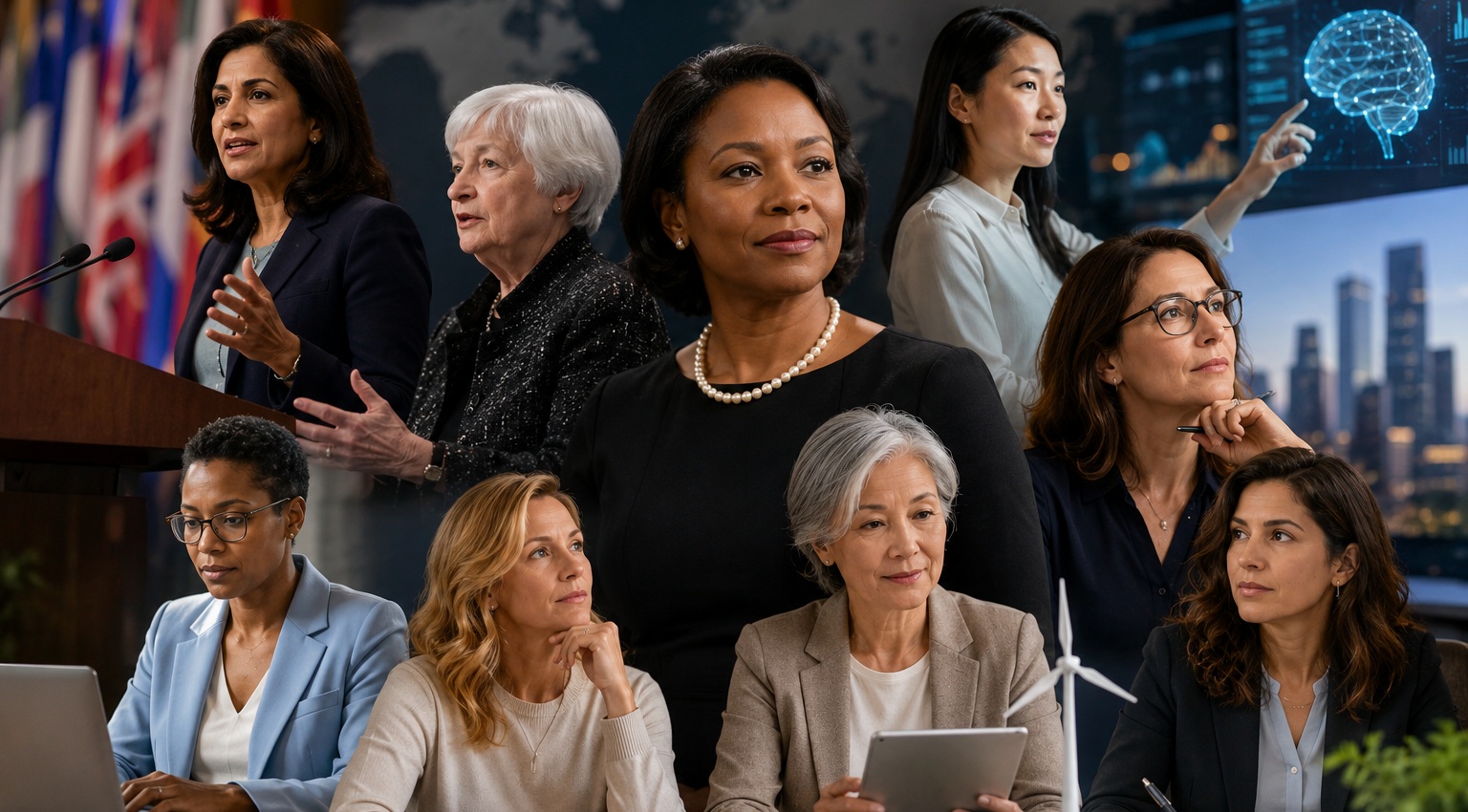
The world’s most influential women are redefining the meaning of leadership. While politics remains one of the most visible avenues of public service, the ability to shape economies, direct technological innovation, influence financial systems and drive social progress increasingly extends beyond elected office. Today, influence is exercised through governments, corporations, financial institutions, philanthropic organisations and technology companies, reflecting a broader shift in where global power resides.
According to the 2025 edition of Forbes’ World’s Most Powerful Women, the 100 women on its annual ranking collectively command approximately US$37 trillion in economic power, up from an estimated US$33 trillion in 2024. Forbes also estimates that they influence the lives of more than one billion people, while the top five women alone account for nearly US$27 trillion in economic influence and impact approximately 765 million people. These figures illustrate that leadership in the twenty-first century is increasingly measured by the ability to shape global systems rather than political authority alone.
Business, Technology and Finance Drive Modern Influence
Politics continues to play a significant role in global leadership, yet business has become one of the most powerful platforms through which women influence the world. Forbes reports that 44 per cent of the women on its 2025 list are chief executive officers, the highest proportion recorded in five years. The ranking also includes founders, central bankers, investors and chief financial officers whose decisions shape international markets and economic policy.
Technology has become one of the defining arenas of modern leadership. Senior female executives are helping to direct investments in artificial intelligence, cloud computing and semiconductor manufacturing. According to market analyses by Goldman Sachs, leading technology companies are expected to invest more than US$400 billion annually in artificial intelligence infrastructure over the coming years. Women occupying senior financial and executive positions are therefore influencing one of the most significant technological transformations of the modern era.
Finance has become equally important. Women leading central banks, investment firms and global financial institutions are directing capital towards infrastructure, sustainability, innovation and economic resilience. Their decisions shape investment priorities, influence financial markets and determine how resources are allocated to address global challenges. In many respects, economic leadership now carries influence comparable to political office.
Philanthropy as a Catalyst for Change
Beyond business and finance, philanthropy has become an increasingly influential avenue for leadership. Major philanthropists are investing billions of dollars in education, healthcare, scientific research, women’s economic empowerment and climate resilience. Unlike traditional charitable giving, strategic philanthropy focuses on long-term solutions, supporting innovation and strengthening institutions where government resources alone may be insufficient.
This growing role demonstrates that lasting social progress depends upon collaboration between governments, businesses and philanthropic organisations. Increasingly, women are leading these partnerships and helping to accelerate sustainable development across sectors.
Why Many Women Build Influence Beyond Politics
The prominence of women outside politics also reflects the structural barriers that continue to limit political representation. According to the 2025 Women in Politics map published by the Inter-Parliamentary Union and UN Women, women occupy approximately 27 per cent of parliamentary seats worldwide, compared with 11 per cent in 1995. The report also shows that women hold only 22.8 per cent of cabinet ministerial positions globally, while relatively few countries are led by women as heads of state or government.
Corporate leadership reveals a similar pattern. Research by Catalyst and Fortune shows that women lead only between 8 and 11 per cent of Fortune 500 and S&P 500 companies, although they now occupy approximately 30 per cent of corporate board seats. These figures indicate that while progress is evident, women continue to face significant barriers at the highest levels of political and corporate leadership.
Rather than limiting their ambitions to traditional political pathways, many women have built influence in sectors where expertise, innovation and measurable outcomes provide opportunities to create lasting impact. Today’s defining challenges, including artificial intelligence, climate change, economic inequality and digital security, require collaboration between governments, businesses, financial institutions and civil society. Leaders capable of working across these sectors are increasingly shaping global solutions.
The Business Case for Women’s Leadership
Research continues to demonstrate that organisations benefit from stronger female representation in leadership. McKinsey & Company’s Women in the Workplace report consistently finds that organisations with greater gender diversity in senior leadership are more likely to outperform their peers in innovation, organisational performance and employee engagement. Similarly, the World Economic Forum’s Global Gender Gap Report concludes that increasing women’s participation in economic leadership strengthens productivity, competitiveness and long term economic resilience.
These findings reinforce that advancing women’s leadership is not simply a matter of representation. It is a strategic investment in economic growth, institutional resilience and sustainable development.
A Call to Action
Governments, businesses, universities and development institutions must broaden their understanding of women’s leadership beyond political office. Greater investment is needed to expand women’s participation in science, technology, engineering, finance, entrepreneurship and executive leadership, where many of the world’s most significant decisions are now made. Public and private institutions must also strengthen policies that remove structural barriers, improve access to education and capital, and create leadership pathways that enable more women to thrive.
Building inclusive leadership is not solely about achieving gender balance. It is about ensuring that the world’s most talented leaders are equipped to address increasingly complex global challenges through innovation, collaboration and responsible governance.
In conclusion, the world’s most influential women are demonstrating that leadership is no longer defined solely by the ability to govern nations. It is increasingly defined by the capacity to shape economies, influence technology, mobilise capital, and improve lives at scale. Their achievements show that the future of global leadership will depend not only on those who hold political office but also on those who can transform institutions, build resilient economies and create lasting solutions for society.
As the centres of global influence continue to evolve, empowering women to lead across politics, business, technology, finance and philanthropy is no longer simply an issue of equality. It is an economic, social and strategic imperative that will shape the future of global development.





Comments are closed.