

By Laura Jones
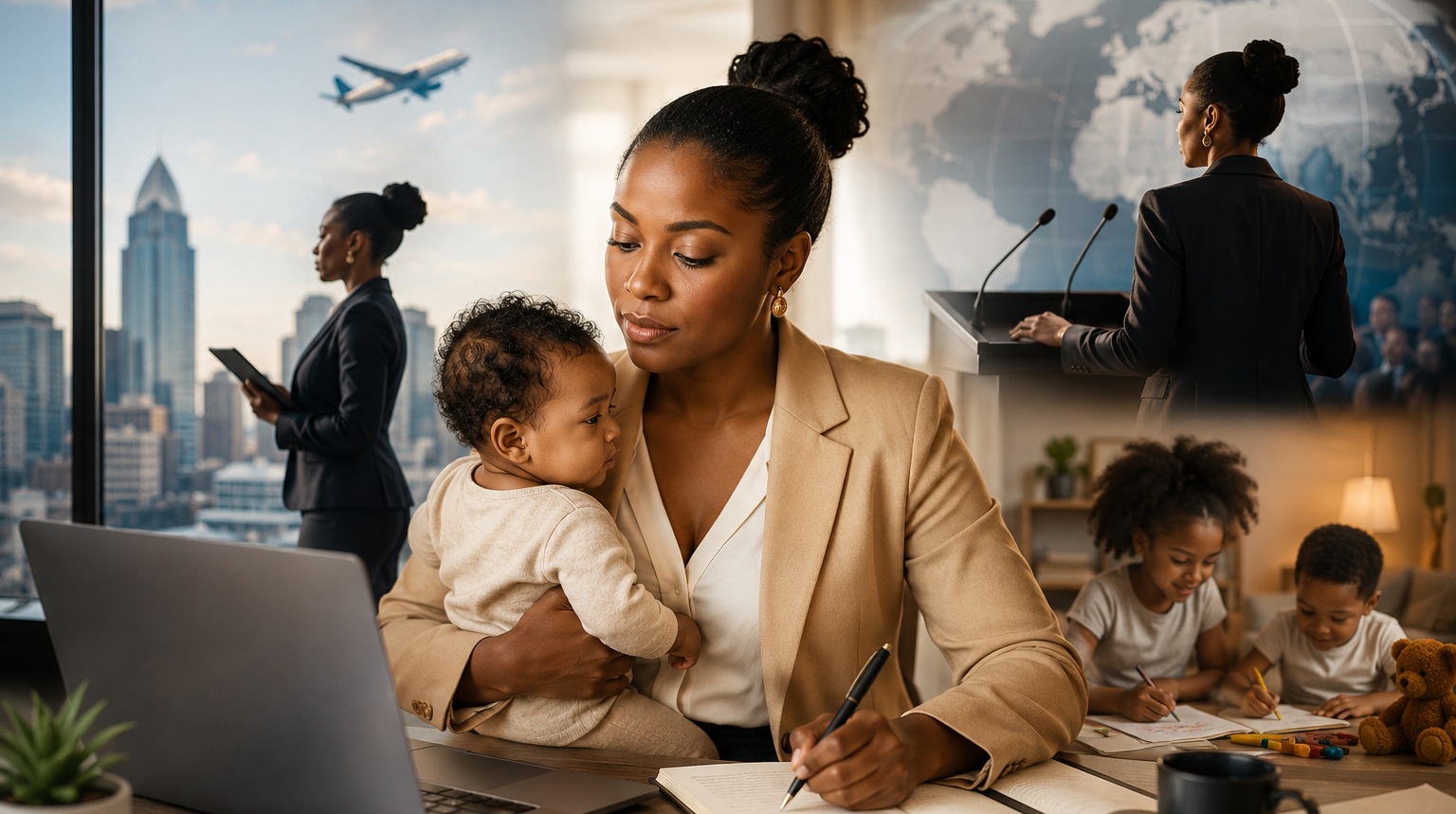
At 6:00 a.m., the day has already begun. A child needs breakfast, a school bag needs finding, a message from a business partner in another time zone is waiting for a response, and a meeting is already on the calendar. Before she has walked into the office, a woman may have already been a mother, caregiver, strategist, employer and decision maker.
Then the world expects her to enter the boardroom and perform as though none of that exists.
This is the part of women’s leadership we do not always see. We see the companies, awards, investments, international appointments and photographs from global stages. We celebrate women for what they have built but rarely see the daily negotiation between ambition and responsibility that makes much of that success possible.
So, how easy is it to balance motherhood, business and global influence?
The honest answer is that it is not easy.
And the numbers tell us why.
When Motherhood Becomes an Economic Issue
Motherhood is deeply personal, but the demands associated with caregiving have consequences far beyond the home. The International Labour Organization estimates that 708 million women worldwide were outside the labour force in 2023 because of unpaid care responsibilities, compared with 40 million men. Among women aged 25 to 54 who were outside the labour force, about two-thirds cited care responsibilities as the reason.
This means the question is not simply whether an ambitious woman can organise her calendar well enough.
It is whether the systems around her allow ambition and caregiving to coexist.
For a woman building a company, raising children and pursuing international influence, every hour has competing demands. A business opportunity may require travel. A child’s needs may require presence. A major negotiation may happen across time zones. Family responsibilities do not pause because the calendar says “important meeting.”
The Myth of Having It All
For decades, successful women have been encouraged to believe that they can “have it all.” The phrase sounds empowering, but it can create an impossible standard.
It suggests that a woman should be an exceptional mother, an ambitious entrepreneur, an attentive partner, an influential leader and a perfectly composed human being, all at the same time.
Real life is rarely that neat.
There are seasons when the business requires more attention. There are seasons when children need more of their mother. There are moments when a woman herself needs to stop, rest and reassess.
Perhaps balance is therefore not about giving every part of life equal attention every day. It is about knowing what deserves attention now.
Motherhood Does Not Make Ambition Smaller
Motherhood can change a woman’s ambitions without diminishing them.
For many women, building a business becomes connected to a larger idea of legacy. Success is no longer only about personal achievement. It can mean creating opportunities, building financial security, opening doors for other women and showing children what female leadership looks like.
A mother who leads a company is not only managing an enterprise. She is also being watched by a generation that is learning what leadership, resilience and ambition can look like.
But there is a danger in turning motherhood into another performance standard.
Women should not have to become “superwomen” to prove that they are capable.
The Business Cannot Depend on Her Alone
One of the most important lessons for women building serious businesses is that leadership cannot mean doing everything personally.
A founder who approves every email, makes every decision and solves every problem eventually becomes the bottleneck in her own organisation.
Delegation is therefore not simply a business strategy. For many women, it is a sustainability strategy.
Strong teams, clear systems, technology, trusted advisers and capable managers allow a leader to focus on decisions where her presence creates the greatest value.
This becomes even more important when her responsibilities extend across countries and continents.
When Influence Goes Global
Global influence adds another layer.
A woman may be running a company in Lagos while negotiating with a partner in London, speaking at a conference in Dubai and joining a virtual meeting with stakeholders in New York. Her work may cross industries, borders and time zones, while her responsibilities at home remain deeply personal.
At that level, saying yes to everything becomes impossible.
The most sustainable leaders learn to ask a different question: Where does my presence matter most?
McKinsey’s research on women CEOs found that successful women leaders often move away from the idea of perfect work-life balance. Instead, they describe creating lives that are integrated and sustainable, with clear priorities, boundaries and support systems.
That distinction matters.
A woman does not need every area of her life to receive equal attention every day. She needs a life that remains meaningful even when priorities shift.
No Woman Builds Alone
Behind many accomplished women is a support system that rarely appears in the headlines.
It may include a partner, parents, relatives, childcare professionals, colleagues, mentors, executive assistants or a strong leadership team. These people do not make a woman’s success less authentic. They make sustainable success more possible.
And organisations have responsibilities too.
McKinsey’s 2025 research covering India, Nigeria and Kenya found persistent systemic barriers to women’s advancement and highlighted the importance of organisational policies and practices in addressing those barriers.
Women should not be told simply to become more resilient while the structures around them remain unchanged.
Flexible working arrangements, supportive parental policies, equitable caregiving and workplaces that judge performance by results rather than constant availability can make a significant difference.
Redefining Balance
Perhaps balance is the wrong word.
Balance sounds like a perfectly level scale, but ambitious women’s lives are rarely static. They move through seasons of intensity, transition and opportunity.
The real goal is sustainability.
A sustainable life allows a woman to build a powerful company without allowing the company to consume her entire identity. It allows her to be present for her children without believing that motherhood makes her less ambitious. It allows her to lead globally while still protecting the relationships and personal values that give that leadership meaning.
That is a much more realistic definition of success.
The question, then, is not simply whether women can balance motherhood, business and global influence.
It is whether families, companies and societies are prepared to help them do it.
Because women should not have to choose between the children they love, the businesses they build and the influence they are capable of creating.
The future of women’s leadership should not be about asking women to carry more.
It should be about creating the freedom, support and systems that allow them to lead powerfully without losing themselves in the process.





Comments are closed.