Tag

Slider

Browsing

Raising Confident Girls in a Globalised World

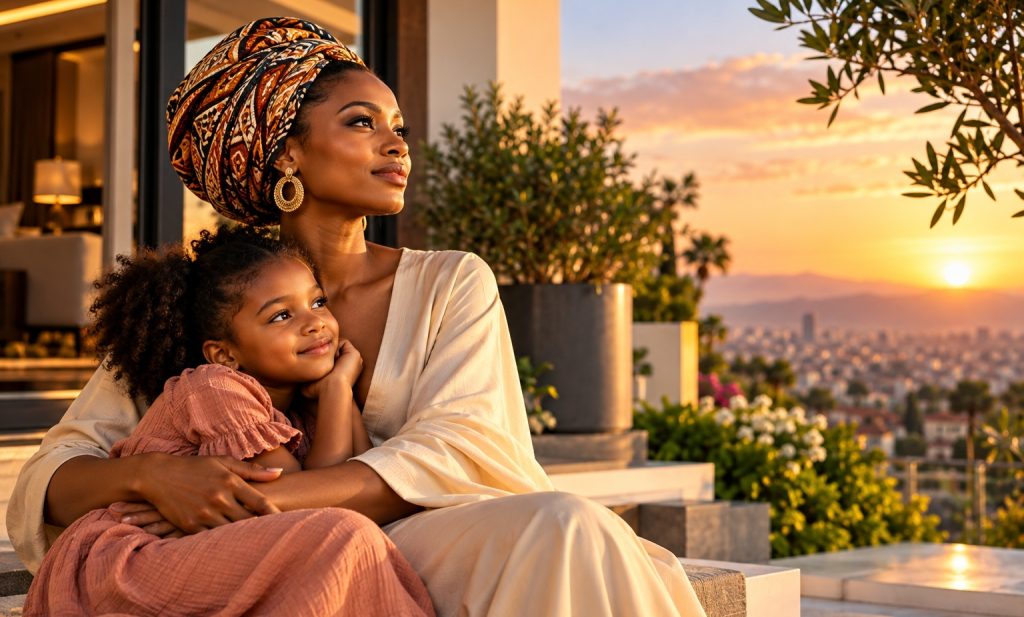
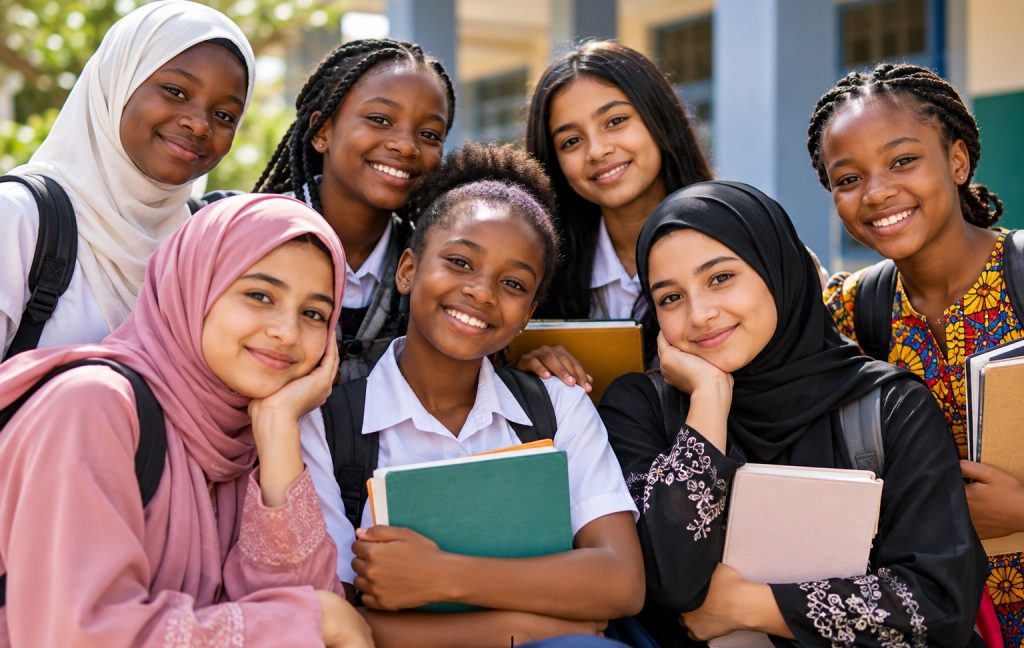
On a warm evening in a bustling city, a mother watched her 11-year-old daughter scroll endlessly through her phone. Between perfectly curated images, filtered beauty, and carefully staged lifestyles, the girl’s smile slowly faded. “I wish I looked like that,” she whispered. In that quiet moment, a global reality came into focus. Across continents, cultures, and income levels, millions of girls are growing up in a world more connected than ever, yet increasingly uncertain about their own worth. Globalisation has opened doors for girls in unprecedented ways. Education levels are rising, access to information is expanding, and opportunities once considered unattainable are now within reach. Yet, beneath this progress lies a troubling pattern. Confidence in girls is declining, particularly during the critical transition from childhood to adolescence. Research consistently shows that between the ages of 8 and 14, girls experience an average 30 percent drop in confidence. While boys and…

Exploring Culture through Travel: Why Every Woman Should Experience Africa

“Travel is fatal to prejudice, bigotry, and narrow-mindedness.” — Mark Twain There is something profoundly feminine about the way women experience travel. It is rarely just movement from one place to another. It is emotional. It is reflective. It is layered with meaning. A woman does not simply arrive, she absorbs, she observes, she connects. And nowhere in the world invites that kind of depth quite like Africa. Before you even step onto the continent, there are stories. Stories shaped by media, by history, by distance. But the moment you arrive, those stories begin to shift. You start to see Africa not as a single narrative, but as a living, breathing collection of cultures, identities, and experiences that cannot be simplified. This is the true essence of travel Africa culture. It challenges what you thought you knew. It replaces assumptions with lived reality. And for a woman, it opens a…

Why Women Must Be at the Center of Global Space Innovation

By Blossom Ukoha “The Earth is the cradle of humanity, but one cannot live in a cradle forever,” said Konstantin Tsiolkovsky. Today, as humanity stretches beyond that cradle into space, a more pressing question emerges: who is shaping this future, and whose voices are still missing? For decades, space exploration has symbolised human ambition, intelligence, and progress. Yet beneath this inspiring narrative lies a quieter truth. Women remain significantly underrepresented in the very systems that are defining the future of our planet and beyond. This absence is not just about inequality. It is about missed opportunities, incomplete solutions, and a future that risks being built without the full strength of human insight. The Power Women Bring to Space Innovation Women have always been part of the story of space, even when history failed to center them. From Valentina Tereshkova, who proved that women belong beyond Earth, to the countless scientists,…

Dr. Irehobhude Iyioha Assumes UNESCO Chair on Health Race and Human Right

By Blossom Ukoha What does it take to transform global health systems into spaces of justice, dignity, and equity? For Dr. Irehobhude O. Iyioha, the answer lies at the powerful intersection of law, race, and human rights, an intersection she is now shaping on a global scale. In March 2026, Irehobhude O. Iyioha was appointed as the inaugural holder of the UNESCO Chair on Health, Race and Human Rights at the University of British Columbia. This landmark appointment is more than a personal milestone. It signals a growing global commitment to addressing racialised health inequities through rigorous research, policy innovation, and legal reform. A Historic Academic Milestone The creation of this UNESCO Chair marks a significant institutional achievement. Established through a formal agreement between UBC President Benoit Antoine Bacon and UNESCO, it is the first UNESCO Chair at UBC and only the second of its kind within a law school…

Lab Queens: 12 Female Researchers Driving Real World Impact

There is something powerful, almost poetic, about a woman in a lab coat, a lecture hall, or deep in the field, quietly shaping the future. Not for applause, not for recognition, but for impact. Across continents and disciplines, women are asking bold questions, challenging long-standing assumptions, and pushing the boundaries of knowledge. Yet even with this brilliance, the global research landscape still reflects a gap that cannot be ignored. Women make up roughly one third of the world’s researchers, despite representing about half of the global population and an increasing share of university graduates. In many regions, especially in parts of Asia, their presence in research remains significantly lower, while even in areas where participation is higher, leadership roles remain limited. In science, technology, engineering, and mathematics, women continue to face barriers that slow progression into senior academic positions and innovation leadership. The innovation ecosystem tells an even more complex…

World Health Day 2026: When Women Stand with Science, the World Heals

By Blossom Ukoha There is something profoundly powerful about women shaping the future of health through science not just as caregivers, but as innovators, leaders, and change-makers. As the World Health Organization (WHO) unveils the 2026 theme for World Health Day, “Together for health. Stand with science,” it invites the world into a deeper truth: when women stand with science, entire generations are lifted into healthier, more equitable futures. This year’s theme is more than a global call it is a celebration of collaboration, resilience, and possibility. It champions the One Health approach, recognising that the well-being of people, animals, plants, and our shared environment are intricately connected. But for women and girls across the world, this message carries an even deeper resonance. It speaks to visibility, to equity, and to the urgent need to center women not only as beneficiaries of health systems, but as architects of them. The…

International Day of Sport for Development and Peace: Celebrating Women, Building Bridges, Breaking Barriers

On a modest community field in Latin America, a young girl once stood at the edge of a football pitch, hesitant, unsure if she belonged. The space felt unfamiliar, even unwelcoming. But with encouragement from a local sport for development programme, she stepped forward. Weeks turned into months, and uncertainty transformed into confidence. She began to lead drills, speak up in school, and support other girls finding their voice. What started as a game became something far greater, a pathway to self-worth, leadership, and possibility. Her story mirrors the lived experiences of millions of women and girls across the world. It is this quiet yet powerful transformation that sits at the heart of the 2026 theme for the International Day of Sport for Development and Peace, designated by the United Nations as “Sport: Building Bridges, Breaking Barriers.” For women, this theme is not abstract. It is deeply personal, profoundly necessary,…