

By Blossom Ukoha
“Tonight, Texas, we answered, and we did not whisper. We answered loud enough for every billionaire, every lobbyist, and every corrupt politician: Texas belongs to us.”
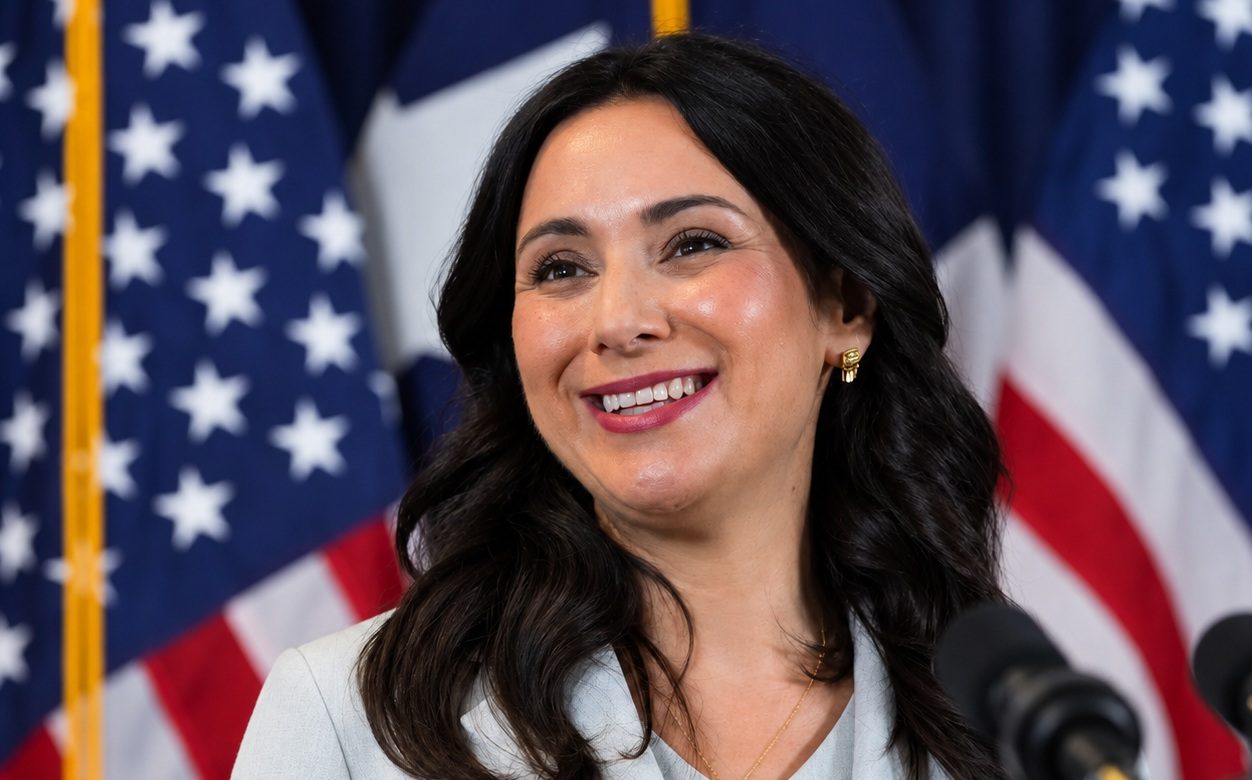
When Gina Hinojosa delivered these words following her historic victory on November 3, 2026, she was making a statement about more than winning an election. She was speaking about political ownership, public accountability and the responsibility of leadership. By defeating three-term Republican Governor Greg Abbott, Hinojosa became the first Latina elected governor of Texas and the first Democrat to occupy the office since Ann Richards left in 1995. Her victory ended more than three decades of Republican control of the governorship and opened a new chapter in the state’s political history. But beyond the historic first, a more important question emerges: can her achievement create lasting political representation for Latina women and the Latino communities that have helped shape Texas?
From the Rio Grande Valley to the Governor’s Office
Born Regina Inez Hinojosa on December 8, 1973, in McAllen, Texas, Gina grew up primarily in Brownsville, in the Rio Grande Valley. Her family background is deeply connected to public service. Her father, Gilberto Hinojosa, served as a county judge and chaired the Texas Democratic Party from 2012 to 2025, while her mother, Crisanta Guerra Lozano, worked as a legal aid attorney.
Growing up in a family familiar with law, public service and community advocacy helped shape her understanding of social responsibility. She attended Homer Hanna High School in Brownsville before studying Plan II Honors and Government at the University of Texas at Austin, graduating in 1996. She subsequently earned her law degree from George Washington University Law School in 1999.
Hinojosa built her professional career as a civil rights and labour attorney, representing workers and union members. Her experience included work with the Communications Workers of America, the American Federation of State, County and Municipal Employees (AFSCME), Catholic Charities USA and the Equal Justice Center.
Her entry into elected politics, however, came through a concern many parents understand. In 2012, when her son’s elementary school faced possible closure because of budget cuts, she became involved in the school community and ran for the Austin Independent School District Board of Trustees. She won the election and later became board president in 2015.
This experience established a foundation for her political career: public education was not simply an electoral talking point but an issue connected to children’s opportunities, family stability and community development.
What Does Being the First Latina Governor Mean?
In 2017, Hinojosa was elected to the Texas House of Representatives for District 49, representing central Austin. During her time in the legislature, she served on committees addressing public education and land and resource management, while advocating for stronger public school funding and opposing private school voucher expansion.
Her election as governor carries particular significance in a state where Hispanic and Latino residents constitute approximately 41 per cent of the population. Despite their substantial contribution to Texas’s economy, culture and workforce, the state had never elected a Latina to its highest executive office.
For the Rio Grande Valley, her victory also carries regional significance. During her election-night address, she declared:
“I am a daughter of the Rio Grande Valley, where the people embodied the great work ethic and values of our great state. No one would have imagined that a little girl from the RGV would stand before you here as the next governor of the greatest state, Texas.”
Her words connected a statewide political achievement to the community that shaped her upbringing. They also offered young Latina girls a visible example of someone from their region occupying the highest political office in Texas.
But representation must go beyond symbolism. What does it change when women who have historically been underrepresented gain access to executive leadership? It creates visibility, challenges established expectations and can encourage broader participation. However, lasting representation requires more women to have access to political funding, leadership development, decision-making institutions and opportunities to contest elections.
Beyond the Historic First: What Will Change?
Hinojosa campaigned on issues that directly affect everyday Texans, including public education, household affordability, workers’ interests and government accountability. She also raised concerns about the rapid expansion of energy-intensive artificial intelligence data centres and their implications for communities and public resources.
Her victory provides an opportunity to examine how these priorities translate into government action. For families, the question is whether public schools will receive stronger support and whether education opportunities will improve. For workers, it is whether labour protections and economic opportunities will receive meaningful attention. For households, it is whether policies addressing the cost of living will produce measurable relief.
For Latino communities, particularly those in the border region, her administration will face expectations around economic opportunity, infrastructure, education and access to public services.
Her election also raises questions about whether the Rio Grande Valley will receive sustained attention beyond the celebrations of election night. Regional identity may have shaped her political story, but statewide leadership requires policies that address the needs of Texans across different regions and communities.
Can One Victory Create Lasting Representation?
Hinojosa’s achievement comes with considerable responsibility. Her election does not automatically remove the structural barriers that have limited women’s participation in executive politics. Nor does having a Latina governor guarantee that every Latino community will experience equal representation.
Her administration must demonstrate that diversity in leadership can translate into inclusive public policies and institutional opportunities.
She has already indicated an intention to pursue bipartisan governance, stating that her transition and administration would involve members across party lines. This commitment will be tested through the relationships her government builds and the decisions it makes.
Scheduled to assume office on January 19, 2027, Hinojosa will have the opportunity to establish what her historic election means beyond the electoral result.
Ultimately, Gina Hinojosa’s story is about more than becoming the first Latina governor of Texas. It is about the relationship between representation and responsibility, political access and public impact.
Can Texas turn a Latina political first into lasting representation? The answer will depend on whether her administration creates opportunities beyond her own leadership, addresses the needs of underrepresented communities and demonstrates that political power can become a pathway for broader participation.
For the next generation of Latina women, her election has expanded what they can imagine. But the greater achievement will be a future in which reaching the highest levels of political leadership is no longer an exception for women from communities like hers.




Comments are closed.