“We demand the right to share our wisdoms with you, our collective survival depends on it. Our inherent, distinct, and collective rights are non-negotiable, and critical to climate action.” — Quack Pirihi, Indigenous Peoples’ Collective Opening Statement at COP31, November 2026.
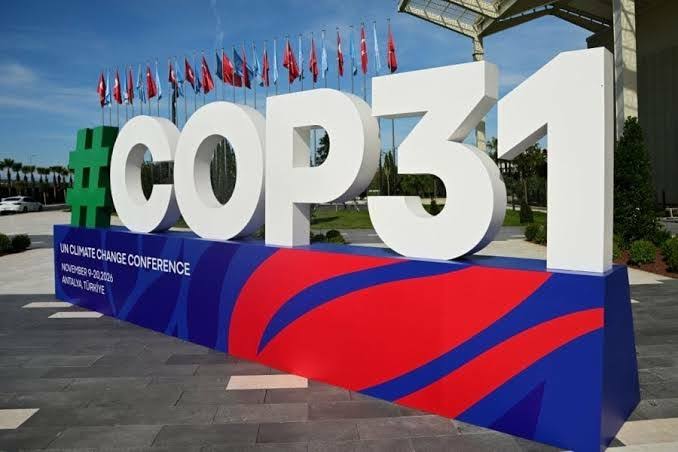
When COP31 concluded its scheduled programme in Antalya, Türkiye, following two weeks of climate negotiations and discussions, Indigenous women had placed an important message before the international community: climate justice cannot be achieved without their rights, knowledge, resources and participation in decision-making.
Their demands went beyond recognition of their contributions to environmental protection. They called for direct climate finance, protection of ancestral territories, recognition of Indigenous knowledge as science, stronger safeguards for environmental defenders and meaningful authority over decisions affecting their communities.
The advocacy began before the conference officially opened. On November 5 and 6, more than 50 Indigenous women leaders, including women with disabilities and young women, from Africa, Asia, the Pacific, the Arctic, North America, Latin America and Eastern Europe gathered in Antalya for a Global Coordination Meeting organised by the International Indigenous Women’s Forum (FIMI/IIWF). Their discussions produced the Declaration of Indigenous Women, Women with Disabilities, and Youth, presented around November 8 and formally read to the Women and Gender Constituency on November 10.
The declaration described Indigenous women as agents of change, leaders, defenders, knowledge holders, political actors and rights-holders. Its closing affirmation captured their position: “We are the rights-holders. We are the agents of change.”
The Climate Finance Inequality: Who Protects the Planet?
One of the strongest demands concerned the unequal distribution of climate finance. Indigenous Peoples and local communities protect significant forests, biodiversity and carbon-rich ecosystems, yet the funding available to support their work remains disproportionately limited.
Research on international climate aid for Indigenous Peoples’ and local communities’ land tenure and forest management indicates that approximately one per cent or less reaches these purposes. Meanwhile, a 2025 funding report by the Rights and Resources Initiative found that 53 per cent of surveyed Indigenous, Afro-descendant and local community women’s organisations received no core funding or less than 10 per cent of their annual budgets through core support.
The women therefore called for direct, predictable, flexible, timely and gender-responsive funding, alongside a dedicated grant window for Indigenous women’s organisations and networks. They want to be recognised as implementers of climate solutions, not merely beneficiaries of financial assistance.
Their demand is fundamentally about control over resources. Funding must reach the communities doing the work without excessive bureaucratic procedures or unnecessary intermediaries.
Indigenous Knowledge Is Science, Not an Afterthought
Another central demand was the recognition of Indigenous Peoples’ Traditional Knowledge (IPTK) in global climate policies.
For generations, Indigenous communities have developed knowledge of forests, water systems, biodiversity, agriculture and environmental changes through their relationship with ancestral territories. Women and elders have played significant roles in preserving and transferring this knowledge.
Yet their expertise has often remained outside formal climate assessments and policy decisions.
The declaration made its position unmistakable: “The Traditional Knowledge of Indigenous Peoples is science and must be treated as such.”
The women called for this knowledge to be formally integrated into the Global Stocktake and climate adaptation frameworks, including knowledge held by Indigenous women with disabilities and older women. Their position challenges institutions to recognise traditional knowledge as a legitimate source of evidence rather than an optional addition to scientific research.
Land Rights, Self-Determination and Protection of Women Defenders
Climate action can also create new threats when projects are implemented without the consent of affected communities. Indigenous women warned that renewable energy developments, mineral extraction and conservation initiatives can reproduce displacement and land dispossession when territorial rights are ignored.
Their declaration demanded recognition of collective rights, self-determination and territorial governance, drawing on international protections such as the United Nations Declaration on the Rights of Indigenous Peoples (UNDRIP), CEDAW General Recommendation No. 39 and the Convention on the Rights of Persons with Disabilities.
They insisted on Free, Prior and Informed Consent (FPIC), equitable benefit-sharing and protection against forced displacement, land grabbing, extractivism and sexual violence.
Their position was particularly clear: “A just transition without Free, Prior and Informed Consent is not a just transition.”
The declaration also demanded enforceable protections for Indigenous women environmental and human-rights defenders, many of whom face intimidation, criminalisation, violence and displacement for defending their territories.
Loss and Damage Is More Than Financial Compensation
For Indigenous communities, climate loss cannot always be measured in monetary terms.
The destruction of ancestral territories can mean the disappearance of languages, cultural practices, spiritual relationships and traditional knowledge that cannot simply be restored through financial compensation.
The women therefore called for the rapid capitalisation of the Loss and Damage Fund, recognition of non-economic losses and direct-access funding arrangements that do not depend exclusively on national governments. They also emphasised accessible and safe mechanisms for Indigenous women and girls with disabilities.
Their demands recognise that climate justice must protect not only livelihoods and infrastructure but also identity, culture and the continuity of communities.
What Did COP31 Leave Unresolved?
Although Indigenous women successfully presented a coordinated political declaration and accountability framework, their advocacy did not translate into every requested outcome through the negotiations.
The conference’s scheduled closing date was November 20, but negotiations extended beyond the deadline into November 21 as countries remained divided over climate finance, adaptation and fossil-fuel commitments. Late negotiating drafts removed explicit fossil-fuel language, while debates over gender equality and the implementation of climate commitments continued.
The declaration therefore remains an important political and accountability instrument rather than a binding agreement guaranteeing dedicated climate finance for Indigenous women’s organisations or full implementation of their territorial rights.
This distinction matters. Recognition of Indigenous leadership is important, but recognition without resources, safeguards and decision-making authority does not resolve the inequalities the women brought to Antalya.
Beyond COP31: A Call to Action
The responsibility now extends beyond conference declarations and diplomatic commitments.
Governments must translate Indigenous rights into national climate policies, protect ancestral territories and guarantee meaningful implementation of FPIC. Climate finance institutions must establish direct, simplified and accessible funding pathways, including dedicated support for Indigenous women’s organisations. The administrators of the Loss and Damage Fund must recognise non-economic losses and create accessible mechanisms for affected communities.
International climate institutions must also ensure that Indigenous women, women with disabilities, elders and young people have meaningful representation in negotiations, funding governance and the monitoring of climate commitments. Their participation must influence decisions, not simply fill seats at international meetings.
As Quack Pirihi reminded delegates in her opening statement, Indigenous communities have brought their knowledge and science to climate negotiations for more than three decades, yet emissions continue to rise. The challenge is no longer a lack of awareness; it is the failure to translate recognition into action.
Ultimately, Indigenous women did not travel to COP31 simply to ask for a place in the climate conversation. They came to demand the resources, rights and authority to shape its direction.
Their message to governments is clear: stop treating Indigenous women as beneficiaries of climate action and recognise them as rights-holders, decision-makers and leaders. The true measure of COP31 will not be the declarations made in Antalya, but whether those declarations lead to protected territories, accessible finance, safer communities and real political power for the women who have spent generations protecting the planet.



Comments are closed.