By Blossom Ukoha
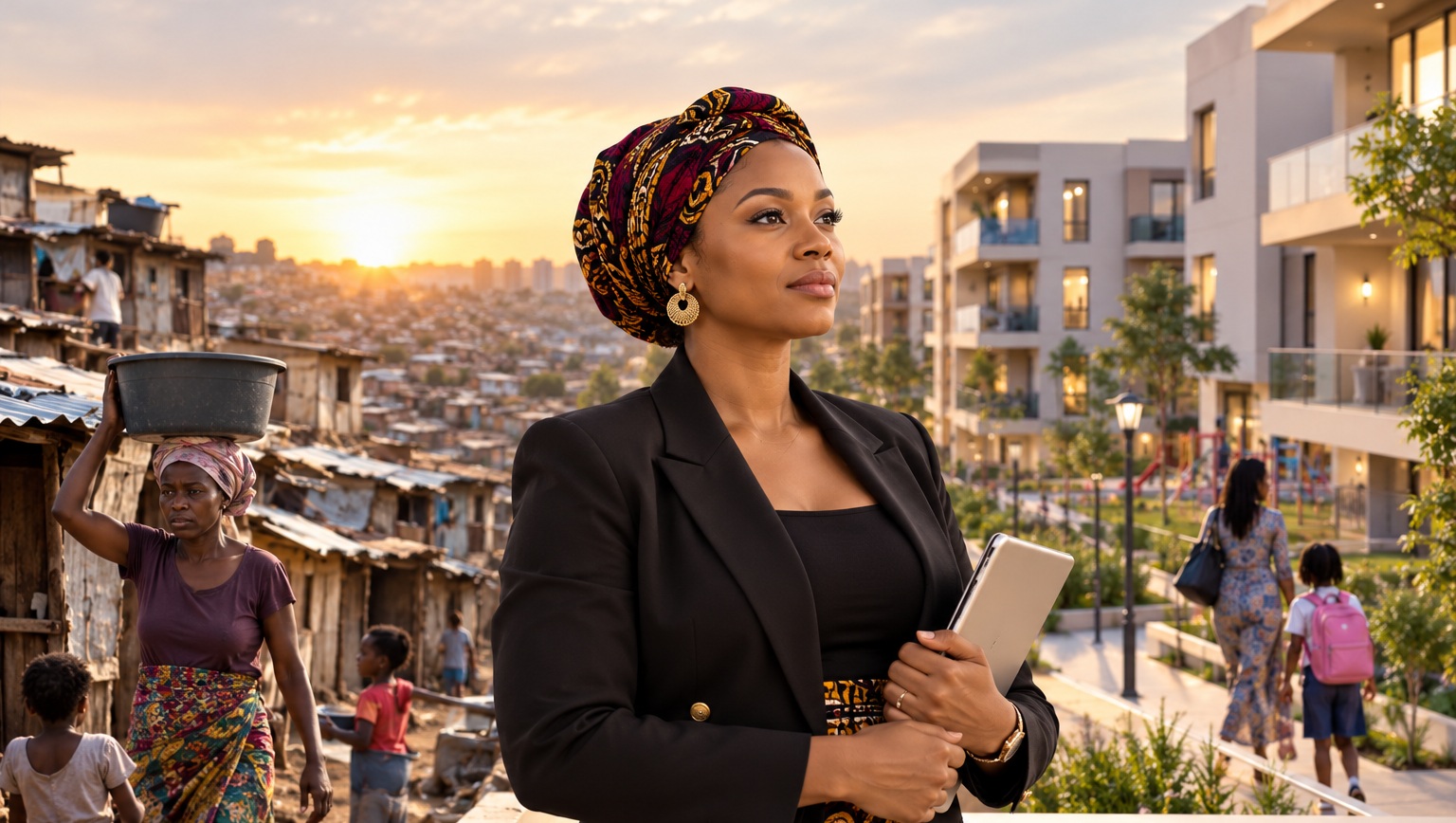
For millions of women around the world, home is more than a physical structure. It is where children are raised, livelihoods are built, education begins and families seek safety. Yet for women living in informal settlements, overcrowded communities or insecure housing, home can also mean exposure to unsafe sanitation, violence, displacement, climate hazards and economic hardship. This World Habitat Day, the question of who has access to adequate housing must therefore include a deeper question: what happens when women do not?
Observed on 5 October 2026 under the theme “Adequate Housing for All,” World Habitat Day draws global attention to the housing crisis and the need for inclusive, safe and sustainable human settlements. The 2026 global observance in Muscat, Oman, launches Urban October at a time when the scale of the crisis is enormous. According to UN-Habitat’s World Cities Report 2026, up to 3.4 billion people lack adequate housing, while more than 1.1 billion people live in slums or informal settlements. The report makes clear that housing is closely connected to health, economic opportunity, education, climate resilience and social inclusion.
For women, however, inadequate housing often carries an additional burden.
Women Are Disproportionately Exposed
According to UN Women and UN-Habitat, women aged 15–49 are overrepresented in urban slums in 80 per cent of the 59 developing countries analysed across Latin America and the Caribbean, Central and Southern Asia, and sub-Saharan Africa. In many of these countries, more than half of women in this age group live in slums. In Kibera, Kenya, for example, there are approximately 116 women for every 100 men living in the settlement.
These statistics reveal that the housing crisis is not gender-neutral. Women and girls can face greater risks from insecure tenure, overcrowding, inadequate sanitation, poor infrastructure and unsafe public spaces. For women heading households, particularly those with limited incomes, these challenges can be even more difficult to overcome.
A home without reliable water can increase the amount of time women spend on unpaid care and domestic work. Poor sanitation can compromise privacy and dignity. Unsafe streets can restrict women’s mobility, while insecure tenure can leave families vulnerable to eviction and displacement.
Housing, therefore, is not simply about shelter. It is about whether women have the foundation to live safely and participate fully in society.
Housing Can Determine Health and Safety
The relationship between adequate housing and women’s health is measurable. According to Habitat for Humanity International, improvements to housing conditions in informal settlements could prevent approximately 20.3 million cases of illness among women in the first year, including respiratory, reproductive and urinary tract infections and heat-related illnesses.
The same research estimates that improving housing conditions could contribute to 42.9 million fewer incidents of gender-based violence and prevent approximately 80,200 deaths.
These findings demonstrate why housing must be considered part of the broader infrastructure for women’s wellbeing. Better sanitation can reduce health risks. Safer homes and neighbourhoods can reduce exposure to violence. Improved ventilation can protect families from disease and extreme heat. Secure housing can provide the stability women need to care for their families and pursue economic opportunities.
The Economic Cost of Poor Housing
Housing also influences whether women can access work, education and markets.
According to UN-Habitat’s World Cities Report 2026, 44 per cent of households globally spend more than 30 per cent of their income on housing, while the burden reaches 55 per cent among renters in sub-Saharan Africa. For low-income women and female-headed households, excessive housing costs can force difficult choices between rent, food, healthcare and education.
Location matters too. When affordable housing is far from employment, schools and essential services, women can lose valuable time and income commuting or managing household responsibilities.
This makes affordable and well-located housing an important component of women’s economic empowerment.
When Women Help Shape Housing Solutions
There is also evidence that involving women in housing and settlement development can produce tangible results.
According to UN-Habitat’s Participatory Slum Upgrading Programme in Mtwapa, Kenya, women secured 45 per cent of representation slots on Community Development Committees through a Community Managed Funds model. The project also established five additional freshwater kiosks, reducing the average time women spent collecting water from approximately 30 minutes to 10 minutes.
That improvement may appear simple, but its impact is significant.
Ten minutes saved on every water-collection trip can become time for paid work, education, childcare, entrepreneurship or community participation. This illustrates an important principle: housing interventions can create economic and social value when they respond to the realities of women’s daily lives.
Women Must Be Part of the Decision
Yet women remain underrepresented in many housing and urban-planning decisions.
According to UN-Habitat’s World Cities Report 2026, participatory approaches to informal-settlement upgrading can remain limited or exclusionary, with women and other vulnerable groups insufficiently represented.
This must change.
Women living in informal settlements understand their communities in ways that statistics alone cannot capture. They know where flooding occurs, where water is difficult to access, which roads become unsafe at night and how inadequate infrastructure affects families.
Their knowledge should not be treated as an afterthought. Women must be participants in designing, implementing and evaluating housing solutions.
Adequate Housing Is an Investment in Women
The benefits of adequate housing extend beyond individual households. According to Habitat for Humanity and the International Institute for Environment and Development (IIED), large-scale improvements in informal settlements could generate significant economic benefits, including potential increases in GDP and income per capita in some countries, while improving children’s access to education.
This is why housing should be viewed not merely as expenditure, but as an investment in human capital, health, productivity, education and economic participation.
For women, the returns can be especially significant. When housing reduces unpaid care burdens, improves safety and brings essential services closer to households, women have greater opportunities to work, learn, build businesses and participate in leadership.
A Call to Action from Amazons Watch Magazine
At Amazons Watch Magazine, we believe that “Adequate Housing for All” cannot be achieved without addressing the specific realities of women and girls.
We call on governments, housing authorities, urban planners, development organisations, financial institutions and private-sector leaders to make gender-responsive housing a development priority. This means strengthening women’s land and property rights, expanding access to affordable housing finance, improving water and sanitation, investing in climate-resilient communities and upgrading informal settlements without displacing vulnerable residents.
Most importantly, women must have a seat at the table where housing policies and urban futures are designed.
Because a safe home gives a woman more than shelter. It gives her a stronger foundation to raise her family, pursue education, earn an income, build a business, participate in her community and lead.
This World Habitat Day, Amazons Watch Magazine calls for a housing agenda that does not simply build houses, but builds the conditions in which women can thrive.
Adequate housing is not a luxury. It is a foundation for dignity, safety, opportunity and women’s power.





Comments are closed.