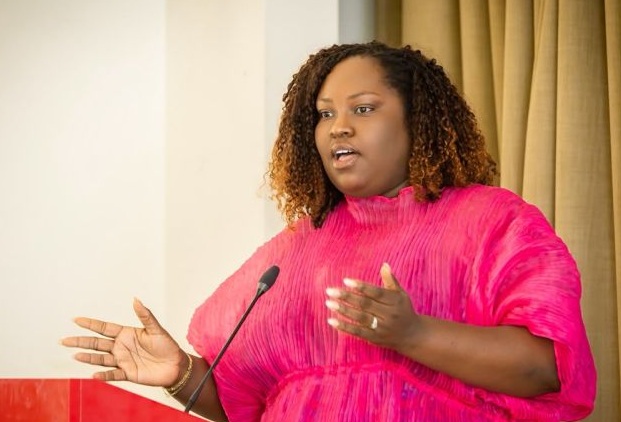
Cambridge, United Kingdom | 9 June 2026 – Creating a structured pathway that transforms women-led enterprises into investment-ready businesses was the central message delivered by Mrs. Nanna Sylla-Coulibaly, Vice President of the Women’s Investment Club (WIC) Côte d’Ivoire, during the National Showcase at the Global Power Women Forum (GPWF) Cambridge 2026.
Presenting Côte d’Ivoire’s strategy for attracting global capital, she demonstrated how stronger institutional coordination can unlock sustainable financing and accelerate women’s economic participation.
The two-day Forum was convened by the Centre for Economic & Leadership Development (CELD) in strategic collaboration with Wolfson College, University of Cambridge and hosted by Dr. Mrs. Ibifuro Ken-Giami, Founder and Chief Executive Officer of CELD and Publisher of Amazons Watch Magazine. Held under the theme, “Women-Powered Economies: Capital, Trade & the Future of Economic Governance,” the Forum assembled global leaders, policymakers, diplomats, investors, academics and development practitioners committed to advancing women’s leadership and inclusive economic growth.
The Forum commenced on Day One with the GPWF Private Networking Mixer & Partnerships Dinner, fostering strategic partnerships among delegates and institutional stakeholders. Day Two featured the Opening Plenary: Women, Power & the Architecture of Global Economies, the Insight-to-Action Roundtable, National Showcase – Women-Powered Economies in Action, Market Access, Trade & Capital Pathways, and concluded with the Global Power Impact & Legacy Honours.
Presenting “Positioning Côte d’Ivoire for Global Capital Through Investment-Ready Women-Led Businesses,” Mrs. Sylla-Coulibaly highlighted Côte d’Ivoire’s strong economic fundamentals, including sustained GDP growth, macroeconomic stability and its position as West Africa’s leading economy within the WAEMU region. She noted that while capital is increasingly available, too few women-led enterprises are adequately prepared to attract investment because of fragmented support systems, weak governance structures and limited access to organised investor networks.
To address these challenges, she introduced GUIF (Guichet Investir au Féminin)—CEPICI’s One-Stop Shop for Women’s Entrepreneurship, Investment and Growth. She described the hybrid platform as an integrated ecosystem combining digital services, business readiness programmes and on-the-ground advisory support to help women entrepreneurs progress from business creation to investment readiness. The initiative provides a single entry point where entrepreneurs can access training, diagnostics, mentorship, referrals and investment opportunities.
Mrs. Sylla-Coulibaly further outlined a structured four-stage investment pathway that identifies high-potential women-led SMEs, prepares them through governance and financial readiness, connects them with investors and strategic partners, and supports them to scale through increased access to capital and markets. She explained that the model is designed to build a continuous pipeline of qualified businesses capable of attracting both domestic and international investment.
Highlighting the role of the Women’s Investment Club Côte d’Ivoire (WIC), she described the organisation as an ecosystem builder, market connector and investment catalyst supporting women entrepreneurs through investment readiness, business acceleration, strategic partnerships, market access and investor matchmaking. She also presented WIC’s five strategic pillars, which focus on resource mobilisation, investment readiness, market access, financial innovation and inclusive governance to reduce the financing gap facing women entrepreneurs.
Mrs. Sylla-Coulibaly concluded by calling for stronger collaboration among governments, investors, development institutions and private-sector partners to build sustainable investment ecosystems capable of transforming women-led enterprises into engines of national economic growth. She stressed that connecting entrepreneurs to structured financing pathways is essential for creating jobs, expanding markets and positioning Côte d’Ivoire as a leading destination for women-led investment in Africa.
The Forum welcomed an exceptional assembly of global leaders, including Her Excellency Diana Nausėdienė, First Lady of the Republic of Lithuania; Her Excellency Ambassador Professor Olufolake AbdulRazaq, First Lady of Kwara State, Nigeria and Chairperson of the Nigeria Governors’ Spouses’ Forum; Hon. Dr. Emma Kantema (MP), Namibia’s Minister of Gender Equality and Child Welfare; Baroness Sandy Verma, Member of the UK House of Lords; Her Excellency Mrs. Sara Amani, Ambassador of the Republic of Côte d’Ivoire to the United Kingdom; Mrs. Oghogho Gwabin Musa; Ann Cotton OBE; Dr. Renuka Thakore; Professor Tolullah Oni; Professor Elizabeth Garnsey; Professor Ronita Bardhan; Joan Asante; Zeinabou Sidibé; and distinguished representatives from government, business, academia and civil society.
The Global Power Women Forum Cambridge 2026 reinforced the importance of creating investment-ready ecosystems that strengthen women’s enterprises, expand regional trade and position Africa’s women entrepreneurs as key drivers of sustainable economic transformation.
About the Global Power Women Forum (GPWF)
The Global Power Women Forum (GPWF) is a premier international leadership platform convened by the Centre for Economic & Leadership Development (CELD) in strategic collaboration with Wolfson College, University of Cambridge. The Forum brings together influential women leaders, policymakers, diplomats, business executives, academics and development partners from around the world to foster dialogue, strengthen strategic partnerships and champion innovative solutions that advance women’s leadership, economic inclusion and sustainable development.





Comments are closed.