By Janet Coin
Imagine two countries making the same promise to empower women. One launches awareness campaigns, celebrates International Women’s Day, and delivers inspiring speeches. The other rewrites discriminatory laws, reforms institutions, allocates national budgets to gender programmes, and measures progress through data. Years later, the difference is unmistakable. While one celebrated good intentions, the other created lasting change.
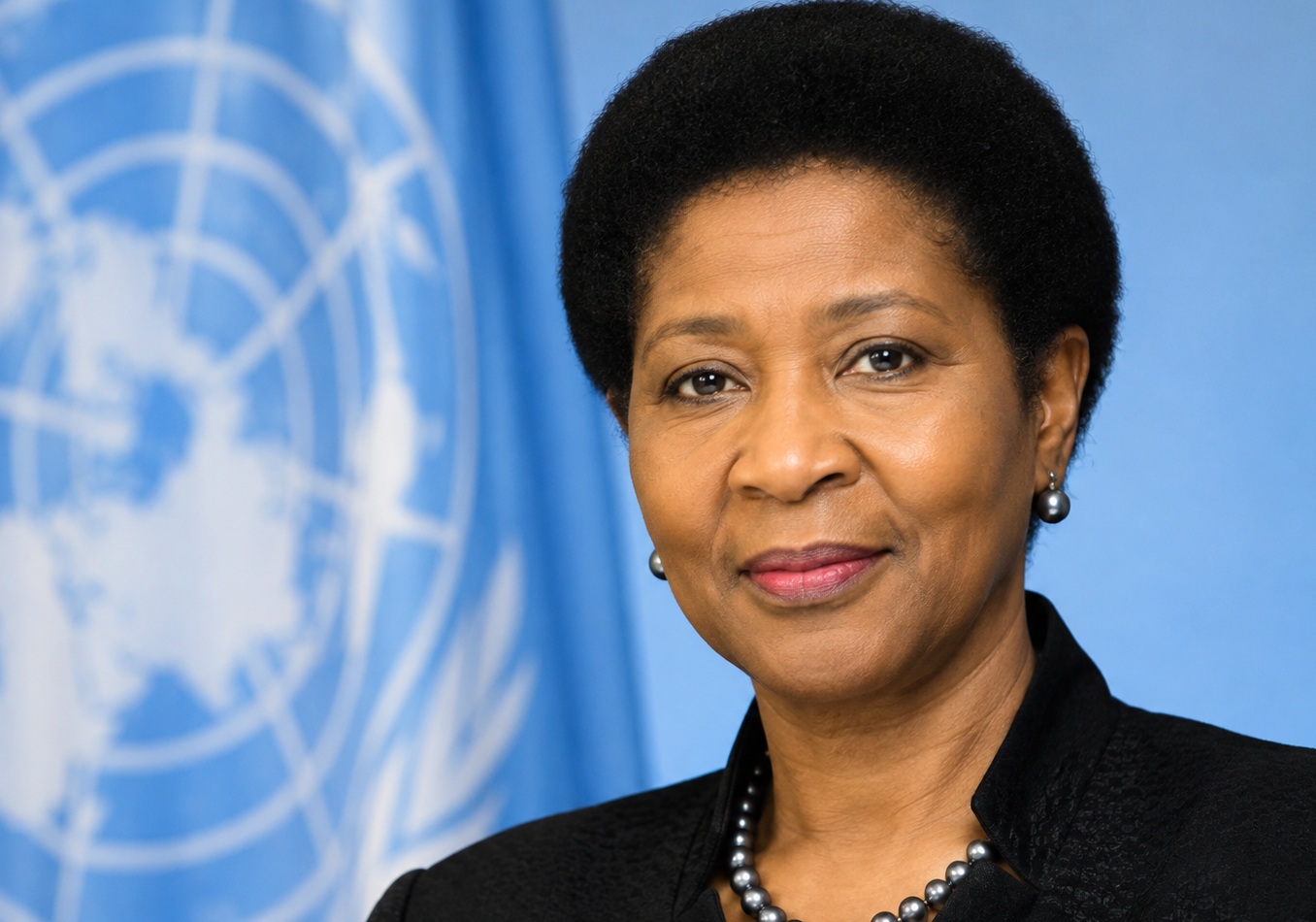
This distinction defined the leadership of Phumzile Mlambo-Ngcuka, the former Deputy President of South Africa, who served as United Nations Under-Secretary-General and Executive Director of UN Women from August 2013 to August 2021. Succeeding Michelle Bachelet, Mlambo-Ngcuka led the organisation through two full terms during a transformative period marked by the implementation of the 2030 Agenda for Sustainable Development, the Beijing+25 review process, and some of the most ambitious global campaigns for gender equality in modern history.
Having served at the highest levels of government, she understood that lasting progress is achieved through policy, not promises. She brought to UN Women the practical experience of a policymaker who had helped shape national development, transforming the organisation into a stronger global institution and demonstrating that gender equality requires legislation, financing, accountability, and sustained political commitment.
From South Africa’s Deputy President to the Global Stage
Long before she became the world’s leading advocate for gender equality, Phumzile Mlambo-Ngcuka had already established herself as one of Africa’s most respected political leaders.
She served as Deputy President of South Africa from 2005 to 2008, becoming the first woman to occupy the country’s second-highest political office. During her time in government, she championed economic inclusion, education, women’s empowerment, and skills development, while helping shape policies aimed at reducing inequality and expanding opportunities for historically disadvantaged communities.
Her experience in public office gave her a deep appreciation of how governments function and, more importantly, how public policy can transform lives. It was this practical understanding of governance that distinguished her leadership at UN Women. She recognised that conferences and declarations alone could not deliver equality unless governments translated commitments into legislation, institutional reforms, and sustainable investment.
Building a Stronger UN Women
When Mlambo-Ngcuka assumed leadership of UN Women in 2013, the organisation was still relatively young, having been established only three years earlier.
By the end of her second term in 2021, UN Women had become one of the world’s most influential institutions for advancing gender equality.
Under her leadership, the organisation more than doubled in size and revenue, significantly expanding its global footprint and influence. She strengthened partnerships not only with governments but also with young people, men and boys, traditional and cultural leaders, private sector organisations, philanthropies, and the world of sport.
Her leadership reflected a fundamental belief that gender equality is not solely a women’s issue. It is a societal issue that requires collective action across governments, businesses, civil society, and communities.
Making Men Part of the Solution
One of the defining achievements of her tenure was the launch of HeForShe in 2014, a global solidarity movement inviting men and boys to become active partners in advancing gender equality.
Rather than framing gender equality as a struggle between men and women, Mlambo-Ngcuka encouraged collaboration, recognising that sustainable progress requires everyone to be part of the solution.
By its tenth anniversary, HeForShe had mobilised more than two million activists, generated over three billion conversations across social media, and inspired governments, universities, corporations, and institutions representing hundreds of millions of people worldwide.
Many participating organisations also reported measurable improvements in women’s representation within senior leadership positions, demonstrating that inclusive leadership produces tangible results.
Turning Commitments into Investments
If HeForShe changed the global conversation, the Generation Equality Forum changed the global response.
Co-hosted by UN Women, France, and Mexico in 2021, the forum commemorated the 25th anniversary of the Beijing Declaration and Platform for Action, widely regarded as the world’s most comprehensive blueprint for achieving gender equality.
Under Mlambo-Ngcuka’s leadership, the forum secured approximately US$40 billion in financial commitments from governments, businesses, philanthropies, and international organisations. Subsequent tracking placed total commitments at more than US$50 billion.
The forum also established six global Action Coalitions focused on ending gender-based violence, advancing economic justice, ensuring bodily autonomy, promoting climate justice, expanding women’s participation in technology and innovation, and strengthening feminist movements and leadership.
For policymakers around the world, the message was unmistakable: meaningful reform requires meaningful investment.
Changing Laws That Shape Lives
Throughout her tenure, Mlambo-Ngcuka consistently argued that equality must be embedded in national legislation.
Working alongside governments, UN Women supported hundreds of legal and policy reforms designed to eliminate discrimination and expand opportunities for women and girls.
Between 2015 and 2020, the organisation supported approximately 509 legal interventions across nearly 90 countries, contributing to reforms addressing violence against women, political participation, economic empowerment, child marriage, family law, nationality rights, and workplace equality.
Across the broader first decade of UN Women, more than 700 legal reforms strengthened protections for nearly three billion women and girls, with approximately half removing discriminatory laws.
These achievements reinforced one of her most enduring lessons: sustainable progress depends on institutions, legislation, and accountable governance.
Policy Must Be Driven by Evidence
One of Mlambo-Ngcuka’s defining leadership principles was evidence-based policymaking.
She encouraged governments to strengthen gender-disaggregated data, monitor measurable outcomes, and use evidence to shape public policy.
During her tenure, the availability of gender-specific indicators for monitoring the Sustainable Development Goals increased significantly, allowing governments to better measure both progress and persistent inequalities.
For her, reliable data transformed advocacy into accountability.
Equality Is a Development Strategy
Throughout her leadership, Mlambo-Ngcuka consistently challenged governments to stop treating gender equality as a stand-alone social issue.
Instead, she linked it directly to economic growth, poverty reduction, peacebuilding, climate resilience, humanitarian response, and sustainable development.
She advocated for equal pay, recognition of unpaid care work, women’s economic participation, protection from violence, and greater representation in political leadership.
When the COVID-19 pandemic threatened to reverse decades of progress, she warned that recovery efforts would only succeed if they addressed the disproportionate impact of the crisis on women and girls.
A Legacy Written in Policy
Perhaps Phumzile Mlambo-Ngcuka’s greatest contribution is the policy framework she leaves behind.
Her leadership demonstrated that advancing gender equality requires governments to work simultaneously on legislation, financing, institutional reform, leadership representation, data collection, partnerships, and accountability.
Those lessons continue to shape international organisations, governments, and development institutions around the world.
Her tenure proved that empowering women is not simply a matter of social justice. It is fundamental to building stronger economies, more resilient institutions, and more inclusive societies.
The Amazons Watch Perspective
Phumzile Mlambo-Ngcuka’s years at UN Women transformed global conversations about women’s empowerment into practical lessons on governance and public policy. As a former Deputy President of South Africa and one of Africa’s most influential global leaders, she demonstrated that real change is achieved when governments move beyond declarations and implement policies that improve lives.
Amazons Watch Magazine celebrates Phumzile Mlambo-Ngcuka as a visionary whose leadership continues to influence policymakers, inspire women leaders, and remind the world that when equality is embedded in policy, it becomes a catalyst for national transformation.




Comments are closed.