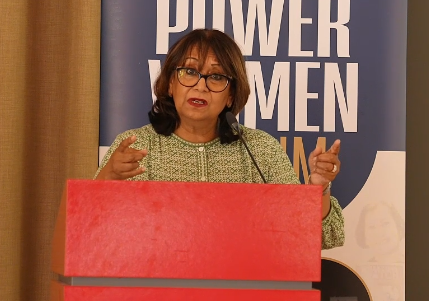
Cambridge, United Kingdom | 9 June 2026 – With a powerful call for women to move from participation to leadership, Baroness Sandy Verma, Member of the United Kingdom House of Lords, urged women to help define the future of artificial intelligence, investment, and global economic governance at the Global Power Women Forum (GPWF) Cambridge 2026.
The two-day Global Power Women Forum was convened by the Centre for Economic & Leadership Development (CELD) in strategic collaboration with Wolfson College, University of Cambridge, and hosted by Dr. Ibifuro Ken-Giami, Founder and Chief Executive Officer of CELD and Publisher of Amazons Watch Magazine. Held under the theme, “Women-Powered Economies: Capital, Trade & the Future of Economic Governance,” the Forum brought together influential women leaders, policymakers, diplomats, academics, business executives, and development partners from across the globe to advance dialogue, strengthen partnerships and promote innovative approaches to inclusive economic growth.
The Forum commenced on Day One with the GPWF Private Networking Mixer & Partnerships Dinner, an exclusive gathering that provided a platform for high-level networking, strategic conversations and relationship-building among international delegates, government representatives, and institutional stakeholders. Day Two featured the Opening Plenary: Women, Power & the Architecture of Global Economies, followed by the Insight-to-Action Roundtable, National Showcase – Women-Powered Economies in Action, Market Access, Trade & Capital Pathways, and culminated in the presentation of the Global Power Impact & Legacy Honours. Collectively, the sessions reinforced the central role of women in driving economic transformation, strengthening institutions and shaping the future of global governance.
Speaking during the Forum, Baroness Verma emphasised the unique strength women possess in bringing people together and influencing change, urging them to use their collective voice more effectively. Reflecting on the leadership of Her Excellency Ambassador Professor Olufolake AbdulRazaq, First Lady of Kwara State, she described women as natural conveners capable of uniting people across sectors and communities. “If we want advocacy to work for us, then we have got to be greater advocates. That means our voices must count,” she said.
Highlighting the rapid advancement of artificial intelligence, Baroness Verma warned that the technology risks reflecting only the perspectives of those who build it unless women and diverse communities become active participants in shaping its future. She observed that the overwhelming majority of the global technology industry remains led by men, making it essential for women to contribute to the design and governance of emerging technologies.
She further stressed that developing nations must define their own development priorities rather than adopt externally imposed solutions. Drawing on her experience in international development and energy policy, she encouraged governments to build strategies around local realities, long-term investment and the aspirations of their own people. “You choose the narrative, you decide on what your messaging is and you decide how your people are going to take it forward. Then the world will come along with you,” she stated.
Calling for a new global movement led by women, Baroness Verma urged participants to ensure women’s voices shape the governance of artificial intelligence and its impact on future generations. “Women lead this conversation. Women take charge. Women challenge those tech companies whose impact on our generations are unable to voice their fears,” she said, adding, “We have the ability. We just need the will.”
The Forum welcomed an exceptional assembly of global leaders, including Her Excellency Diana Nausėdienė, First Lady of the Republic of Lithuania; Her Excellency Ambassador Professor Olufolake AbdulRazaq, First Lady of Kwara State, Nigeria; Hon. Dr. Emma Kantema (MP), Namibia’s Minister of Gender Equality and Child Welfare; Her Excellency Mrs. Sara Amani, Ambassador of the Republic of Côte d’Ivoire to the United Kingdom; Mrs. Oghogho Gwabin Musa, Co-Founder of the Christopher Oghogho Foundation; Ann Cotton OBE, Founder and Chair Emerita of CAMFED; Rachel Blackburn MBE, Founder and Chief Executive Officer of US2U Consulting Ltd; Dr. Renuka Thakore, Founder and Chief Executive Officer of the Global Sustainable Futures Network CIC; Mrs. Nanna Sylla Coulibaly, Vice President of WIC Côte d’Ivoire; Mrs. Zeinabou Sidibé, Founder and Chief Executive Officer of Afrisends; Professor Tolullah Oni, Clinical Professor at the University of Cambridge and Founder of UrbanBetter; Joan Asante, Managing Director of The Asante Group; Professor Ronita Bardhan of the University of Cambridge; Professor Fawzia Rasheed of the London School of Hygiene & Tropical Medicine; Tililenji Phiri, Cambridge Commonwealth Scholar; Professor Elizabeth Garnsey, alongside numerous distinguished representatives from government, academia, business and civil society.
The Global Power Women Forum Cambridge 2026 concluded with a renewed commitment to strengthening international partnerships that advance women’s leadership, expand economic opportunities and foster more inclusive, resilient and prosperous societies across the world.
About the Global Power Women Forum (GPWF)
The Global Power Women Forum (GPWF) is a premier international leadership platform convened by the Centre for Economic & Leadership Development (CELD) in strategic collaboration with Wolfson College, University of Cambridge. The Forum brings together influential women leaders, policymakers, diplomats, business executives, academics and development partners from around the world to foster dialogue, promote strategic partnerships and champion transformative solutions that advance women’s leadership, economic inclusion and sustainable development.





Comments are closed.