
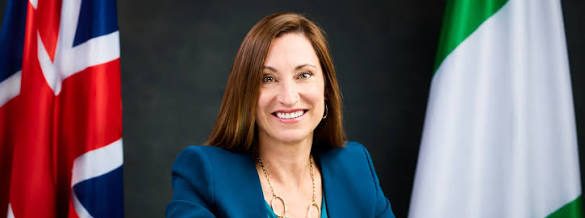
“I am delighted to be taking up the role of Deputy High Commissioner in Abuja. I look forward to getting to know this extraordinary country, meeting people from across Nigeria’s diverse communities, and building on the strong partnership that already exists between our two countries. Together, I hope we can continue creating opportunities for greater collaboration and links between our people in the years ahead.” — Vicky Seymour
For Vicky Seymour, her new posting in Abuja is about more than assuming a senior diplomatic position. It is an opportunity to deepen a relationship between two countries connected by history, trade, development, security, migration, education and millions of personal relationships. Appointed Deputy High Commissioner at the British High Commission in Abuja in August 2026, Seymour arrives with more than two decades of experience spanning diplomacy, international development, trade, climate, security and government service. Her career across Africa and other complex international environments has prepared her for a role at the centre of one of the United Kingdom’s most important bilateral relationships on the continent.
A Career Shaped by International Service
Seymour has built her career around some of the most complex questions facing governments and international organisations. Before entering the British civil service, she worked in the not-for-profit sector, including on issues connected to migration and refugees.
She subsequently developed extensive experience within the UK government, working across development, climate and environmental policy, humanitarian affairs, security and international relations.
That breadth is particularly relevant to her new assignment. Diplomacy today extends far beyond political negotiations. Economic growth, migration, climate change, security and development are increasingly interconnected, requiring diplomats to understand how decisions in one area affect another.
Africa Has Been a Major Part of Her Journey
Seymour brings considerable African experience to Abuja.
Her previous assignments have included leadership responsibilities in Uganda, the Democratic Republic of Congo and Mozambique. She served as Development Director in Mozambique, where she worked on development cooperation in a country navigating significant economic, social and environmental challenges.
She later took on a senior role leading the UK Foreign, Commonwealth & Development Office’s East Africa Department, a position she held from 2023.
Her experience across different African contexts means that Nigeria is not her first encounter with the continent’s complex political and development landscape.
But Nigeria presents a different scale.
With its large population, influential economy, regional significance and extensive international networks, Nigeria occupies a unique position in Africa. Understanding that complexity will be central to Seymour’s new role.
From Development to Trade Diplomacy
One of the most distinctive aspects of Seymour’s professional background is the combination of development and trade experience.
She previously led the FCDO’s Trade Diplomacy Department, giving her experience in an area that has become increasingly important to Britain’s engagement with African economies.
The UK–Nigeria relationship is already deeply connected through business and investment. British companies operate across sectors including financial services, energy, technology, infrastructure, education and professional services, while Nigerian businesses and entrepreneurs maintain increasingly important international connections.
Seymour’s background therefore places economic diplomacy firmly within her professional toolkit.
Her new role could see that experience intersect with Nigeria’s ambitions around investment, economic diversification and private-sector growth.
Experience Across Security and Climate
Her career has also taken her into areas where development intersects with security and environmental challenges.
Seymour has held senior responsibilities covering climate and environmental issues, as well as conflict, humanitarian affairs and security. Her international experience has included work connected to Afghanistan alongside her African assignments.
These experiences are increasingly relevant to Nigeria.
Climate change affects agriculture, livelihoods and migration. Security affects investment and economic activity. Migration affects both domestic development and international relations. Development itself increasingly depends on stability and resilient institutions.
The ability to see these issues as interconnected rather than isolated is becoming an essential part of modern diplomacy.
A People-Centred Approach to Diplomacy
Seymour’s statement following her appointment provides an important insight into how she views the role.
Rather than focusing solely on government-to-government relations, she specifically highlighted Nigeria’s diverse communities and the importance of links between people.
That is significant because the UK–Nigeria relationship exists at many levels.
It exists between governments, but also between universities, businesses, entrepreneurs, researchers, civil society organisations, artists, students and families. Nigerians form one of the UK’s most prominent diaspora communities, while Britain remains an important destination for Nigerian students, professionals and businesses.
Strengthening those connections can create opportunities that extend beyond traditional diplomacy.
Taking on the Abuja Role at an Important Moment
Seymour succeeds Gill Lever OBE, who completed her posting in June 2026.
Her arrival comes as both countries continue to navigate a changing global environment. Economic competition is intensifying, migration remains a major international issue, security challenges are evolving and countries are increasingly seeking partnerships that deliver tangible economic and social benefits.
For Nigeria and the UK, this creates both challenges and opportunities.
The relationship has the potential to expand beyond traditional development cooperation towards stronger trade, investment, technology, education, climate and innovation partnerships.
Seymour’s varied professional background gives her experience across many of these areas.
What Her Appointment Represents
For Seymour, Abuja represents another chapter in a career that has taken her through different countries, institutions and policy environments.
For the British High Commission, her appointment brings an experienced diplomat with substantial knowledge of Africa and a professional portfolio that spans development, trade, security and climate.
For Nigeria, it represents an opportunity to engage with a diplomat who has already spent years working across the continent and understands that effective international partnerships must respond to changing economic and social realities.
Her stated ambition is clear: to build on the existing relationship and create greater opportunities for collaboration between the people of both countries.
The measure of her tenure will ultimately be found not only in diplomatic meetings or official agreements, but in whether those relationships translate into stronger partnerships, new opportunities and deeper connections between Nigeria and the United Kingdom.
Amazons Watch Magazine Congratulates Vicky Seymour
The AWM team congratulates Vicky Seymour on her appointment as Deputy High Commissioner at the British High Commission in Abuja. We celebrate her extensive record of international service and leadership, particularly her experience across Africa, development, trade diplomacy, climate and security.
As she begins this new chapter in Nigeria, we wish her a successful and impactful tenure and look forward to seeing the partnerships, opportunities and connections that her leadership will help strengthen between the United Kingdom and Nigeria.




Comments are closed.