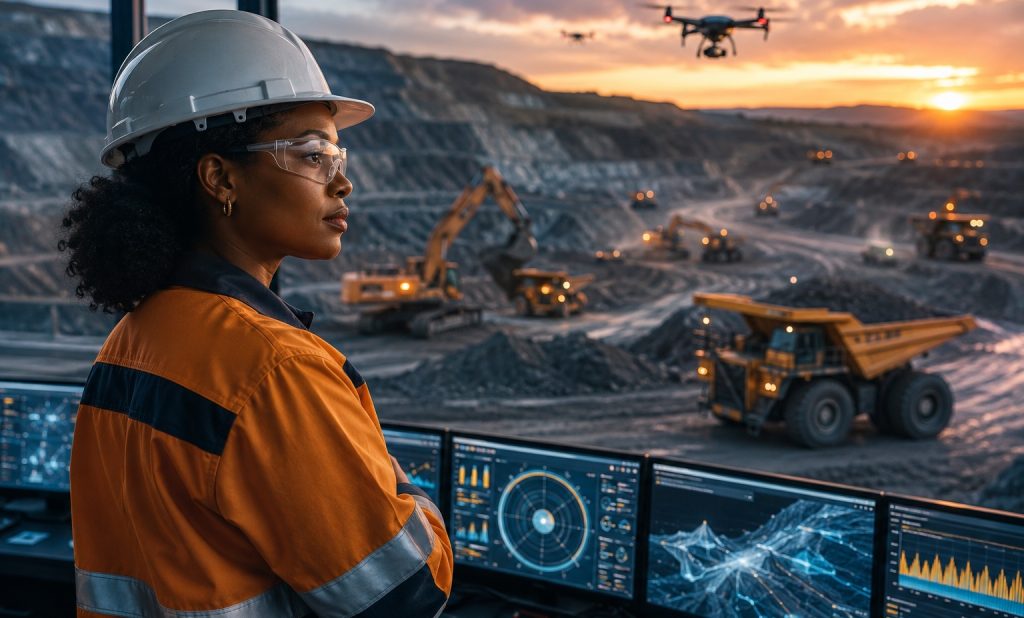
For generations, mining has been defined by physical strength, heavy machinery and demanding work in remote and underground environments. That image has influenced not only how mining is perceived, but also who is encouraged to pursue a career in the sector. Yet the industry is changing. Automation, artificial intelligence, remote operations, robotics and data analytics are creating a new mining environment in which technical expertise and digital skills are becoming just as important as physical strength. For women, this transformation could open doors to roles that were once difficult to access. As Alex Atkins, a Mining and Geotechnical Engineer and Non-Executive Director, observed: “Digital transformation is going to enable the greater inclusion of women and to give them more choice over how they can keep working in the industry once they have families.” Her observation points to a much bigger shift. The question is no longer whether women can work…
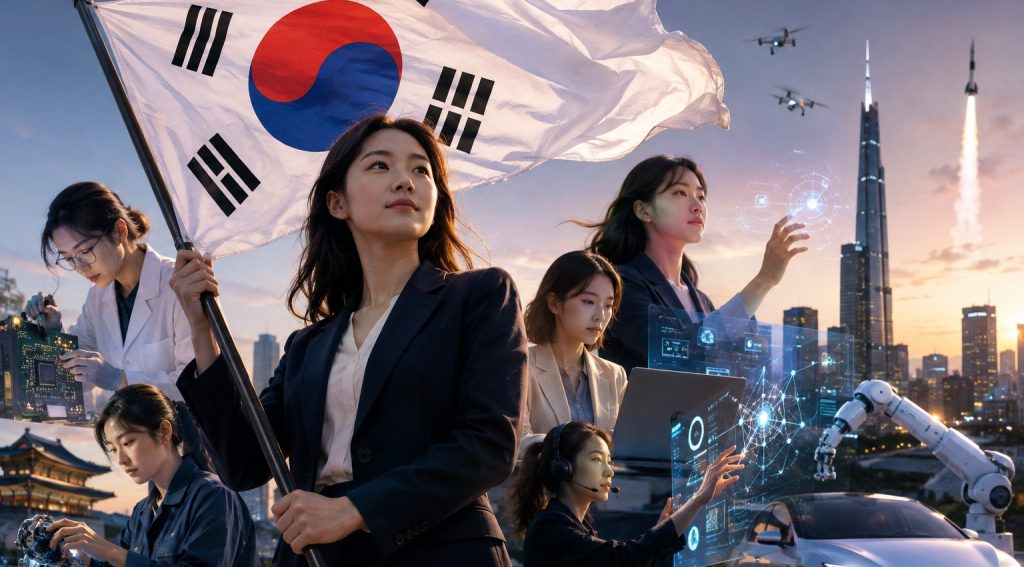
The Women Powering South Korea’s Next Technology Revolution
By Blossom Ukoha In Seoul, the future of technology is being built in places that look very different from one another: inside a global internet platform, a messaging ecosystem used by millions, an AI research laboratory, a venture capital firm backing AI native startups, a university lab working on explainable artificial intelligence, and the software division of one of the world’s largest automakers. What connects these spaces is increasingly the presence of women shaping what comes next. South Korea is already a global technology powerhouse, known for semiconductors, electronics, automobiles, telecommunications and increasingly artificial intelligence. Yet women remain underrepresented at the highest levels of the technology economy. Against that backdrop, a group of Korean women are occupying influential positions across platforms, AI research, digital transformation, entrepreneurship and investment. Their stories demonstrate that technology leadership is no longer confined to engineering laboratories or semiconductor factories. It increasingly encompasses the platforms people…
Why Women Must Be at the Center of Global Space Innovation
By Blossom Ukoha “The Earth is the cradle of humanity, but one cannot live in a cradle forever,” said Konstantin Tsiolkovsky. Today, as humanity stretches beyond that cradle into space, a more pressing question emerges: who is shaping this future, and whose voices are still missing? For decades, space exploration has symbolised human ambition, intelligence, and progress. Yet beneath this inspiring narrative lies a quieter truth. Women remain significantly underrepresented in the very systems that are defining the future of our planet and beyond. This absence is not just about inequality. It is about missed opportunities, incomplete solutions, and a future that risks being built without the full strength of human insight. The Power Women Bring to Space Innovation Women have always been part of the story of space, even when history failed to center them. From Valentina Tereshkova, who proved that women belong beyond Earth, to the countless scientists,…
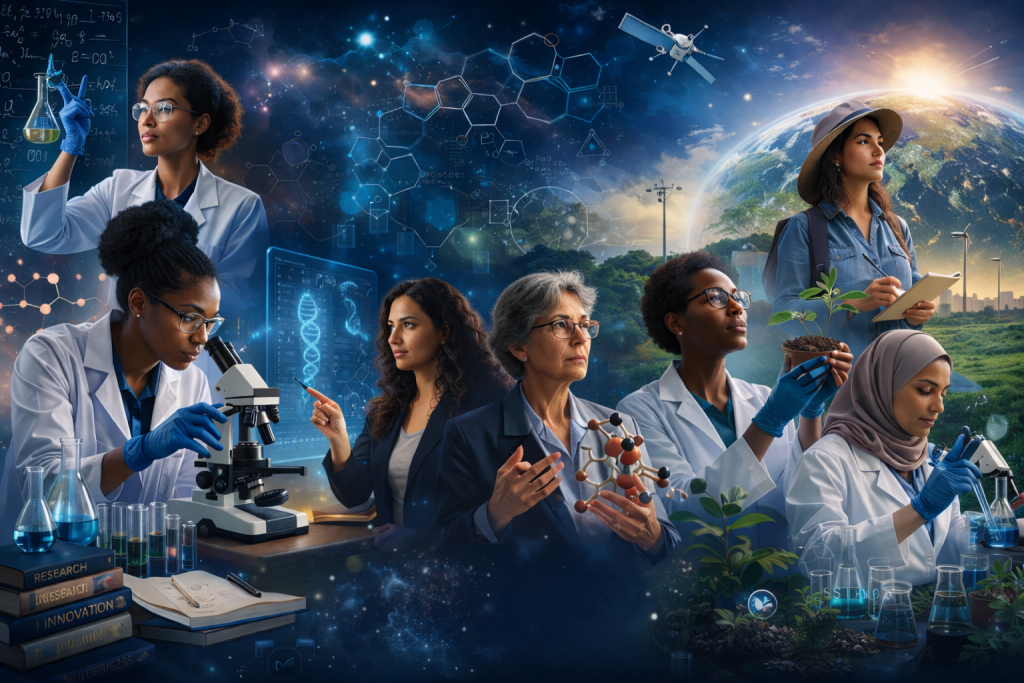
Lab Queens: 12 Female Researchers Driving Real World Impact
There is something powerful, almost poetic, about a woman in a lab coat, a lecture hall, or deep in the field, quietly shaping the future. Not for applause, not for recognition, but for impact. Across continents and disciplines, women are asking bold questions, challenging long-standing assumptions, and pushing the boundaries of knowledge. Yet even with this brilliance, the global research landscape still reflects a gap that cannot be ignored. Women make up roughly one third of the world’s researchers, despite representing about half of the global population and an increasing share of university graduates. In many regions, especially in parts of Asia, their presence in research remains significantly lower, while even in areas where participation is higher, leadership roles remain limited. In science, technology, engineering, and mathematics, women continue to face barriers that slow progression into senior academic positions and innovation leadership. The innovation ecosystem tells an even more complex…
National Aviation Day: The Untold Stories of Female Aircraft Engineers and Innovators
“We needed to be assertive as women in those days—assertive and aggressive—and the degree to which we had to be that way depended on where you were. I had to be in the front row.” — Katherine Johnson, NASA mathematician. Every August 19th, the world pauses to celebrate National Aviation Day, a holiday first proclaimed by U.S. President Franklin D. Roosevelt in 1939 to honor the birthday of Orville Wright, one of the pioneers of human flight. Over the decades, the day has grown into a global moment of reflection on aviation’s remarkable progress; from fragile wood-and-cloth planes to jetliners, spacecraft, and futuristic drones. Yet, within this inspiring story, one chapter has often been underwritten: the women whose genius, grit, and innovation in aircraft engineering and design made many of these milestones possible. While we often celebrate daring female pilots like Amelia Earhart and Bessie Coleman, the engineers, the women…
Her Voice in Science: Let’s Celebrate a Decade of Progress
“The future of our world is only as bright as the future of our girls.” – Michelle Obama As we commemorate the tenth International Day of Women and Girls in Science on February 11, 2025, we reflect on the strides made and the challenges that remain in amplifying women’s voices in STEM (Science, Technology, Engineering, and Mathematics). This year’s theme, “Unpacking STEM Careers: Her Voice in Science,” underscores the critical role women play in driving scientific innovation and the importance of inclusive representation. A Decade of Growth: Women in STEM Over the past decade, the number of women in STEM occupations has doubled, surpassing one million. This significant achievement is a testament to the dedication of organizations and initiatives aimed at bridging the gender gap in these fields. However, despite these advancements, women still comprise only 29% of the STEM workforce. In engineering, the disparity is even more pronounced, with…
“Quality Waters drives economic development and supports healthy ecosystems”, María Alexandra Tamayo, Biomedical Engineer
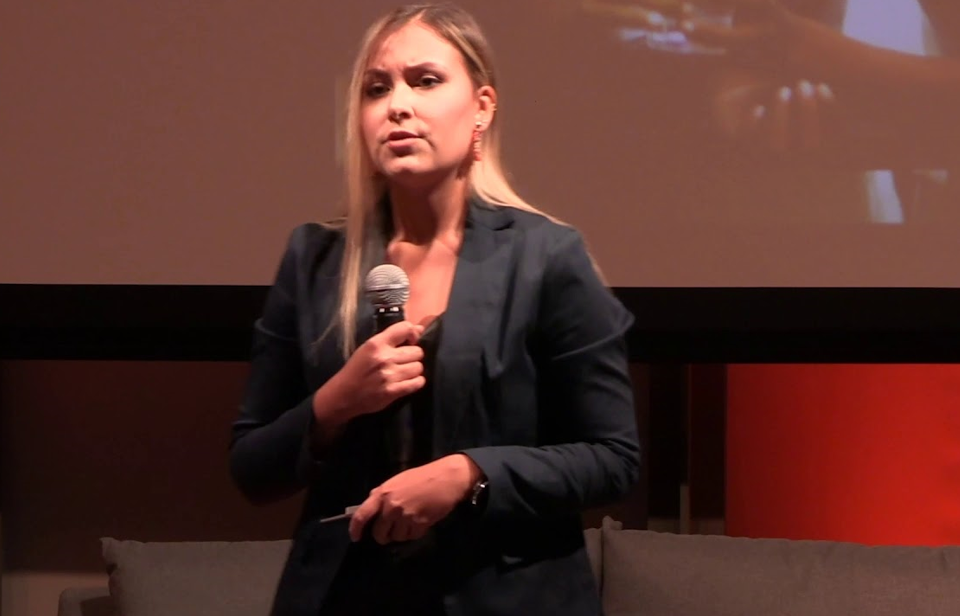
Maria Alexandra Tamayo is a Colombian biomedical engineer, inventor and founder of NanoPro, a device capable of eliminating fungi, viruses, and bacteria in water without affecting its flavour, smell, and colour. Because of her invention, she was selected as one of the winners in the Latin American Innovators Under 35 from the MIT Technology Review LATAM edition. Maria has been selected as one of the top ten speakers for the CELD and Amazon Watch Magazine Women in STEM Symposium. Her speech was inspiring and revealed a simple truth that we often overlook: the relevance of clean, quality water in our development and sustainability on Earth.