By Blossom Ukoha
“Leadership does not always begin in a boardroom, parliament or presidential office. Sometimes, it begins in a classroom.”
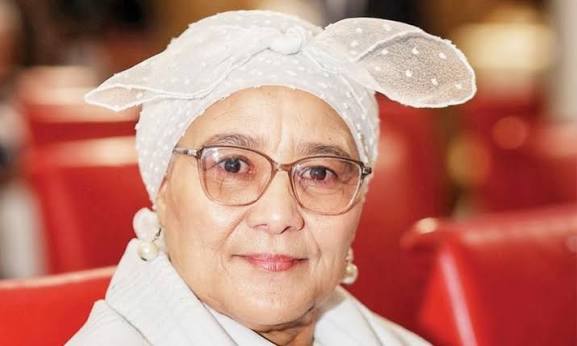
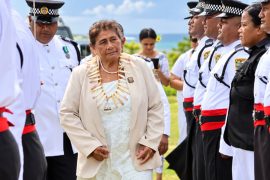
For Lucia Witbooi, those words reflect more than a belief about leadership. They describe her own journey, from a rural Namibian classroom, where she spent nearly three decades shaping young minds, to the country’s second-highest political office.
On 22 March 2025, President Netumbo Nandi-Ndaitwah appointed Witbooi as Namibia’s Vice President, creating a historic female leadership pairing at the top of the country’s government. For the first time in Namibia’s history, the presidency and vice presidency were simultaneously occupied by women.
But Witbooi’s significance extends beyond the symbolism of her appointment. Her journey from a rural teacher to a senior national leader offers a compelling portrait of how education, community service and parliamentary experience can evolve into political leadership.
From ǂGabes to the Classroom
Witbooi was born on 21 March 1961 in Gabes, now known as ǂGabes, near Karasburg in what is today Namibia’s ǁKharas Region. She was one of twelve children born to Willem and Anna Witbooi.
Her family moved to Gibeon in the Hardap Region in 1967, where they farmed, while Witbooi later moved to Keetmanshoop for her education. She completed Grade 12 at Suiderling Senior Secondary School in 1979 before pursuing professional qualifications in education. Her studies included a Higher Primary Education Certificate from the University of Namibia, a Diploma in Education from Azaliah College for Further and Higher Education and a Higher Diploma in Education from the University of Port Elizabeth.
Education would become the foundation of her professional life.
Witbooi spent approximately 27 years as a teacher, including serving as Head of Department at Dr. W.M. Jod Primary School in Gibeon. She also served as the Gibeon Schools cluster convenor for counselling between 2003 and 2009.
That background matters. Before she entered the national political arena, Witbooi was already working in a profession built around listening, mentoring, problem-solving and developing people.
From Teacher to Parliamentarian
Witbooi entered politics through Namibia’s ruling SWAPO party and was elected to the National Assembly in 2009. She remained in Parliament until March 2025, building more than a decade of legislative and public-policy experience before her elevation to the vice presidency.
Her parliamentary career exposed her to some of the country’s most important policy areas. She served on committees dealing with foreign affairs, defence and security, gender and family affairs, and human resources and social and community development. She also became Deputy Chairperson of the Information and Communications Technology Committee and took on responsibilities within the Commonwealth Parliamentary Association and Commonwealth Women Parliamentarians.
Her transition from educator to legislator was therefore not a departure from public service. It was an expansion of it.
The classroom gave her proximity to communities and families. Parliament gave her a platform to participate in national policy. Government ministries subsequently gave her executive experience.
Experience Before the Vice Presidency
Witbooi’s political progression included two deputy ministerial appointments.
She served as Deputy Minister of Gender Equality and Child Welfare from 2015 to 2020, before becoming Deputy Minister of Home Affairs, Immigration, Safety and Security from 2023 to 2025.
These positions placed her at the intersection of some of Namibia’s most sensitive social and administrative issues, from gender and child welfare to immigration, security and the functioning of the state.
By the time President Nandi-Ndaitwah appointed her Vice President, Witbooi was therefore bringing decades of experience in education, community engagement, legislation and executive government.
Her rise was gradual rather than sudden.
A Vice Presidency Built Around Inclusion
Perhaps the clearest indication of what the new administration expected from Witbooi came with the portfolio assigned to her office.
The functions relating to marginalised communities and people with disabilities were placed under the Vice President’s Office, with the intention of giving these issues greater attention and coordination across government. Namibia’s Presidency describes the vice president’s office as having a particular focus on marginalised communities and war survivors.
This has become a defining feature of Witbooi’s early vice-presidential work.
Her public engagements have highlighted social inclusion, accessible services, disability rights and the concerns of indigenous communities. In reflecting on her first year in office, Witbooi identified the advancement of the rights and welfare of people with disabilities and indigenous communities among her key areas of focus.
It is a portfolio that connects closely with her career-long emphasis on people.
Remembering the Marginalised
Witbooi’s responsibilities also extend into Namibia’s difficult history.
The country’s discussions around the 1904–1908 genocide of Herero and Nama communities remain an important part of national conversations about historical justice, reconciliation and reparations. Witbooi has been associated with Namibia’s continued call for genocide reparations from Germany.
For a leader whose roots are in southern Namibia, questions of history, identity and cultural memory carry particular resonance.
Her approach suggests that national development cannot simply be measured through economic growth or infrastructure. It must also ask who is included, whose history is remembered and who benefits from the country’s progress.
Looking Beyond Representation
Witbooi’s appointment is undeniably a milestone for women in African politics. Yet representation alone does not guarantee transformation.
The more important question is what women in positions of authority are able to do with that power.
For Witbooi, some of the answers are emerging through her focus on communities that have historically struggled to receive adequate attention. Her office has emphasised inclusion, coordination and ensuring that national programmes respond to the needs of citizens who may otherwise remain at the margins.
That makes her story particularly relevant to the broader conversation about women and political leadership.
A woman reaching the highest levels of government is significant. A woman using that position to widen access to government is arguably more significant.
A Broader Vision for Namibia
Witbooi’s leadership agenda also touches on Namibia’s economic and technological future.
Issues surrounding youth empowerment, education, science and innovation, green hydrogen and the responsible development of the country’s emerging oil and gas sector have formed part of the broader policy environment in which she operates.
The challenge is one shared by many resource-rich and developing economies: how can national wealth translate into opportunities for ordinary citizens rather than deepen existing inequalities?
For Witbooi, inclusion appears to be central to that question.
The same principle applies to young people. Namibia’s investments in youth development and education raise a larger issue about whether today’s young citizens will have the skills, opportunities and economic pathways necessary to participate meaningfully in the country’s future.
The Teacher Still at the Centre
There is something particularly striking about Witbooi’s journey.
Her most important professional identity was formed not in a political office, but in a classroom.
For 27 years, she worked in education before entering Parliament. That experience may help explain the people-centred character often associated with her public leadership.
Teaching requires patience. It requires communication. It requires understanding that progress does not happen at the same pace for everyone.
Those qualities can be valuable in politics, where national transformation also depends on bringing different communities, interests and generations into the same conversation.
A New Chapter for Namibia’s Women
Lucia Witbooi’s rise does not erase the challenges facing women in African politics. Nor does one historic appointment automatically establish gender equality.
But it creates an important image of what political leadership can look like.
A rural girl becomes a teacher.
A teacher becomes a parliamentarian.
A parliamentarian becomes a ministerial leader.
And eventually, she enters the vice presidency.
Her story is therefore not simply about reaching the top. It is about the many stages of service that can precede it.
As Namibia continues under President Netumbo Nandi-Ndaitwah’s administration, Witbooi’s vice presidency will be measured not only by its historic symbolism but by the lives touched by the policies and communities placed within her office’s mandate.
For the women and girls watching her journey, that may be the most powerful message of all: leadership does not always begin in a boardroom, parliament or presidential office.
Sometimes, it begins in a classroom.
And sometimes, the woman teaching the next generation is quietly preparing herself to lead a nation.



Comments are closed.