

By Blossom Ukoha
“Take care of your body. It’s the only place you have to live.” — Jim Rohn
By 10:00 a.m., many professional women have already responded to dozens of emails, attended a virtual meeting, reviewed reports and solved problems for everyone except themselves. By 6:00 p.m., they have barely taken 1,000 steps. Their minds are exhausted, yet their bodies have hardly moved. Ironically, the modern workplace has made women more productive than ever, yet more sedentary than at any other point in history.
For many women, this is not an occasional busy day. It has become a way of life. The alarm rings before sunrise, emails begin arriving before breakfast, meetings fill the calendar, deadlines compete for attention and, before you know it, another day has slipped away. Somewhere between leading teams, caring for family, responding to messages and chasing ambitious goals, one important person is often forgotten. You.
If you have ever stood up after hours at your desk and felt your back ache, your neck stiffen or your legs seem unusually heavy, you are certainly not alone. Modern success often comes with an unexpected price: long hours of sitting. While technology has made work more efficient, it has also made many of us far less active than our bodies were designed to be.
The good news? You do not need an expensive gym membership or two hours of free time each day to feel better. Sometimes, the biggest transformation begins with the smallest movements. That is the idea behind the 21 Day Desk Job Reset, a simple commitment to move a little more, every single day.
Why Sitting Is the New Silent Challenge
Most office professionals spend between seven and ten hours sitting each day. Whether you are working from a corporate office, a home workspace or constantly travelling between meetings, prolonged sitting affects far more than your posture.
It can reduce circulation, tighten muscles, lower energy levels, contribute to weight gain and increase the risk of chronic conditions such as heart disease and diabetes. It also affects mental wellbeing. That afternoon slump, difficulty concentrating or unexplained irritability may have less to do with your workload and more to do with the fact that your body has barely moved.
Your body was created for movement, not marathon sitting sessions. Some of the world’s most accomplished women understand this well. Former First Lady Michelle Obama has long prioritised exercise despite the demands of public life, often describing it as essential to maintaining her physical and mental wellbeing. Likewise, Robin Arzón, Vice President of Fitness Programming at Peloton and a former corporate lawyer, encourages busy women to see movement not as another task on a long to do list but as a daily investment in their health, confidence and performance.
The Beauty of Twenty One Days
If spending years undoing the effects of a sedentary lifestyle sounds overwhelming, here is the encouraging news. Meaningful change does not have to begin with dramatic workouts or expensive fitness programmes. Sometimes, all it takes is twenty one days of intentional movement to reset your routine.
Why twenty one days?
While forming lasting habits often takes longer, three weeks is an achievable period to begin creating a healthier routine. Twenty one days is long enough to notice positive changes but short enough to avoid feeling overwhelmed.
Think of it as pressing the reset button, not striving for perfection but creating consistency.
The goal is not to become a fitness enthusiast overnight. It is simply to remind your body that movement belongs in your working day. The women who lead demanding organisations understand that consistency matters more than perfection. They schedule movement with the same commitment they give to meetings, presentations and deadlines because they know that protecting their health is essential to sustaining their success.
Week One: Wake Up Your Body
The beauty of this reset is its simplicity. Rather than asking you to overhaul your entire lifestyle overnight, it breaks the journey into three manageable stages, allowing small habits to become lasting ones.
The first week is about awareness.
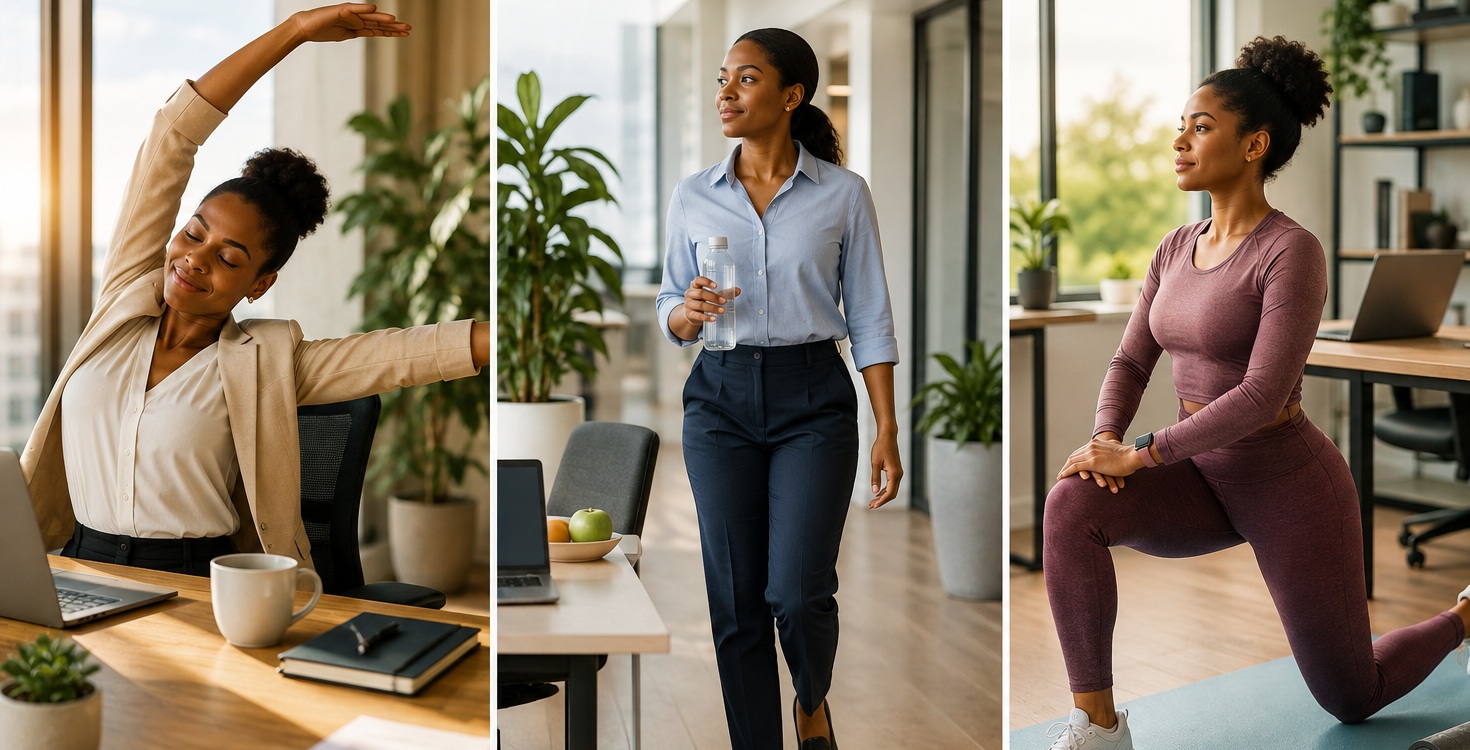
Instead of remaining seated for hours, make it a personal rule to stand up every hour, even if only for two or three minutes. Stretch your arms overhead, roll your shoulders backwards and gently rotate your neck.
Walk while taking phone calls whenever possible. Instead of sending a message to a nearby colleague, walk over and have the conversation in person. Choose the stairs instead of the lift whenever practical.
These tiny actions may seem insignificant, but together they improve circulation, reduce stiffness and increase alertness.
Your body begins to remember what movement feels like.
Week Two: Build Movement Into Your Routine
By the second week, your hourly movement breaks will begin to feel more natural.
Now it is time to introduce slightly more intentional activity.
Take a brisk ten minute walk during lunch instead of remaining at your desk. Stretch your hips after long meetings. Tighten your abdominal muscles while sitting to improve posture. If you work from home, dance to your favourite song while preparing lunch or making coffee.
Movement does not always have to look like exercise.
Sometimes it simply looks like choosing activity instead of convenience. Former New Zealand Prime Minister Jacinda Ardern has spoken about the importance of walking and spending time outdoors to maintain perspective and wellbeing during some of the most demanding periods of her leadership. Her example reminds us that caring for ourselves is not a distraction from leadership. It is often what makes better leadership possible.
Week Three: Make Movement Part of Your Lifestyle
The final week focuses on turning healthy choices into lasting habits.
Consider scheduling movement into your diary just as you schedule meetings. Block fifteen minutes in the morning for gentle stretching or yoga. End your workday with a relaxing walk around your neighbourhood. Invite a colleague to become your accountability partner.
Most importantly, listen to your body.
Some days you may feel energetic enough for a longer workout. Other days, a few stretches and a short walk may be exactly what you need.
Progress is not measured by intensity. It is measured by consistency.
Small Habits, Big Rewards
By the end of three weeks, you may not have transformed your body completely, but you will almost certainly have transformed your relationship with movement. That is where the real rewards begin.
Many professional women believe they need dramatic lifestyle changes before they can become healthier. The truth is often the opposite.
Standing during virtual meetings, stretching between presentations, walking after lunch or parking slightly farther away may seem like minor decisions, but over time they can improve posture, reduce stress, boost energy and sharpen concentration.
Movement also influences confidence. When your body feels stronger, your mind often follows. You walk into meetings differently. You think more clearly. You feel more capable of handling the demands of leadership.
Olympic champion Dame Kelly Holmes, now a leading advocate for mental health and workplace wellbeing, frequently speaks about the connection between movement, resilience and confidence. Her message is simple. When women invest in their physical wellbeing, they also strengthen their emotional resilience and their ability to perform under pressure.
Success is not only about what you accomplish professionally. It is also about having the health to enjoy the life you are building.
Permit Yourself to Pause
Perhaps the greatest lesson of the 21 Day Reset has nothing to do with exercise. It is about permission, the permission to prioritise your wellbeing without guilt.
Professional women are experts at caring for everyone else. They lead organisations, mentor colleagues, raise families and support communities. Yet many struggle to give themselves the same care they so freely offer others.
Choosing to move your body is not a luxury or a sign of laziness. It is an investment in your wellbeing, your productivity and your future. The most successful women understand that burnout should never become a badge of honour. Caring for yourself is not selfish. It is one of the most important leadership decisions you can make.
The next time your calendar feels impossibly full, remember this. Taking five minutes to stretch, walk or breathe deeply is not time lost. It is energy gained.
Your 21 Day Challenge Starts Today
Imagine how you could feel three weeks from now. Less stiffness. More energy. Better focus. Improved posture. Greater confidence.
The transformation does not begin with running a marathon or joining an expensive fitness programme. It begins with one decision, to stand up, take a few steps and choose yourself.
Women like Michelle Obama, Robin Arzón, Jacinda Ardern and Dame Kelly Holmes have shown that even in the busiest seasons of life, making time to move is not a luxury. It is an investment in sustained performance and wellbeing. They understand that caring for the body that carries their ambitions is just as important as achieving those ambitions.
Your inbox will still be there tomorrow. The meetings will still fill your calendar. The deadlines will continue to demand your attention. But imagine showing up to each one with renewed energy, greater clarity and the confidence that comes from knowing you have also taken care of yourself.
Because the healthiest version of you is also the most powerful version of you. Every remarkable journey, including the journey back to wellness, begins with a single step.





Comments are closed.