

Between demanding careers, family responsibilities, business meetings and the many little things that fill a woman’s day, eating well can easily become an afterthought. Breakfast becomes a quick cup of tea, lunch is whatever is available, and dinner arrives when the body is already exhausted.
Sound familiar?
For women approaching or navigating midlife, however, what goes on the plate matters more than we sometimes realise. One nutrient deserves particular attention: protein.
Protein is not just for athletes, gym enthusiasts or women trying to lose weight. It plays an important role in maintaining muscle, supporting healthy ageing, keeping us satisfied after meals and helping the body function properly. And the beautiful thing is that getting enough does not require expensive ingredients or hours in the kitchen.
Why Protein Matters as Women Grow Older
Our bodies change as we age, and the years surrounding menopause can bring noticeable differences in muscle mass, body composition and energy levels. Declining oestrogen levels contribute to changes in body fat distribution, while ageing can gradually reduce muscle mass and strength.
This is where protein becomes especially valuable.
Protein supplies the amino acids the body needs to maintain and repair muscle tissue. When combined with regular strength-building activities, it helps women preserve strength, support mobility and maintain greater independence as they grow older.
READ ALSO:
Seven Business Lessons to Learn from Motherhood
There is also the everyday benefit. Protein-rich foods generally take longer to digest than many refined carbohydrates and can help us feel satisfied for longer. Pairing protein with fibre-rich foods and healthy fats can support steadier blood sugar levels, although it cannot guarantee freedom from afternoon fatigue.
For a busy woman, that can mean making more satisfying food choices instead of reaching for another sugary snack an hour after lunch.
The goal is not to eat perfectly. It is to nourish your body consistently.
How Much Protein Does a Woman Really Need?
The basic recommended dietary allowance for a healthy adult is approximately 0.8 grams of protein per kilogram of body weight daily. Some women, particularly those who are physically active or older, may benefit from higher amounts depending on their individual needs.
For many healthy midlife women, a practical starting point is to include a substantial protein source at every main meal rather than consuming most of it at dinner.
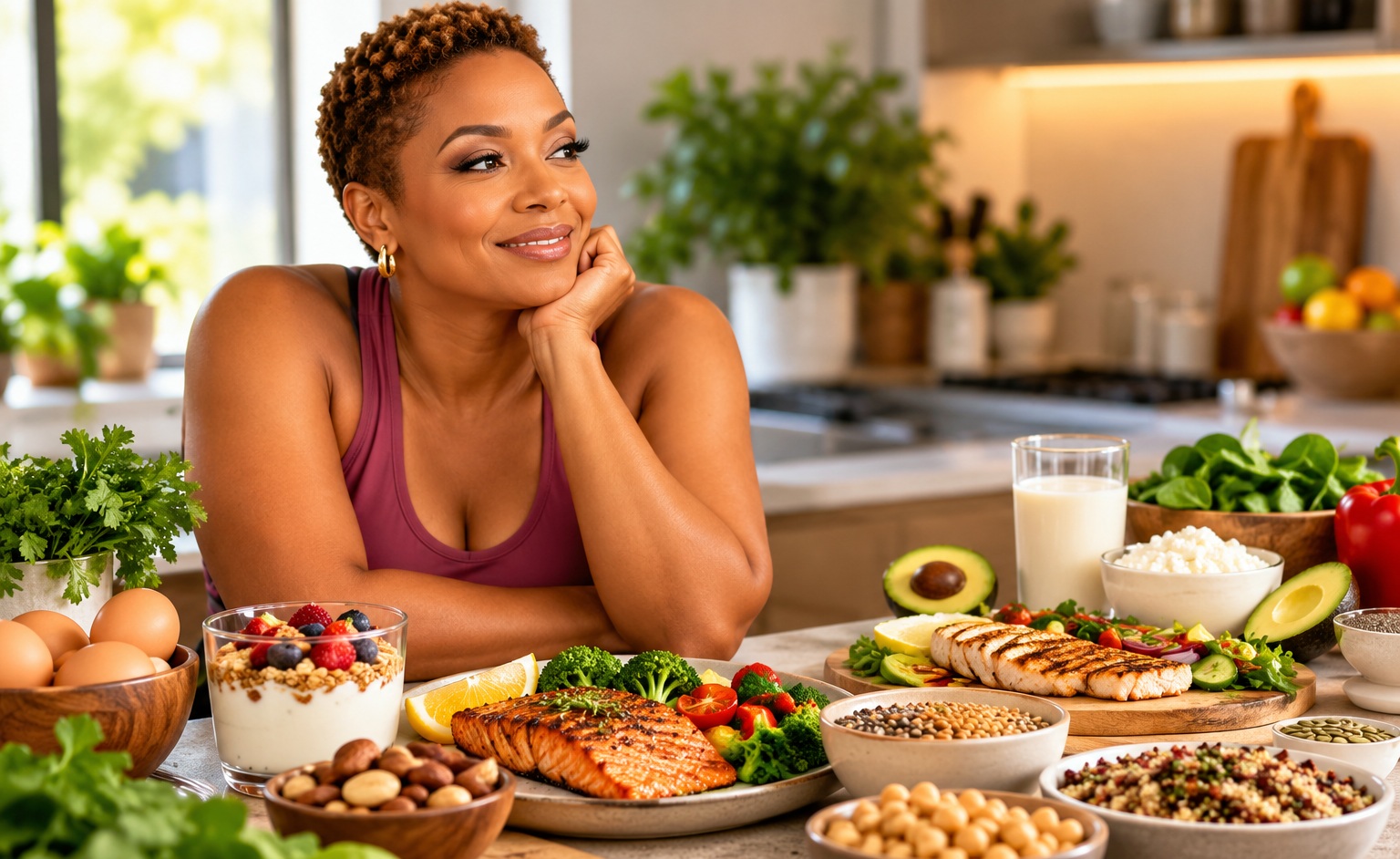
Eggs, fish, chicken, milk, yoghurt, beans, lentils, soy products and lean meat are all useful options. You do not have to rely on protein powders or expensive speciality foods to make meaningful improvements.
However, individual needs differ. Women with kidney disease or other medical conditions affecting dietary protein should seek personalised advice from a qualified healthcare professional or registered dietitian.
Simple Protein-Rich Meals for Your Busy Schedule
The secret is to make nutritious eating fit your life, rather than creating another demanding routine you struggle to maintain.
Start your morning with something more satisfying.
If your breakfast usually consists of tea and bread, consider adding boiled eggs, an omelette or a serving of plain yoghurt. You could also prepare oats with milk and yoghurt, adding groundnuts or seeds for extra nourishment.
For a familiar Nigerian breakfast, moi moi with eggs or a side of fish can provide a satisfying protein-rich option. Beans and pap can also contribute protein, particularly when prepared with milk or paired with another protein source.
Make lunchtime work for you.
You do not need an elaborate lunch to eat well. Rice with beans and fish, boiled yam with egg sauce, or a portion of eba with vegetable soup containing fish or lean meat can all contribute to your daily protein intake.
If you work in an office, consider preparing extra chicken, fish or beans during dinner so you have something ready for the following day. Leftovers can be a gift to your future self on a particularly demanding morning.
Keep dinner simple and nourishing.
After a long day, nobody wants to spend hours cooking. Try grilled fish with vegetables, chicken with rice and greens, or beans with plantain and a portion of fish.
You can also prepare a pot of beans or stew in advance and refrigerate or freeze portions for later. A little planning can make the difference between a nourishing meal and skipping dinner altogether.
Choose snacks that do more for you.
When hunger strikes between meetings, reach for boiled eggs, plain yoghurt, roasted groundnuts, milk or roasted chickpeas. These can help bridge the gap between meals while contributing useful nutrients.
Remember, snacks complement your meals; they do not have to replace them.
The Breakfast Habit Worth Rethinking
Many women focus on eating more protein at dinner while overlooking breakfast. Yet distributing protein across meals can make it easier to meet daily needs and support muscle maintenance.
You do not need to count every gram to get started. Simply ask yourself: Where is my protein source in this meal?
That small question can gradually transform your eating habits.
It is equally important to remember that protein works best as part of a balanced lifestyle. Vegetables, fruits, whole grains, adequate hydration, quality sleep and regular physical activity all contribute to overall wellbeing. Strength training at least twice a week, when appropriate for your health and fitness level, can be particularly helpful for maintaining muscle.
Nourishing the Woman You Are Becoming
Midlife is not a season to fight your body. It is an opportunity to understand it better and respond to its changing needs with greater care.
You do not have to overhaul your kitchen overnight, buy expensive supplements or prepare elaborate meals to begin. Start with one change: add eggs to breakfast, include beans at lunch or prepare fish for dinner.
Small, consistent choices can become powerful habits over time.





Comments are closed.