

By Blossom Ukoha
“I look forward to leading the nation and empowering our people, especially the women of Tuvalu.”
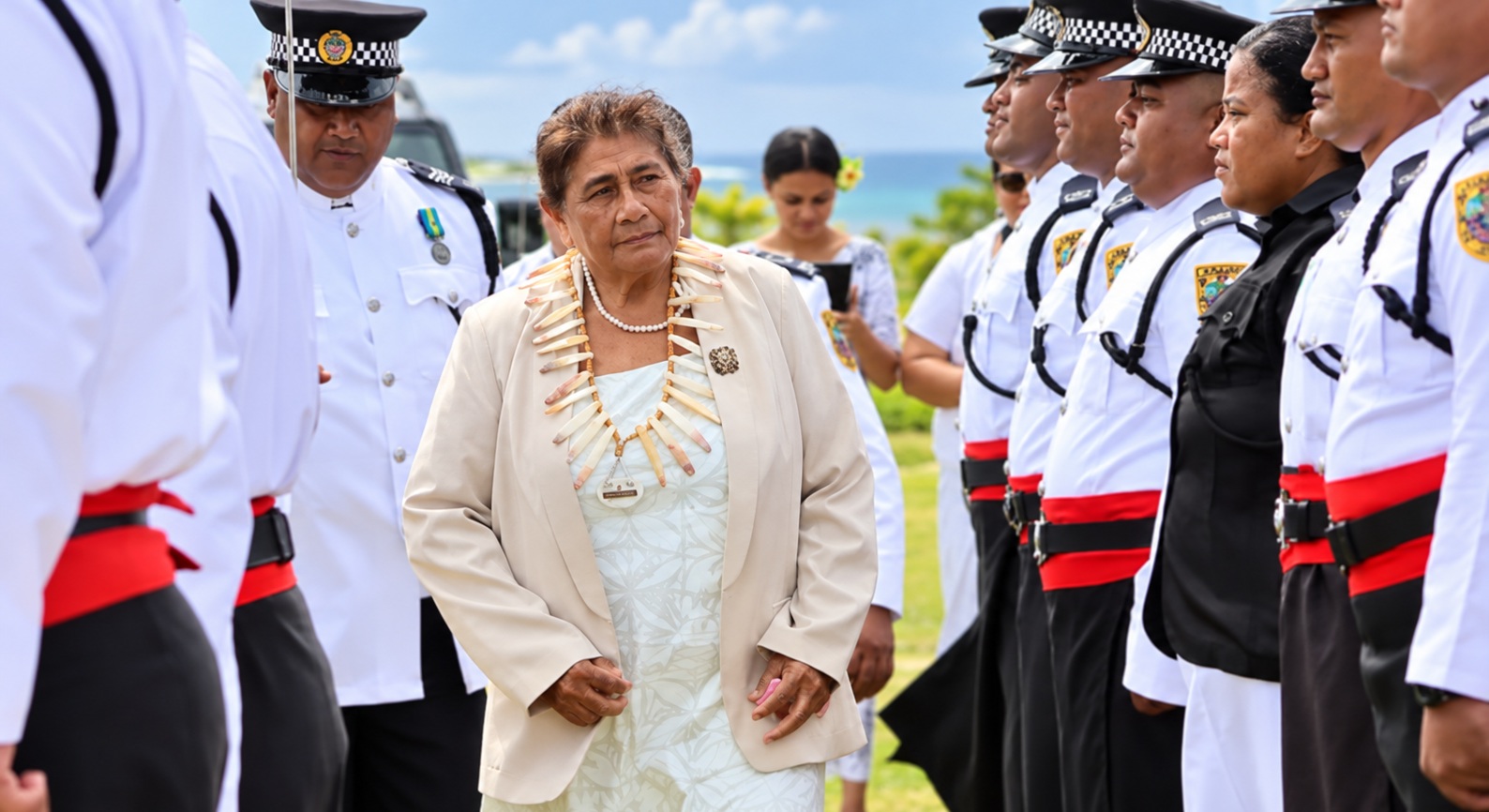
With these words, Temukisa Auina Penehuro Hauma began a historic chapter in Tuvalu’s leadership. Sworn in on 30 September 2026, Hauma became the Pacific island nation’s first woman Governor-General, beginning a four-year term as the representative of King Charles III. Her appointment marks a significant milestone in Tuvalu’s constitutional history and brings renewed attention to women’s representation in public leadership across the Pacific.
A Historic Appointment
At 71, Hauma took the Oath of Office and Oath of Allegiance at Niutao Hall in Funafuti, Tuvalu’s capital. Acting Chief Justice Sir John Muria administered the ceremony, which included a Guard of Honour and a General Salute by the Tuvalu Police Service.
The timing made the occasion particularly meaningful. Her inauguration took place on the eve of Tuvalu’s 48th Independence Day, celebrated on 1 October. As the nation prepared to commemorate its independence, it also witnessed a historic change in representation at one of its highest constitutional offices.
Since gaining independence in 1978, Tuvalu has had 10 substantive governors-general, all men until Hauma’s appointment. Teniku Talesi had previously served in an acting capacity, but Hauma is the first woman to hold the position substantively. She succeeds Sir Tofiga Vaevalu Falani.
Prime Minister Feleti Teo described the appointment as “a historic moment for Tuvalu, as she becomes the first woman to hold this position.”
Her appointment represents more than a change in officeholder. It demonstrates that women can occupy prominent constitutional positions and contribute to the institutions responsible for representing and serving their nations.
From Education to National Leadership
Hauma’s journey to the Governor-General’s office reflects decades of professional and public service. With family connections to the islands of Vaitupu and Nanumaga, she brings more than 30 years of experience in education, including 12 years as a headmistress, or school principal.
She holds a Bachelor of Education from the University of the South Pacific and a Master of Business Administration. Her educational and management qualifications complement a career built around learning, institutional responsibility and service to communities.
Education is a foundation for national development, shaping the knowledge, confidence and opportunities available to future generations. As an educator and school leader, Hauma worked within a sector that influences how young people prepare for their futures. Her professional background also illustrates how leadership can develop through years of service outside conventional political pathways.
Her appointment offers an important reminder that experience gained in classrooms, institutions and communities can contribute to leadership at the highest levels of public life.
A Commitment to Women’s Advancement
Since 2016, Hauma has served as President of the Tuvalu National Council of Women, maintaining a longstanding connection to women’s development and representation.
Women’s organisations provide platforms for advocacy, leadership development and engagement with institutions that shape public policy and community wellbeing. Hauma’s experience in this role places her within efforts to ensure that women’s concerns and contributions are recognised in national life.
She has also contributed to initiatives involving the review of Tuvalu’s Constitution and work towards establishing a Tuvaluan dictionary. These activities reflect her involvement in questions of governance, national identity and cultural preservation.
Her background therefore extends beyond education into women’s advocacy and national initiatives. These experiences provide important context for her statement that she intends to empower the women of Tuvalu.
Her new position offers a visible platform from which women’s participation in public life can receive greater recognition. However, lasting progress also depends on ensuring that girls and women have access to education, economic opportunities, institutional support and meaningful participation in decision-making.
Understanding the Governor-General’s Role
Tuvalu is a constitutional monarchy, with King Charles III serving as head of state. The Governor-General represents the monarch in the country and performs constitutional and ceremonial duties. The monarch appoints the Governor-General on the advice of the Prime Minister, and the office generally operates in accordance with the advice of the elected government, subject to the Constitution.
The Governor-General is distinct from the Prime Minister, who leads the government. Hauma’s appointment does not make her Tuvalu’s head of government; rather, she assumes the constitutional role through which the monarch is represented.
Based at Government House in Funafuti, the Governor-General participates in official ceremonies and carries out responsibilities defined by Tuvalu’s constitutional arrangements. Her position places her among the country’s most prominent public representatives.
Understanding this distinction helps explain the significance of her appointment: she has entered an office central to the country’s constitutional identity, becoming the first woman to hold it substantively.
What Her Appointment Means for Women in the Pacific
Hauma’s achievement contributes to a broader discussion about women’s leadership across the Pacific. Women already play important roles in education, community development, public administration, advocacy and economic life, but their contributions have not always been reflected in representation at the highest levels of public institutions.
Her appointment gives girls and young women in Tuvalu a visible example of a woman assuming one of the country’s most prominent constitutional responsibilities. Her career also demonstrates that leadership can emerge from professional expertise, sustained service and participation in community organisations.
Representation alone, however, cannot eliminate the barriers women face. Meaningful progress requires supportive institutions, access to opportunities, recognition of women’s expertise and pathways for girls to develop their ambitions without discrimination.
Hauma’s stated commitment to empowering women makes these issues particularly relevant. Her tenure will provide an opportunity to connect the symbolism of her appointment with the responsibilities of public service and the values she has expressed.
For women across the Pacific and beyond, her journey reinforces the importance of recognising different pathways to leadership and creating institutions where women can contribute fully.
Conclusion
Temukisa Auina Penehuro Hauma’s appointment brings together personal achievement and national history. From more than three decades in education to her leadership of the Tuvalu National Council of Women, her career reflects a sustained commitment to professional service and women’s advancement.
As Tuvalu’s first woman Governor-General, she begins her four-year term at a significant moment in the nation’s history. Her words about leading the nation and empowering women express an ambition that reaches beyond the distinction of being first.
Amazons Watch Magazine congratulates Temukisa Auina Penehuro Hauma on her historic appointment. Her journey is a reminder that women belong in every sphere of public leadership and that opening new pathways today can expand what future generations believe is possible.





Comments are closed.