“Health is a fundamental human right.” – World Health Organization A pregnant woman arrives at her first antenatal appointment feeling healthy and excited about the future. She has no symptoms, no pain, and no reason to believe anything is wrong. Yet, without knowing it, she is living with hepatitis B, a silent viral infection that could be passed on to her baby during childbirth. Fortunately, a simple blood test, timely treatment and a vaccine administered within the first twenty-four hours of birth can almost completely prevent that transmission. Her story reflects the urgent message behind World Hepatitis Day 2026, observed annually on 28 July under the theme “Hepatitis: Let’s Break It Down.” The campaign calls on governments, health professionals and communities to break down the financial, social and systemic barriers that continue to prevent millions of people from accessing prevention, testing, treatment and care. For women, this message is especially…
The Future of Female Leadership in a Multipolar World
As global power shifts, will women help shape the next world order—or be left behind? According to the 2026 Women in Politics Map, jointly published by UN Women and the Inter-Parliamentary Union (IPU), the world remains far from achieving gender-balanced leadership. Only 28 countries are currently led by a woman as Head of State or Government, while 101 countries have never had a female leader. Women occupy just 22.4% of cabinet minister positions globally, 27.5% of parliamentary seats, and only 19.9% of Speaker of Parliament positions, a decline that marks the first reversal in more than two decades. At the current pace, the IPU and UN Women estimate that gender equality in the world’s highest executive offices remains approximately 130 years away. The picture is equally concerning in business. The World Economic Forum (WEF) reports that the global gender gap is 68.8% closed, leaving the world approximately 123 years away…
Robinah Nabbanja: The Teacher Who Became Uganda’s First Female Prime Minister
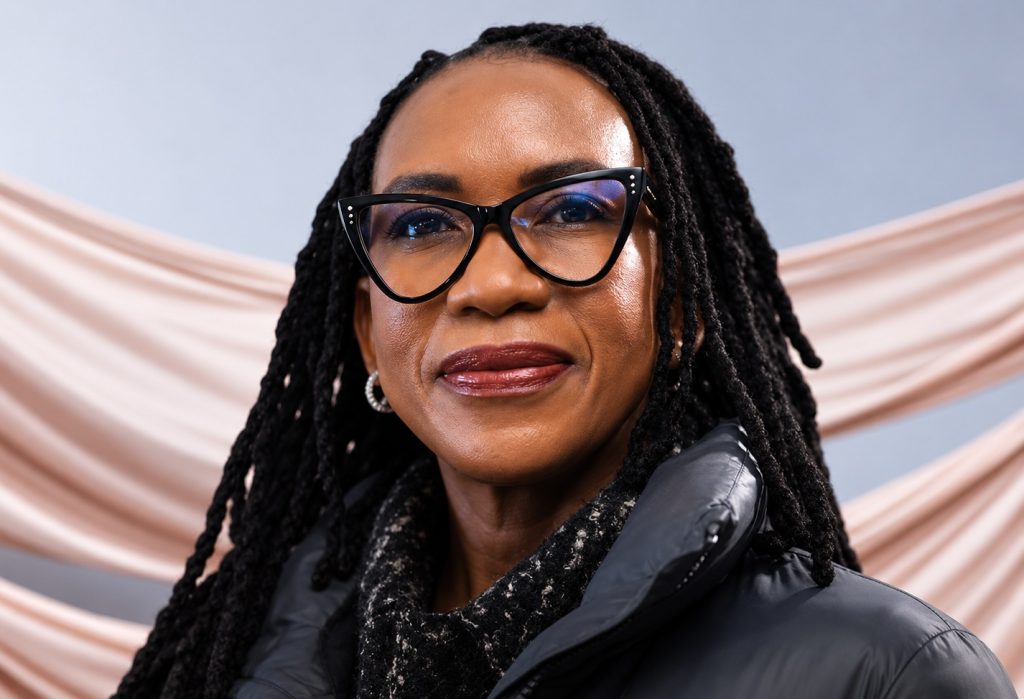
“As a female leader, I’m here to advocate for a future that recognizes and elevates the potential and dignity of women and girls.” Rt. Hon. Robinah Nabbanja, Global Power Women Conference, New York, 2024. Those words reflected more than a personal conviction; they captured the leadership journey of a woman whose life has been shaped by service, resilience, and an unwavering commitment to national development. Long before she became Uganda’s first female Prime Minister, Robinah Nabbanja was a teacher helping to shape young minds in rural western Uganda. Today, she stands among Africa’s most influential women leaders, proving that leadership is built through dedication, experience, and a genuine desire to improve people’s lives. Her remarkable rise from the classroom to the highest levels of government is one of Uganda’s most inspiring leadership stories. Humble Beginnings, Extraordinary Ambition Born on 17 December 1969 in Kamusenene Village, Nkooko Sub-County, in present-day Kakumiro…
9 Traits the World’s Most Successful Women Leaders Have in Common
When Russia’s invasion of Ukraine plunged Europe into one of its greatest geopolitical and energy crises in decades, uncertainty spread across governments, businesses, and financial markets. Yet amid the turbulence, European Commission President Ursula von der Leyen delivered a message that reflected the mindset of exceptional leaders. “We simply cannot accept being shaken around by the seismic change that we are facing,” she said. “The starting point here is to face the world as it really is.” Her words were more than political rhetoric. They reflected a pattern found in many of today’s most influential women leaders, a willingness to confront reality, inspire confidence, and transform uncertainty into opportunity. Whether leading nations, multinational corporations, or global institutions, women such as Ursula von der Leyen, Ngozi Okonjo-Iweala, Christine Lagarde, Samia Suluhu Hassan, Netumbo Nandi-Ndaitwah, Judith Suminwa Tuluka, Mary Vilakazi, and Mpumi Madisa have demonstrated that leadership is built on character long…
Oyinkansola Badejo Okusanya: The Woman Who Broke 34-Year Leadership Barrier at the NBA
Some moments quietly redefine history. They do not arrive with fireworks or fanfare. Instead, they come with a simple announcement, a final vote count, and the realisation that a door closed for decades has finally been opened again. For thousands of women in Nigeria’s legal profession, July 2026 was one of those moments. After 34 years, another woman would lead the Nigerian Bar Association (NBA), proving that persistence, preparation, and excellence can outlast even the longest-standing barriers. That woman is Oyinkansola Badejo Okusanya, SAN, FCIArb. Her election as the 33rd President of the Nigerian Bar Association is more than a personal triumph. It marks the return of female leadership to one of Africa’s largest and most influential professional associations for the first time since Priscilla Kuye served as NBA President in 1992. Even more significantly, Badejo Okusanya became the first woman to be elected through the NBA’s direct universal suffrage…
Meet Dahlia Khalifa: The Woman Leading the World Bank’s Development Agenda Across the Middle East
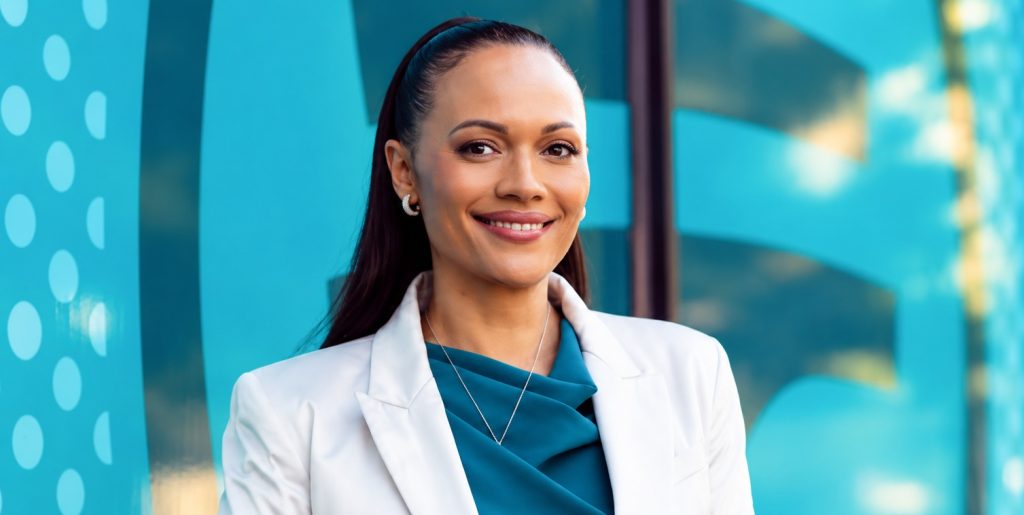
Across the Middle East, millions of people look to stronger economies, better infrastructure, quality education and greater employment opportunities to improve their lives. Behind many of the programmes and partnerships supporting these aspirations are development leaders whose work shapes policies, investments and long-term growth, often far from the public eye. One of those leaders is Dahlia Khalifa. The World Bank recently appointed Khalifa as Division Director for its Middle East Department, placing her at the forefront of the institution’s strategic engagement across Iran, Iraq, Jordan, Lebanon and Syria. Based in Amman, Jordan, she succeeds Jean-Christophe Carret, who served in the role for the past four years. Her appointment is more than a career milestone. It reflects over two decades of experience in international development and positions her to help shape one of the World Bank’s most significant regional portfolios. Working closely with governments, development partners, the private sector and other…
International Chess Day: What Chess Teaches Women About Leadership, Strategy and Success
A young girl sits quietly before a chessboard, her eyes fixed on sixty-four black and white squares. Around her, the room is filled with anticipation. She is the only girl in the competition, facing an opponent with years more experience. She pauses, studies the board and makes her move. It is bold, calculated, and unexpected. Minutes later, she wins. That victory is about far more than chess. It is about confidence overcoming doubt, preparation defeating fear and strategy triumphing over stereotypes. It is a reminder that every woman who dares to think differently has the power to change not only the outcome of a game, but the course of her own life. Every year on 20 July, the world celebrates International Chess Day, marking the founding of the International Chess Federation (FIDE) in 1924. Officially proclaimed by the United Nations General Assembly in 2019, the observance recognises chess as a…