
When Russia’s invasion of Ukraine plunged Europe into one of its greatest geopolitical and energy crises in decades, uncertainty spread across governments, businesses, and financial markets. Yet amid the turbulence, European Commission President Ursula von der Leyen delivered a message that reflected the mindset of exceptional leaders. “We simply cannot accept being shaken around by the seismic change that we are facing,” she said. “The starting point here is to face the world as it really is.”
Her words were more than political rhetoric. They reflected a pattern found in many of today’s most influential women leaders, a willingness to confront reality, inspire confidence, and transform uncertainty into opportunity.
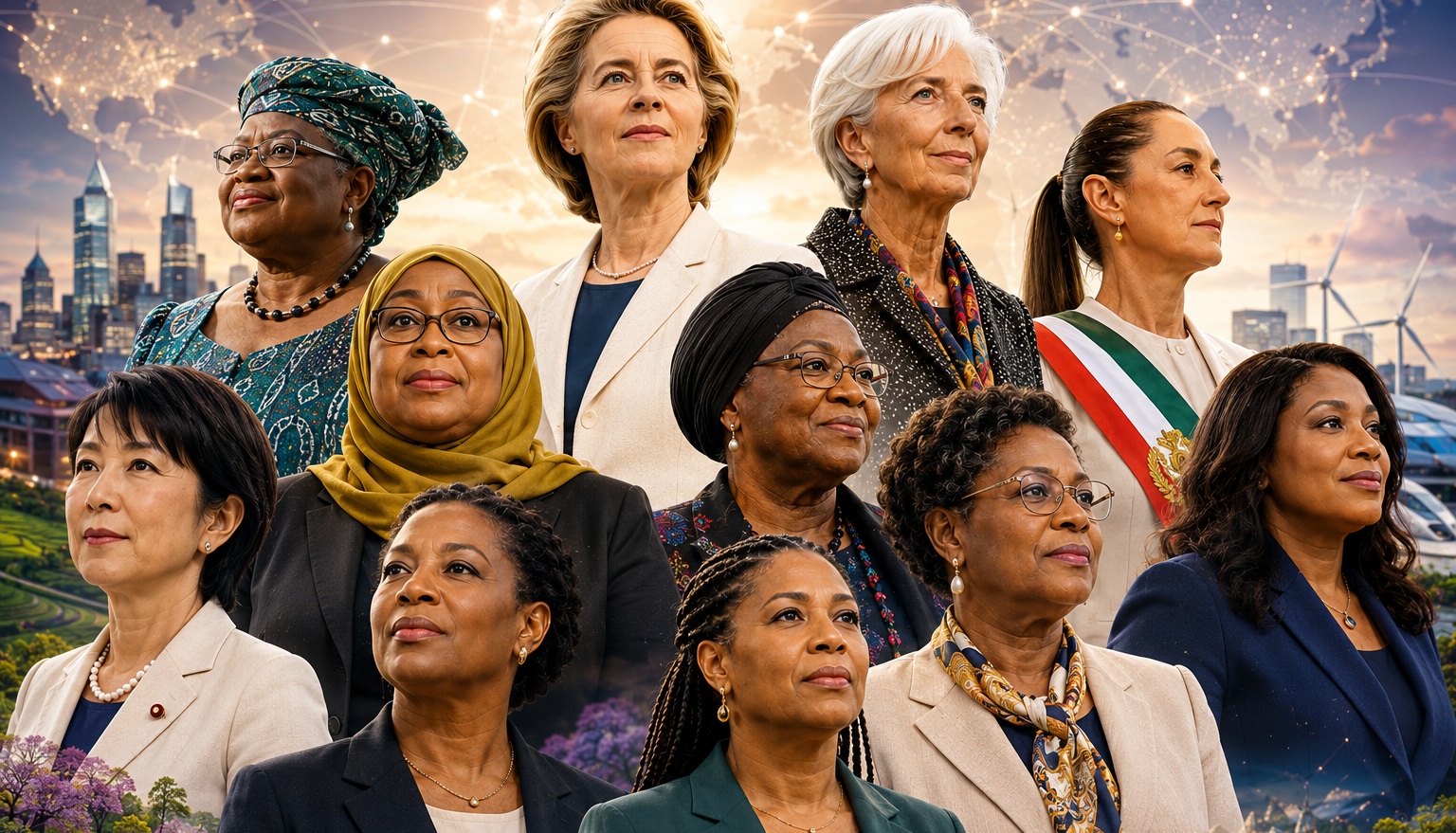
Whether leading nations, multinational corporations, or global institutions, women such as Ursula von der Leyen, Ngozi Okonjo-Iweala, Christine Lagarde, Samia Suluhu Hassan, Netumbo Nandi-Ndaitwah, Judith Suminwa Tuluka, Mary Vilakazi, and Mpumi Madisa have demonstrated that leadership is built on character long before it is measured by title.
Research from McKinsey & Company, Korn Ferry, Harvard Business Review, and Zenger Folkman consistently reveals that high-performing women leaders share a common set of qualities that enable them to thrive in some of the world’s most demanding leadership environments.
They Lead with Emotional Intelligence
Leadership begins with people. Numerous studies have found that women executives consistently score highly in emotional intelligence, the ability to understand emotions, build trust, resolve conflict, and motivate others. This strength has become increasingly valuable in an era where collaboration often determines success more than authority.
Tanzanian President Samia Suluhu Hassan demonstrated this after assuming office during a period of national uncertainty. Rather than deepening political divisions, she appealed for reconciliation.
“This is a time to bury our differences and be one as a nation,” she urged, later adding, “This is not a time for finger pointing, but it is a time to hold hands and move forward together.”
Her response illustrates that empathy is not a weakness. It is one of leadership’s greatest strategic assets.
They Are Authentically Themselves
The most successful women do not lead by imitation. Instead, they embrace their own identity, values, and leadership philosophy, building trust through authenticity rather than performance.
World Trade Organization Director-General Ngozi Okonjo-Iweala, the first woman and first African to lead the organization, has repeatedly encouraged women not to force themselves into outdated leadership moulds.
“There is no right way to be a woman leader. Be true to yourself.”
The same philosophy echoes in South African business leader Mpumi Madisa, who has often remarked that she remains herself before she is ever a chief executive.
Authenticity creates credibility. People follow leaders whose actions consistently match their values.
They Transform Adversity into Resilience
Every accomplished woman leader has faced moments that tested her resolve.
Resilience is not simply surviving hardship; it is emerging stronger because of it.
President Samia Suluhu Hassan captured this truth with a timeless observation.
“A woman is like a tea bag; you can’t tell how strong she is until you put her in hot water.”
Ngozi Okonjo-Iweala shares a similar perspective.
“In every crisis lies an opportunity.”
Rather than allowing setbacks to define them, exceptional leaders treat adversity as preparation for greater responsibility.
They Lead with Purpose
Research from McKinsey shows that many successful women leaders are motivated by purpose rather than position. Their decisions are guided by long-term impact rather than short-term recognition.
For Ngozi Okonjo-Iweala, leadership has always been about creating opportunities for others.
“If you have a sense of purpose that drives you, then aim high and become a leader—and make room as you go.”
Her commitment to inclusive economic development is reflected in another powerful reminder:
“Investing in women is smart economics, and investing in girls is even smarter economics.”
Likewise, Ursula von der Leyen’s vision for artificial intelligence is rooted in public benefit rather than technological competition alone.
“We want AI to be a force for good. We want an AI where everyone collaborates and everyone benefits.”
Purpose gives leadership direction.
They Possess the Courage to Make Difficult Decisions
Leadership often demands choices that are uncomfortable but necessary. Throughout her tenure as President of the European Central Bank, Christine Lagarde has consistently argued that lasting resilience requires courageous decisions today rather than delayed action tomorrow.
“The future is nothing more than today’s decisions that need to be put in order,” she has observed.
That same courage has defined leaders such as Claudia Sheinbaum in Mexico, Giorgia Meloni in Italy, and Judith Suminwa Tuluka in the Democratic Republic of the Congo, all of whom have had to navigate complex political and economic realities while balancing public expectations with national priorities.
True leadership is not avoiding difficult decisions, it is making them with integrity.
They Bring People Together
Modern leadership is increasingly collaborative. Rather than relying solely on authority, successful women leaders build coalitions, empower teams, and encourage participation.
Samia Suluhu Hassan’s emphasis on reconciliation reflects this approach, while Ursula von der Leyen has consistently championed international cooperation, declaring,
“Europe will always choose the world, and the world is ready to choose Europe.”
Her statement reflects a broader belief that progress is achieved not through isolation but through partnership.
The world’s greatest challenges require collective leadership.
They Never Stop Learning
High-achieving leaders rarely believe they have “arrived.”
Research into women CEOs consistently identifies curiosity and continuous learning as defining characteristics.
Mary Vilakazi’s leadership at FirstRand Group has been marked by developing people, encouraging ownership, and creating a culture where learning never stops. Her career demonstrates that leadership is not about knowing everything; it is about remaining teachable while empowering others to grow.
Growth-minded leaders evolve as the world evolves.
They Think Beyond the Present
Vision distinguishes managers from leaders. The world’s most successful women consistently demonstrate an ability to see possibilities beyond immediate crises.
Namibia’s President Netumbo Nandi-Ndaitwah has challenged her nation to reject incremental thinking.
“It’s not going to be business as usual. We must have radical shifts in addressing the plight of our people.”
Strategic thinking allows leaders to prepare their organisations and nations not merely to survive change but to shape it.
They Take Ownership
Perhaps the strongest common denominator among exceptional women leaders is accountability.
They own outcomes, accept responsibility, and lead by example.
Netumbo Nandi-Ndaitwah summarises this philosophy simply:
“We do what we say.”
She also offers a powerful lesson in discipline:
“Don’t allow the pressure of those eating their harvest make you eat your seed.”
Similarly, Ngozi Okonjo-Iweala approaches every challenge with a solution-oriented mindset.
“When I find problems, I always try to find solutions.”
Ownership builds credibility because trust grows when leaders consistently match words with action.
The Amazons Watch Perspective
The rise of women to the highest offices in government, finance, business, and global diplomacy is not merely changing who leads, it is changing how leadership itself is understood.
Across continents, these leaders demonstrate that influence is no longer measured solely by authority or power. It is measured by emotional intelligence, authenticity, resilience, purpose, courage, collaboration, continuous learning, strategic vision, and unwavering accountability.
Their stories remind us that leadership is neither masculine nor feminine. It is human. And in an increasingly complex world, the leaders who will shape the future are those who possess not only the intelligence to solve problems but also the character to inspire people.
These nine traits are more than personal qualities. They are the blueprint for the next generation of transformational leadership and perhaps the most enduring lesson the world’s most successful women leaders have to offer.





Comments are closed.