By Blossom Ukoha
“Education is the most powerful weapon which you can use to change the world.” Nelson Mandela
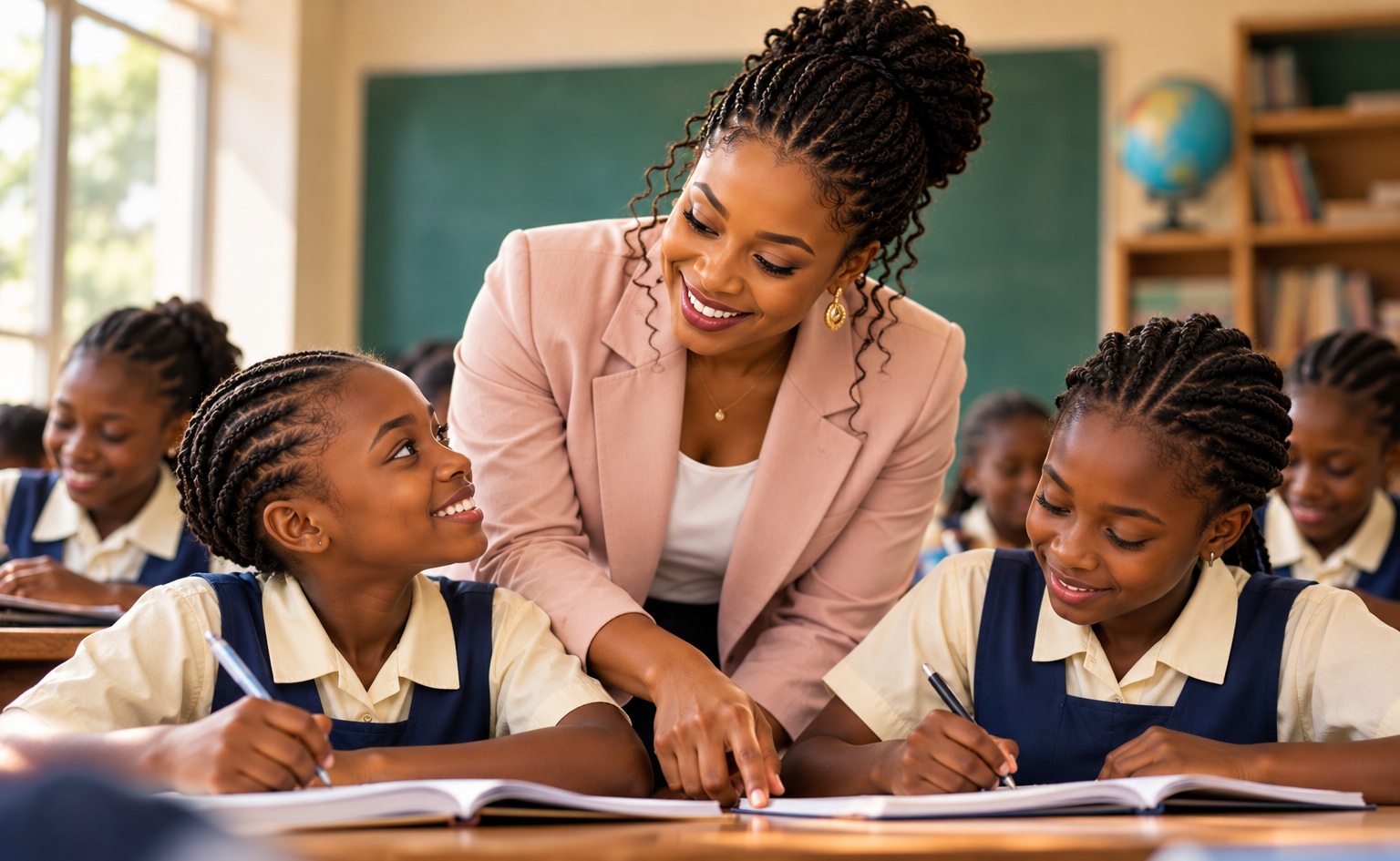
Nelson Mandela’s words capture a truth that is often overlooked: education does not transform societies by itself. Teachers are the people who turn education into opportunity. They stand at the intersection between knowledge and possibility, helping young people discover what they can become. For millions of girls, particularly across Africa, a woman teacher can be more than an educator. She can be a role model, a mentor and, sometimes, the first woman in a position of authority they encounter.
That is why World Teachers’ Day 2026, observed on Monday, 5 October, is about more than celebrating teachers. It is a moment to ask whether the people entrusted with shaping future generations are themselves receiving the recognition, protection, resources and professional support they need.
The 2026 observance, held at UNESCO Headquarters in Paris, marks the 60th anniversary of the 1966 ILO/UNESCO Recommendation concerning the Status of Teachers, the landmark international standard addressing teachers’ rights, responsibilities, preparation, recruitment, employment and working conditions. The theme, “Standing with teachers: 60 years of protecting the profession, advancing its status and shaping our futures,” places the status of teachers at the centre of the global conversation. The celebration is being co-convened by UNESCO, the International Labour Organization (ILO), UNICEF and Education International, and includes the ninth edition of the UNESCO-Hamdan Prize for Teacher Development.
World Teachers’ Day has been observed every year since 1994, commemorating the adoption of the 1966 Recommendation. A complementary recommendation concerning higher-education teaching personnel followed in 1997. Six decades later, the profession is facing a dramatically changed educational landscape, with digital technologies, artificial intelligence, climate change, migration, displacement and growing demands for inclusion placing new pressures on teachers. UNESCO notes that these pressures affect the symbolic, professional and material status of teachers, including their recognition, autonomy, voice in policymaking, salaries, workloads and working environments.
The numbers reveal just how serious the global challenge has become. According to UNESCO’s Global Report on Teachers, the world needs approximately 44 million additional primary and secondary teachers by 2030 to achieve universal education. Sub-Saharan Africa alone requires about 15 million additional teachers, making the region the area with the greatest projected need.
But the teacher shortage is not simply a problem of insufficient recruitment. UNESCO’s Global Report on Teachers estimates that about 58 percent of the projected requirement is needed to replace teachers leaving the profession, while 42 percent is associated with creating new teaching positions. Teacher attrition, heavy workloads, inadequate support and declining professional attractiveness therefore sit at the heart of the crisis.
For Africa, this has profound implications. The continent has expanded access to education considerably, but the growth of its school-age population and enrolment has placed enormous pressure on education systems. Rural communities, conflict-affected areas and populations experiencing displacement are particularly vulnerable to teacher shortages. In some communities, teachers are expected to serve large numbers of learners while working with limited resources and few opportunities for professional development.
The consequences extend far beyond the classroom. When there are not enough qualified teachers, learning suffers, workloads increase and educational inequalities deepen. It becomes harder to provide children with the foundational literacy, numeracy, scientific knowledge and digital skills they need to participate meaningfully in the economy.
For girls, the stakes are even higher.
A woman teacher can change how a girl sees herself. She can encourage a student who doubts her ability to pursue science or mathematics. She can challenge the belief that leadership is reserved for men. She can demonstrate that professional achievement, intellectual authority and public influence are also spaces where women belong.
This makes investment in women teachers an important part of Africa’s broader leadership and human-capital agenda.
Yet women teachers themselves face additional challenges, including safety concerns, difficult deployment conditions and the challenge of balancing professional responsibilities with family and care responsibilities. If African education systems want to retain women educators and increase their contribution to leadership, policies must recognise these realities rather than treating teachers as a uniform workforce.
The changing nature of education makes this investment even more urgent. Artificial intelligence is reshaping how information is produced and accessed. Climate change is affecting schools and communities. Displacement is creating increasingly complex classrooms, while employers are demanding new technological, analytical and interpersonal skills.
Yet technology cannot replace the human relationship at the heart of education. Teachers do more than deliver information. They interpret, encourage, challenge, mentor and understand their learners. UNESCO has emphasised that teachers remain indispensable in an era of technological change because education requires human connection, creativity, judgement and empathy.
For Africa, therefore, standing with teachers must mean more than celebrating them once a year. It must mean building a profession that attracts talented people, retains experienced educators and gives teachers a meaningful voice in shaping education policy.
That requires stronger initial teacher training, continuous professional development, fair remuneration, safer working environments, better support for teachers in rural and underserved communities, opportunities for career progression and greater recognition of teaching as a profession essential to national development.
It also means creating pathways for women teachers to move beyond the classroom and into school leadership, education policymaking, research, curriculum development and educational innovation. The woman who begins her career teaching a classroom of children today could become tomorrow’s education minister, university leader, policymaker or advocate for millions of learners.
Mandela’s words therefore carry particular significance for Africa. If education is one of the most powerful forces for changing the world, then teachers are among the people entrusted with wielding that power.
At Amazons Watch Magazine, we believe that the women who teach also shape the women who lead. This World Teachers’ Day, we call on African governments, education authorities, development institutions and private-sector partners to move beyond appreciation and invest meaningfully in the teaching profession.
Because when we invest in the woman standing in front of the classroom, we are not investing in one teacher alone. We are investing in every child she teaches, every girl whose confidence she builds and every future woman leader whose potential she helps unlock.
This World Teachers’ Day, let us not simply thank teachers. Let us stand with them, invest in them and give them the status, resources and support they need to shape Africa’s future.



Comments are closed.