
By Blossom Ukoha
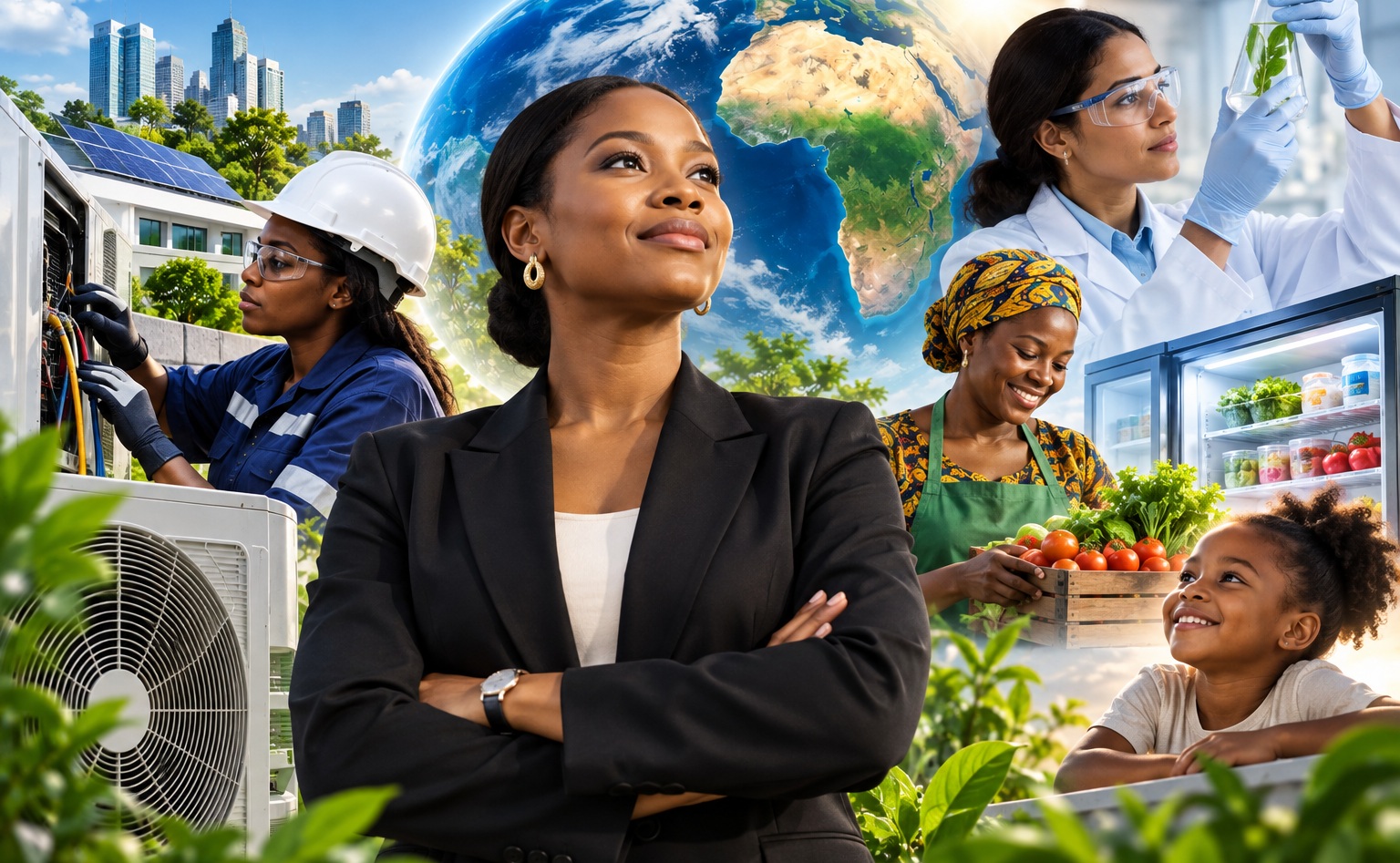
A cooler world is not simply about turning on an air conditioner. Behind every refrigerator preserving food, every hospital storing vaccines, every cold room protecting agricultural produce and every building made safer during extreme heat is a rapidly evolving global industry — one that needs more women.
As the world marks the International Day for the Preservation of the Ozone Layer on 16 September 2026, the focus is increasingly shifting from protecting the ozone layer to building a sustainable cooling economy. The 2026 theme, “Global action for a cooler planet,” marks ten years of the Kigali Amendment to the Montreal Protocol and its drive to phase down hydrofluorocarbons (HFCs), powerful greenhouse gases used in cooling.
For women, this transition represents more than an environmental agenda. It is an opportunity to participate in one of the world’s essential and expanding sectors, as engineers, technicians, entrepreneurs, researchers, policymakers and business leaders.
A Global Success Story and a New Opportunity
The Montreal Protocol has transformed the global response to ozone depletion. Nearly 99 per cent of controlled ozone-depleting substances have been phased out, helping put the ozone layer on a recovery pathway.
The health implications are significant. U.S. Environmental Protection Agency modelling estimates that full implementation of the Montreal Protocol is expected to prevent approximately 443 million cases of skin cancer, 2.3 million skin cancer deaths and 63 million cases of cataracts among people born in the United States between 1890 and 2100.
The recovery is also becoming visible. The World Meteorological Organization reported on 16 September 2026 that the 2025 Antarctic ozone hole was among the smallest recorded in recent decades, ranking fourth to fifth weakest since severe depletion patterns emerged in 1992. Its maximum ozone mass deficit was 36.7 million tonnes, more than 25 per cent below the 1990–2010 average.
“This is an environmental success story. Since 2000, the ozone layer has been recovering, and we can expect full recovery within several decades,” said WMO Secretary-General Celeste Saulo.
But the success of ozone protection has opened another chapter: how the world cools.
Why Sustainable Cooling Matters to Women
Cooling has become increasingly connected to health, food security, productivity and household wellbeing. In many communities, women are deeply involved in food preservation, household management, caregiving, agriculture and informal commerce — activities that are increasingly affected by heat and access to reliable cooling.
For women farmers and food entrepreneurs, cold-chain infrastructure can mean the difference between losing perishable goods and reaching profitable markets. For healthcare workers and patients, reliable refrigeration can support the safe storage of medicines and vaccines.
At the same time, women are increasingly entering fields traditionally dominated by men, including engineering, technical services and energy.
The opportunity is substantial. According to UNEP OzonAction, more than 15 million people are employed worldwide in the refrigeration industry, yet women account for only around 6 per cent of members of national refrigeration associations and organisations.
That gap represents not only an inequality but an untapped economic opportunity.
The Green Cooling Revolution Needs Women
The transition to sustainable cooling will require new technologies, technical expertise, investment and innovation. It will also require a workforce capable of installing, maintaining and developing energy-efficient systems.
Women must be part of that workforce.
UNEP OzonAction has identified equitable workplace policies, mentoring, training and access to opportunities as important measures for enabling women to participate fully in the refrigeration and air-conditioning sector.
There are already women demonstrating what is possible. UNEP has documented women working across the cooling industry, including technicians, engineers, educators and entrepreneurs. In Nigeria, for example, UNEP has profiled women who built careers in refrigeration and air-conditioning despite entering a heavily male-dominated technical field.
Their experiences challenge an old assumption: that technical industries are not women’s spaces.
They are.
Kigali and the Future of Cooling
The Kigali Amendment, adopted in Rwanda in 2016, added a critical climate dimension to the Montreal Protocol by requiring a phasedown of high-global-warming-potential HFCs.
Full compliance is projected to avoid approximately 0.3–0.5°C of warming by 2100, while combining refrigerant transition with energy-efficiency improvements could deliver even greater climate benefits.
This matters for women because climate pressures do not exist in isolation. Extreme heat, food insecurity, energy costs and disruptions to livelihoods can intensify existing inequalities.
As UN Secretary-General António Guterres stated in his 2026 World Ozone Day message, “access to efficient cooling saves lives. We must meet that need fairly and sustainably.”
Fairly means ensuring that women are not only protected by the transition but positioned to benefit economically from it.
From Beneficiaries to Leaders
The next phase requires a deliberate investment in women.
Governments and industry can expand technical and vocational training for women, strengthen certification pathways and create mentorship opportunities. Financial institutions and investors can increase access to capital for women-led cooling businesses and climate enterprises.
Policymakers can also ensure that women are represented in the rooms where decisions about energy, climate, technology and cooling infrastructure are made.
Better data is equally important. Understanding how many women work in the sector, where they face barriers and where opportunities exist can help governments and industry design more effective interventions.
The goal should not simply be to increase the number of women entering the cooling industry. It should be to create pathways for women to become owners, innovators, investors, researchers and decision-makers.
A Cooler World Needs More Amazons
The story of the ozone layer demonstrates what can happen when science, policy, financing and international cooperation come together. The next chapter presents a different but equally important challenge: ensuring that the transition to sustainable cooling creates opportunities that are accessible to everyone.
For women, the green cooling revolution can become a pathway into technical careers, entrepreneurship, innovation and climate leadership.
The question is no longer whether women belong in this future.
The question is whether the world is prepared to make room for them to lead it.
A Call to Action from Amazons Watch Magazine
Amazons Watch Magazine calls on governments, businesses, investors, educational institutions and development partners to make women visible and active participants in the global transition to sustainable cooling.
Invest in women’s technical education. Open pathways into engineering and refrigeration. Fund women-led climate enterprises. Mentor the next generation of women innovators. And ensure that women have a seat at the tables where the future of cooling, climate and economic development is being designed.
A cooler planet should also be a more inclusive economy.
This International Day for the Preservation of the Ozone Layer, Amazons Watch Magazine celebrates the women already breaking barriers and calls for a new generation of women to design, build and lead the technologies that will keep our world cool.





Comments are closed.