

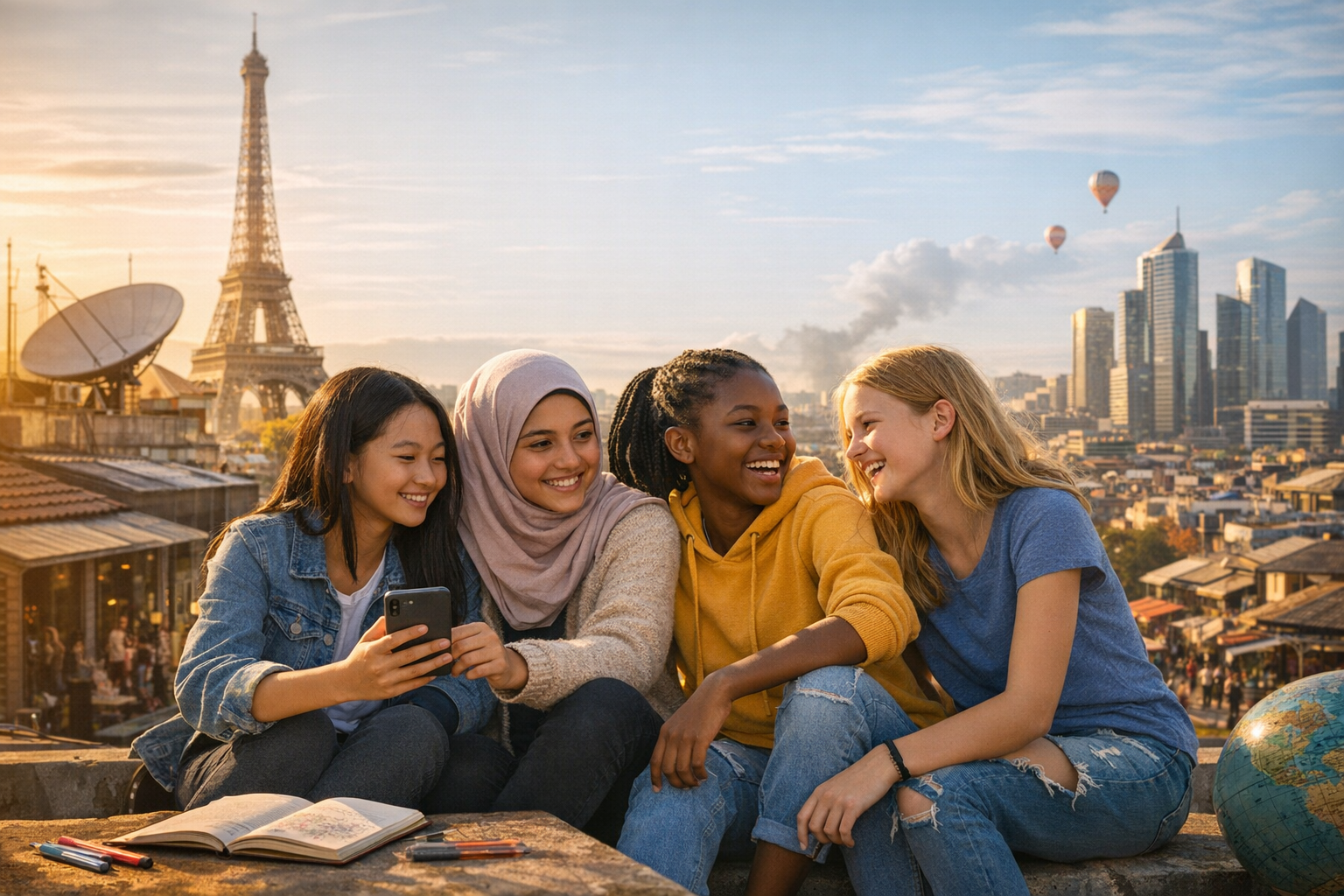
On a warm evening in a bustling city, a mother watched her 11-year-old daughter scroll endlessly through her phone. Between perfectly curated images, filtered beauty, and carefully staged lifestyles, the girl’s smile slowly faded. “I wish I looked like that,” she whispered. In that quiet moment, a global reality came into focus. Across continents, cultures, and income levels, millions of girls are growing up in a world more connected than ever, yet increasingly uncertain about their own worth.
Globalisation has opened doors for girls in unprecedented ways. Education levels are rising, access to information is expanding, and opportunities once considered unattainable are now within reach. Yet, beneath this progress lies a troubling pattern. Confidence in girls is declining, particularly during the critical transition from childhood to adolescence.
Research consistently shows that between the ages of 8 and 14, girls experience an average 30 percent drop in confidence. While boys and girls report similar self-esteem levels at age 12, by age 14, a significant gap emerges. In a large 2023 survey of over 17,500 girls, overall confidence dropped from 68 percent in 2017 to 55 percent. By the time girls reach ninth grade, only half describe themselves as confident. Even more concerning, more than half of girls in early adolescence doubt whether they are smart enough to pursue their dream careers.
This confidence gap is not simply an internal struggle. It is shaped by powerful external forces, many of which are intensified by globalisation. Social media, while offering connection and visibility, has become a major driver of comparison culture. Nearly half of girls report spending six or more hours daily on social platforms, and those with the highest usage levels are significantly less confident than their peers. Exposure to idealised beauty standards fuels dissatisfaction, with 46 percent of girls saying their body image frequently causes worry. Two-thirds report that body image issues directly reduce their confidence, and over half admit that social media makes them want to change their appearance.
The psychological toll is profound. Adolescent girls are up to twice as likely as boys to experience depression after puberty. Globally, depression is now the leading cause of disability among girls aged 15 to 19, and self-harm remains one of the leading causes of death in this group. One in seven adolescents lives with a mental health condition, with girls disproportionately affected by online harassment, violence, and societal pressures.
At the same time, globalisation reveals stark inequalities. While some girls navigate digital overload, others remain excluded entirely. In low-income countries, approximately 90 percent of adolescent girls are offline, limiting access to education, digital skills, and opportunities. Even globally, women still lag behind men in internet usage. For girls with disabilities, this gap widens even further. This uneven access creates a paradox where some girls face excessive exposure, while others are denied the benefits of connectivity altogether.
Despite these challenges, there is undeniable progress. Girls’ completion rates in upper secondary education have risen dramatically, from 36 percent in 2000 to 61 percent in 2023. In many regions, girls now outperform boys academically, particularly in reading and foundational learning. Yet, barriers remain. An estimated 122 million girls are still out of school worldwide, with those in conflict-affected regions significantly more likely to be excluded.
Social and cultural constraints continue to shape girls’ confidence. One in five young women globally was married before the age of 18. Millions face harmful practices such as female genital mutilation or experience violence in their lifetimes. Additionally, girls between the ages of 10 and 14 spend 160 million more hours daily on unpaid household chores than boys, limiting time for learning, rest, and self-development. These early experiences quietly reinforce beliefs about worth, capability, and limitation.
Amid these realities, one factor consistently emerges as a powerful buffer against declining confidence: supportive parenting. Girls who feel supported by caring adults are significantly more likely to speak up, participate, and develop a strong sense of belonging. Parents play a critical role not only in protecting girls from harmful influences but also in actively shaping their self-perception.
Evidence-based strategies offer clear direction. Programs focused on raising confident girls show that when mothers improve their own body image and self-perception, their daughters benefit directly. Confidence is modeled before it is taught. When girls see self-acceptance at home, they internalise it.
Practical parenting approaches matter. Encouraging effort over perfection fosters a growth mindset, helping girls embrace challenges without fear of failure. Promoting participation in sports and non-traditional activities builds resilience and breaks gender stereotypes. Open conversations about social media, including how algorithms shape what they see, empower girls to question unrealistic standards rather than internalise them.
Equally important is creating balance in daily life. Setting healthy boundaries around screen time, encouraging offline friendships, and sharing responsibilities at home help girls develop a sense of agency. Teaching digital literacy is no longer optional; it is essential for navigating a globalised world with confidence and clarity.
Let us take action to raise confident girls in a connected world. Start by listening intentionally to the girls in your life. Create safe spaces where they can express fears without judgment. Challenge harmful norms when you see them, whether in media, schools, or communities. Share stories of diverse female role models who reflect strength, intelligence, and authenticity. Invest time in building skills that matter, from critical thinking to emotional intelligence. Most importantly, model the confidence you hope to see.
The story of girls in today’s world is not one of inevitable decline but of immense possibility. Globalisation may amplify pressures, but it also amplifies voices, opportunities, and change. When families, communities, and institutions work together, the narrative shifts. Girls begin to see themselves not through the lens of comparison, but through the clarity of their own potential.
And when a girl truly believes in her worth, she does not just navigate the world. She reshapes it.





Comments are closed.