By Blossom Ukoha
As dawn broke over a remote village in South Sudan, a young mother cautiously approached a United Nations patrol. For months, fear had kept her indoors. Armed conflict had displaced families, disrupted livelihoods, and shattered trust in institutions. But on that day, she walked directly toward a female peacekeeper wearing the iconic blue helmet. The woman listened patiently, spoke with empathy, and helped connect the community to protection services. For the villagers, the presence of women in the peacekeeping force represented more than security; it offered trust, understanding, and hope.
This scene reflects a growing reality across conflict zones worldwide. Women peacekeepers are increasingly becoming essential actors in the global pursuit of peace, helping communities rebuild after violence and contributing unique perspectives that strengthen peacekeeping missions. Yet despite their proven impact, women remain significantly underrepresented within United Nations peace operations.
United Nations peacekeepers are military personnel, police officers, and civilian experts deployed to support countries emerging from conflict. Their responsibilities range from monitoring ceasefires and protecting civilians to strengthening the rule of law, promoting human rights, and supporting political transitions. In these complex environments, women peacekeepers play a critical role in building bridges between communities and institutions.
Over the past three decades, the participation of women in UN peacekeeping has grown steadily. According to UN Women, female military personnel represented only about 1 percent of peacekeepers in 1993. By 2025 and early 2026, that figure had increased to approximately 7 to 8 percent. While this progress is notable, the numbers reveal that significant barriers remain.
Current UN Peacekeeping gender statistics show that women account for approximately 8 percent of military contingents, 17 percent of formed police units, 31 percent of individual police officers, and 23 percent of military experts and staff officers. These figures demonstrate progress, but they also highlight the substantial gap between aspiration and reality.
The importance of women’s participation extends far beyond numerical representation. Research and operational experience consistently show that women peacekeepers enhance mission effectiveness. Their presence often improves engagement with local communities, particularly women and girls who may be reluctant to speak with male officers due to cultural norms or experiences of trauma.
Female peacekeepers are frequently better positioned to identify risks related to gender-based violence, gather critical information from communities, and support survivors of abuse. Their involvement helps missions gain broader perspectives on security challenges, making interventions more responsive and inclusive.
Recognizing these benefits, the United Nations has increasingly integrated gender considerations into peacekeeping mandates. Today, gender provisions are included in approximately 55 percent of active UN peace operation mandates. These provisions aim to ensure that missions address the needs of all members of society and contribute to more sustainable peacebuilding outcomes.
However, achieving greater gender balance remains a challenge. One of the primary obstacles is the limited number of women nominated by troop and police contributing countries. Structural barriers within national security institutions often restrict women’s access to military and policing careers, reducing the pool of personnel available for deployment. Safety concerns, cultural expectations, and limited leadership opportunities further complicate efforts to increase participation.
Despite these challenges, women continue to break new ground at the highest levels of international peace and security.
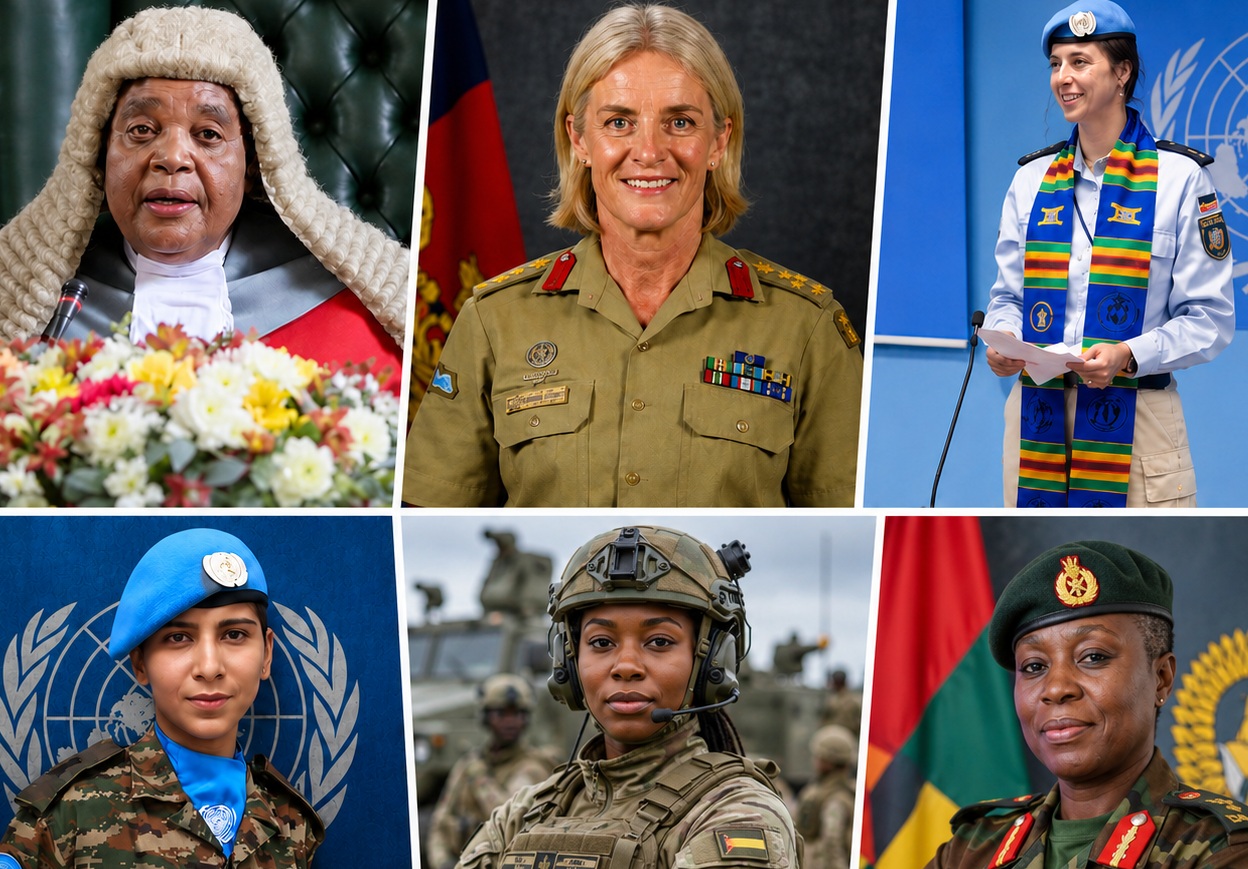
Among the most inspiring figures is Anita Asmah, a Ghanaian military leader who became the first African woman to serve as Force Commander of a United Nations peacekeeping mission. Leading the United Nations Disengagement Observer Force in the Golan Heights, she has shattered long-standing barriers in military leadership and serves as a powerful role model for women across Africa and beyond.
Another trailblazer is Abhilasha Barak of India. Recognized as the 2025 UN Military Gender Advocate of the Year, she serves with the United Nations Interim Force in Lebanon. As a combat helicopter pilot and leader of a Female Engagement Team, she has reached thousands of women and girls through empowerment and community outreach initiatives, demonstrating how operational effectiveness and gender inclusion can go hand in hand.
In South Sudan, Stephanie Königs has earned international recognition for her exceptional service. Named the 2025 UN Woman Police Officer of the Year, she has been celebrated for strengthening community security and advancing the mission’s mandate through innovative and people-centered policing approaches.
Leadership representation is also growing at the strategic level. Cheryl Pearce, one of the highest-ranking uniformed women within the UN system, currently serves as Acting Military Adviser in the Department of Peace Operations. Her career exemplifies the expanding influence of women in shaping global peacekeeping policy and strategy.
Beyond traditional peacekeeping missions, women are making transformative contributions to the justice systems that sustain long-term peace. A remarkable example is Elizabeth Gwaunza, who became Zimbabwe’s first female Chief Justice in May 2026. Her distinguished judicial career includes service with the International Criminal Tribunal for the former Yugoslavia, a United Nations institution that played a critical role in advancing international justice. Her appointment underscores the vital connection between the rule of law and sustainable peace.
The next generation of female peace leaders is also emerging. Officers such as Swathi Shantha Kumar have gained recognition for women-led peacebuilding initiatives in South Sudan, while countless African women continue to serve as military gender advisers, police officers, civilian experts, and community engagement specialists across missions throughout the continent.
Their collective contributions reinforce a central lesson of modern peacekeeping: peace is most durable when it is inclusive. Communities recovering from conflict require diverse voices, experiences, and leadership styles. Women bring perspectives that enrich decision-making, improve civilian protection, and strengthen relationships between peacekeepers and local populations.
This vision aligns closely with the landmark Women, Peace and Security agenda established by the United Nations Security Council Resolution 1325. Adopted in 2000, the resolution recognises the essential role of women in conflict prevention, peace negotiations, peacebuilding, humanitarian response, and post-conflict recovery. More than two decades later, its message remains as relevant as ever.
As conflicts become increasingly complex and interconnected, the world cannot afford to overlook half of its talent. Expanding opportunities for women in peacekeeping is not merely a matter of equality; it is a strategic necessity. Every additional woman deployed, every barrier removed, and every leadership position opened contributes to stronger institutions and more resilient societies.
The image of the female peacekeeper listening to a frightened mother in a conflict-affected village captures a profound truth: peace is built not only through military strength and political agreements, but also through trust, empathy, and inclusion. Around the world, women in blue helmets are proving that when women participate fully in peacekeeping, communities are safer, missions are stronger, and the prospects for lasting peace become far brighter.
Call to Action
Governments, security institutions, international organisations, and civil society must work together to increase women’s participation at every level of peacekeeping and peacebuilding. By investing in recruitment, training, mentorship, and leadership opportunities for women, nations can strengthen both global security and gender equality. The future of peace depends on ensuring that women are not merely present in peace operations but are empowered to lead them.
Conclusion
From conflict zones in South Sudan and Lebanon to leadership offices at the United Nations and the highest courts of Africa, women are reshaping the landscape of global peace and security. Their growing presence is changing lives, strengthening institutions, and creating pathways toward more inclusive and sustainable peace. While challenges remain, the message is clear: when women lead, protect, and serve, peacekeeping becomes more effective, communities become more resilient, and the world moves one step closer to lasting peace.


Comments are closed.