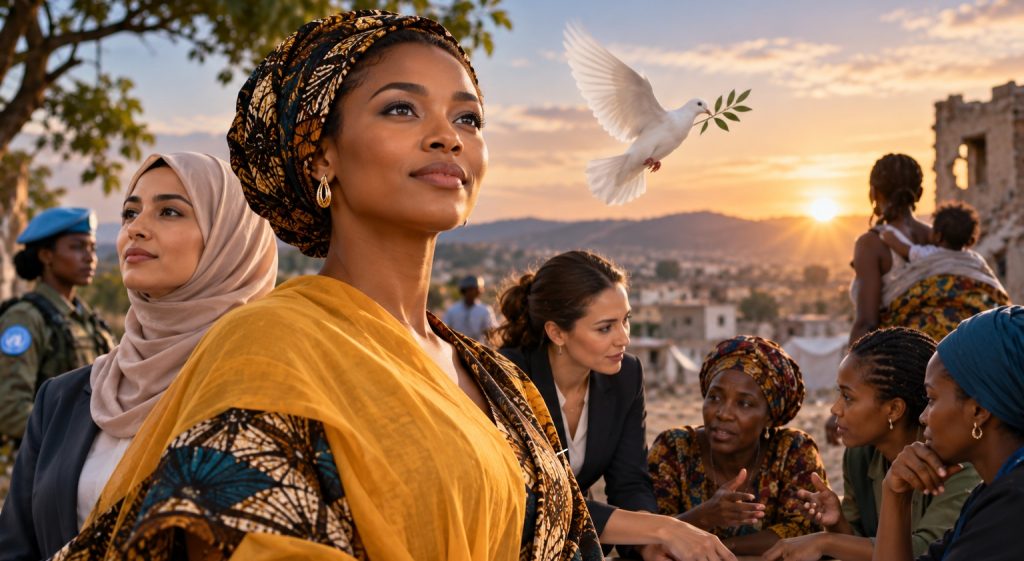
By Blossom Ukoha When 26-year-old Angel Musiime wakes up for work in Uganda’s Kyegegwa Town Council, peacebuilding does not begin in a diplomatic conference room. As a local parish chief and trained peace mediator, her work can involve helping young people return to school, navigating difficult conversations around domestic abuse, and helping people resolve conflicts within their communities. Musiime describes her ambition simply: “I want to be a great woman of peace.” Through peace-mediation training, she developed skills in conflict resolution and leadership and began using them to support women, girls and others in her community. Her story is a reminder that some of the most important work of peace happens far from the rooms where governments negotiate agreements. That is precisely why this year’s International Day of Peace matters. Observed on 21 September 2026, the United Nations theme is “Invest in Peace – For Everyone, Everywhere, Every Day.” The…
Dubai’s Women-Led Power Story: Beyond Luxury, Into Business and Influence
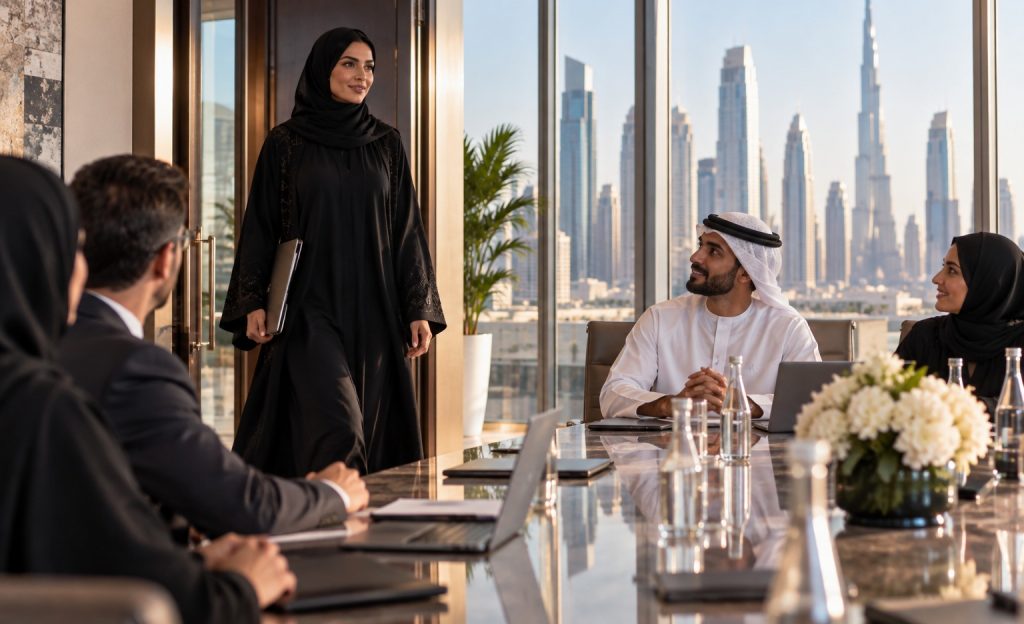
By Blossom Ukoha She is not there as a guest. She is not there to represent a family name or add diversity to a photograph. She is there because she owns the company, leads the strategy, sits on the board or has a decision to make. Outside, Dubai continues to project its familiar image of glass towers, luxury brands and spectacular ambition. But behind that polished skyline, another story is taking shape, one in which Emirati women are increasingly becoming builders of businesses, leaders of institutions and participants in decisions that shape the UAE economy. The numbers tell part of that story. In March 2026, the UAE Ministry of Economy and Tourism reported that the country had 48,257 Emirati women entrepreneurs, while Emirati women owned or co-owned 114,050 SMEs across diverse economic sectors. The National SME Programme alone had attracted 2,700 Emirati women entrepreneurs. These figures matter because entrepreneurship is not…
Equal Pay Day: Who Gets to Decide What Women’s Work Is Worth?
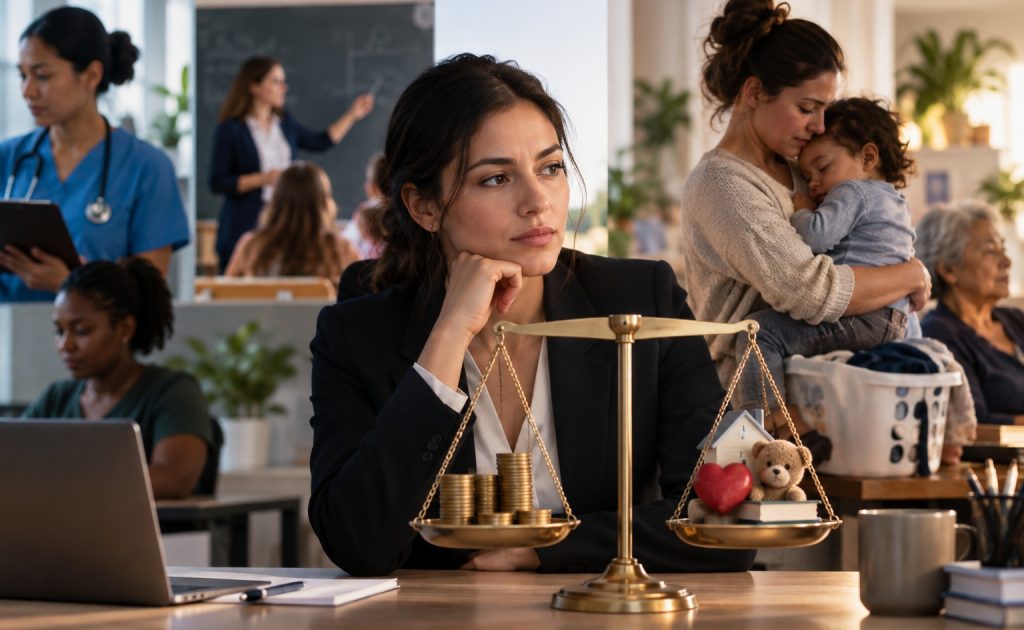
By Blossom Ukoha She sat across from her manager, salary review letter in hand. Her responsibilities had grown. She was leading projects, mentoring younger colleagues, staying late when deadlines demanded it and becoming the person everyone turned to when something needed to be fixed. Then she saw the number. There was an increase, but it was smaller than she had expected. She also knew that a male colleague with similar responsibilities earned more. The familiar questions came quickly: Should I negotiate harder? Do I need another qualification? Am I not doing enough? But perhaps there was another question worth asking: Who decided that her work was worth less in the first place? That question goes to the heart of Equal Pay Day. Because the gender pay gap is not only about women receiving smaller salaries than men. It is also about how society decides what work is valuable, which skills…
Women and AI: Who Gets to Lead the Businesses of the Future?
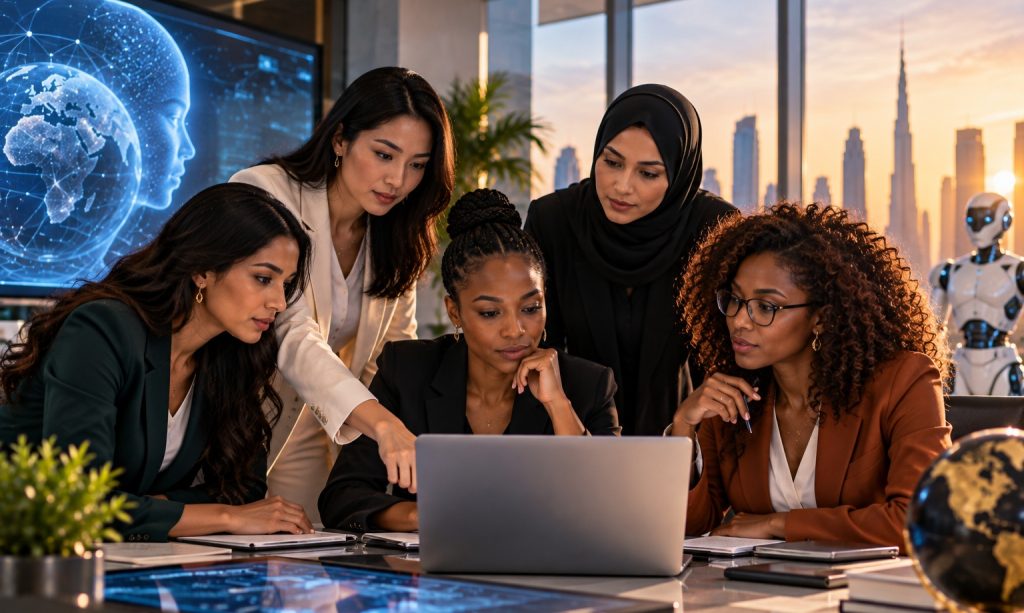
By Blossom Ukoha Artificial intelligence is creating some of the fastest-growing and highest-paying opportunities in the global economy. But as the technology accelerates, another question is becoming harder to ignore: who is actually getting the opportunity to build, lead and profit from it? The answer, according to new LinkedIn data, is still disproportionately men. In the United States, women accounted for just 26 per cent of new hires into AI roles in 2025, compared with 50 per cent of hires into non-AI occupations. Across 27 countries, women held only 13 per cent of C-suite AI leadership positions at AI companies. Meanwhile, AI job postings have roughly doubled since 2023, with a typical listed salary of about $177,000, compared with $80,000 for non-AI roles. That means the issue is no longer simply whether women have access to technology. It is whether women will have a meaningful share of the economic power being…
South-South Cooperation: Why Women Must Be at the Centre of the Global South’s Next Power Shift
By Blossom Ukoha The Global South is gaining economic weight. But who gets to shape the power that comes with it? In 2026, only 28 countries have a woman serving as Head of State or Government. Women hold just 22.4 per cent of cabinet positions and approximately 27.5 per cent of parliamentary seats worldwide, according to the latest data from UN Women and the Inter-Parliamentary Union. The figures arrive at a consequential moment for the Global South. Countries across Africa, Asia, Latin America and the Caribbean are becoming increasingly connected through new trade relationships, investment partnerships, technology exchanges and development initiatives. South-South cooperation is no longer a secondary feature of global development; it is becoming an important part of how emerging economies build collective economic strength. The scale is already significant. According to the United Nations, South-South trade reached US$6.8 trillion in 2025, while more than half of developing countries’ exports went to other…
International Day for the Preservation of the Ozone Layer: Why the Green Cooling Revolution Needs More Women
By Blossom Ukoha A cooler world is not simply about turning on an air conditioner. Behind every refrigerator preserving food, every hospital storing vaccines, every cold room protecting agricultural produce and every building made safer during extreme heat is a rapidly evolving global industry — one that needs more women. As the world marks the International Day for the Preservation of the Ozone Layer on 16 September 2026, the focus is increasingly shifting from protecting the ozone layer to building a sustainable cooling economy. The 2026 theme, “Global action for a cooler planet,” marks ten years of the Kigali Amendment to the Montreal Protocol and its drive to phase down hydrofluorocarbons (HFCs), powerful greenhouse gases used in cooling. For women, this transition represents more than an environmental agenda. It is an opportunity to participate in one of the world’s essential and expanding sectors, as engineers, technicians, entrepreneurs, researchers, policymakers and business leaders. A…
International Day of Democracy: When Women Have a Voice, Democracy Works Better
By Blossom Ukoha Every year on 15 September, the world marks the International Day of Democracy, a day dedicated to one of the fundamental principles of modern governance: the right of people to participate in shaping the decisions that govern their lives. But democracy is more than elections, political parties and casting ballots. At its heart, it is about participation, representation, human rights, accountability and the ability of citizens to have a meaningful voice in public affairs. If half of the world’s population remains significantly underrepresented in positions where decisions are made, one question remains: Can democracy truly deliver for everyone when women are not equally represented? The United Nations established the International Day of Democracy through General Assembly Resolution A/RES/62/7, adopted by consensus on 8 November 2007, with the first observance taking place in 2008. The date also coincides with the anniversary of the Inter-Parliamentary Union’s Universal Declaration on…