

By Blossom Ukoha
“Growing up I would not have said I would be CEO of the largest bank in South Africa, but it is [the outcome of] a series of opportunities I was fortunate to have. I always say I was not the brightest or the most gifted, but I managed to get opportunities… without access to them I would not be here.”
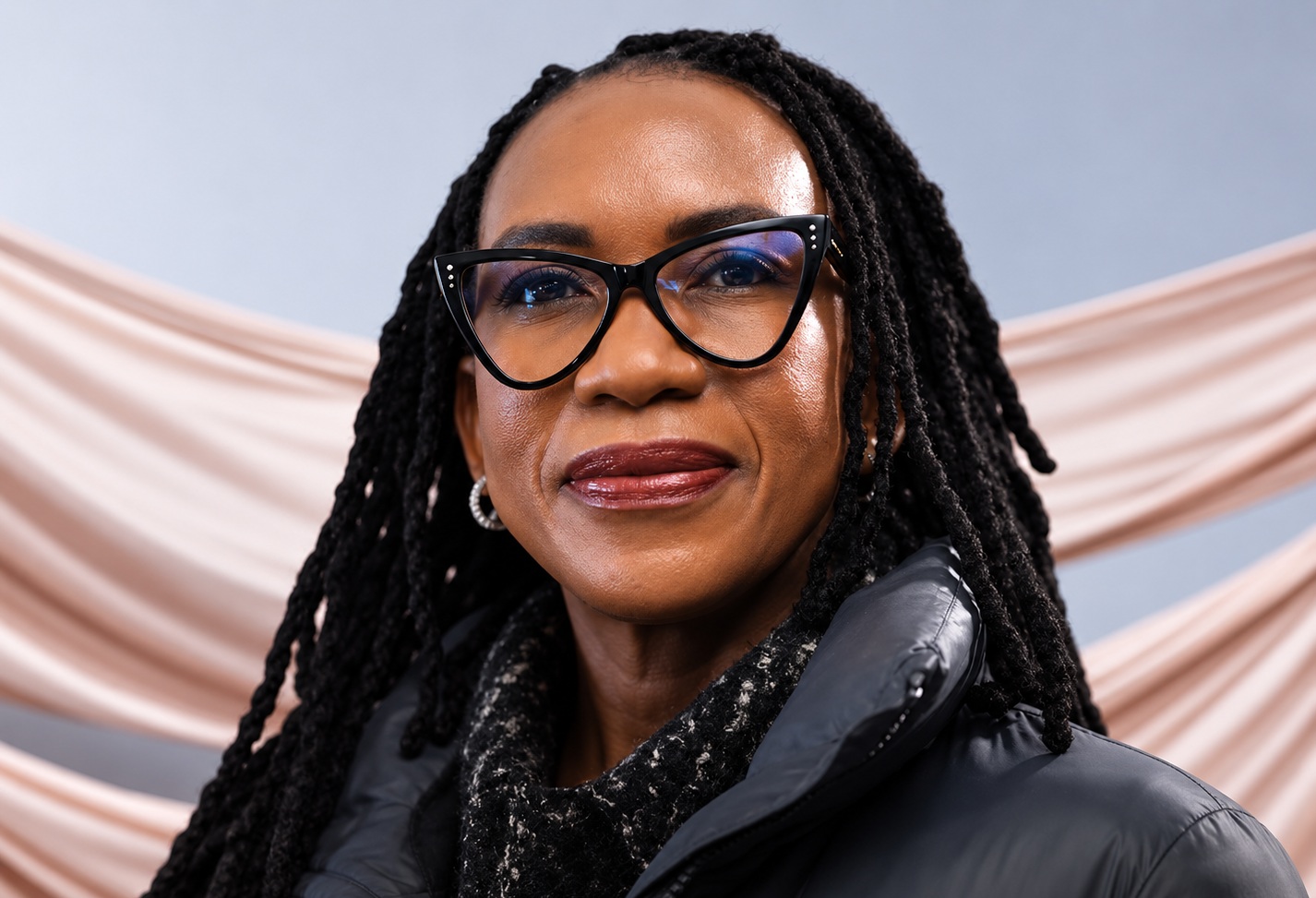
For Mary Vilakazi, becoming Group Chief Executive Officer of FirstRand is not a story she attributes to a single defining moment. It is the result of opportunities accumulated over time, combined with preparation, performance and the willingness to take on increasingly complex responsibilities. Her journey from Alexandra township in Johannesburg to the leadership of one of Africa’s largest financial groups illustrates how access to opportunity can transform ambition into executive leadership.
Vilakazi became FirstRand Group CEO on 1 April 2024, succeeding Alan Pullinger. Her appointment made her the first woman to lead FirstRand and the second Black person to occupy the position after Sizwe Nxasana. FirstRand’s major businesses include FNB, RMB and WesBank, giving the group a significant presence across retail and commercial banking, corporate and investment banking, and vehicle and asset finance.
A Journey Built Across Finance
Long before she occupied the Group CEO’s office, Vilakazi built a career across different areas of financial and corporate management.
A Chartered Accountant (CA(SA)), she began her career at PwC, where she became one of the firm’s youngest partners globally at just 27. She subsequently held leadership positions at Mineral Services Group and MMI Holdings, where she served as Deputy CEO and CFO.
In 2018, she joined FirstRand as Group Chief Operating Officer. The role gave her exposure to the organisation at group level and positioned her to understand the relationships between its different businesses, people, operations and strategy.
Six years later, she became Group CEO.
Her career demonstrates the value of professional breadth. Rather than building her reputation around one narrow speciality, Vilakazi accumulated experience across finance, operations, strategy and leadership.
As she has described it, her career was shaped by “a series of opportunities.”
That perspective also explains why access is such an important theme in her story.
From Alexandra to the Boardroom
Vilakazi grew up in Alexandra, a township in Johannesburg. Her background was far removed from the executive environment she would eventually enter.
Her rise therefore carries significance beyond FirstRand itself. It demonstrates what can happen when professional opportunity reaches talent that may not begin with conventional access to corporate networks.
“If my appointment inspires a person in Alex to believe that anything is possible, that would be a great outcome,” she has said.
That statement places her achievement within a wider context. Her success is personal, but its symbolic value extends to young people watching from communities where senior corporate leadership may appear distant.
Her story suggests that representation can change perceptions of what is possible—not by promising that every journey will follow the same path, but by making previously unfamiliar possibilities visible.
Leading FirstRand at Scale
The organisation Vilakazi leads is one of Africa’s most significant financial groups.
FirstRand’s portfolio includes FNB, RMB and WesBank, with operations spanning consumer and business banking, investment banking and vehicle and asset finance. The group has assets in the region of R2.5 trillion to R2.7 trillion in recent reporting periods.
Leading an organisation of this scale requires more than technical financial knowledge. It requires the ability to balance growth, risk, capital, regulation, technology, customer needs and shareholder expectations.
Under Vilakazi’s leadership, FirstRand has continued to report resilient financial results despite challenging economic conditions and provisions associated with its UK motor-finance operations.
Recent reporting periods have recorded normalised earnings growth of roughly 10% to 11%, while return on equity has remained around 20% to 21%, within FirstRand’s stated target range of 18% to 22%.
Vilakazi has linked the group’s performance to the strength of its customer-facing businesses and disciplined allocation of financial resources.
“FirstRand continues to deliver growth and superior returns for shareholders,” she has said.
She has also pointed to the group’s financial-resource management approach as a contributor to balance-sheet efficiency, capital strength and returns.
A Leadership Philosophy Grounded in People
Despite the scale of her position, Vilakazi does not describe leadership primarily through hierarchy.
She has emphasised the importance of putting the right people in the right roles, creating alignment, having frank conversations and holding leaders accountable for results.
When asked about gender within senior leadership, her response has been revealing:
“When you see us at a group executive exco, I forget anybody’s gender. What mattered… was whether the team is aligned on values, operates cohesively, and can effectively support the organization.”
Her emphasis is therefore on competence and collective performance.
Yet her presence at the top of FirstRand remains significant for women. She is leading the group at the same time that Lytania Johnson leads FNB and Emrie Brown leads RMB, creating an unusual concentration of women at the top of FirstRand’s major businesses.
The development represents not simply greater representation, but women’s participation in roles carrying substantial responsibility for revenue, strategy and performance.
The First Woman Does Not Have to Be the Last
Vilakazi’s appointment also raises a broader question about how institutions create leadership pipelines.
Her journey was not built overnight. It developed through accounting, professional services, corporate finance, executive management and years inside FirstRand.
That matters because leadership succession is rarely about a single appointment. It is about whether organisations consistently identify talent, provide meaningful responsibilities and prepare people for increasingly complex roles.
Vilakazi’s own experience reinforces that principle.
The opportunities she received created access to subsequent opportunities. Each role became part of the preparation for the next.
Her story therefore makes a case for intentional leadership development—not only for women, but for talented people whose backgrounds may not traditionally connect them to the highest levels of corporate power.
Beyond the CEO Title
There is, however, an important distinction between leading a company and owning its capital.
Vilakazi has significant executive authority over FirstRand’s strategy, performance and allocation of financial resources. But FirstRand is a listed company, and its ownership remains distributed among shareholders.
According to FirstRand’s 2025 annual financial statements, the Public Investment Corporation held approximately 15.7%, while BEE partners held about 4.9%. Other significant institutional investors included BlackRock and Old Mutual. Directors and prescribed officers held only a small proportion of the company’s shares.
The distinction is important. A woman can occupy the highest executive position in a major financial institution without personally controlling the majority of its underlying capital.
That makes Vilakazi’s rise part of a much larger conversation about women’s economic power—one that extends beyond executive titles to ownership, investment, board representation and capital allocation.
A Legacy Being Built
For Vilakazi, leadership appears to be measured not only by the position attained but by what becomes possible because someone reached it.
Her journey from Alexandra to FirstRand’s Group CEO office demonstrates the cumulative power of opportunity, preparation and professional growth.
She has become a historic figure within FirstRand, but her own words suggest that she sees the significance of her appointment in what it might make others believe is possible.
A young woman from Alexandra may now look at the Group CEO’s office and see not an unreachable destination, but a possibility.
And that may be one of Mary Vilakazi’s most enduring contributions: not simply becoming the first woman to lead FirstRand, but helping expand the imagination of who can lead next.




Comments are closed.