
By Blossom Ukoha
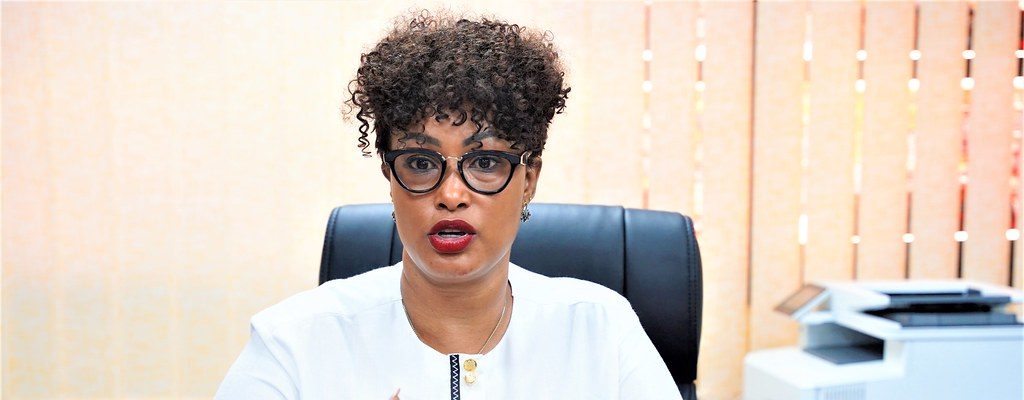
For millions of people, a mobile phone is simply a device for communication. In Rwanda, under the leadership of Chantal Umutoni Kagame, it has become something much more powerful: a gateway to financial opportunity.
As Chief Executive Officer of Mobile Money Rwanda Limited (MTN MoMo Rwanda), Chantal sits at the centre of one of Rwanda’s most significant digital transformation stories. Her work has helped expand mobile financial services beyond simple money transfers, creating an ecosystem through which people can send and receive money, pay merchants, save, access micro-loans and participate more fully in the formal economy.
But Chantal’s journey to the helm of Rwanda’s fintech revolution did not happen overnight. It was built over more than two decades of experience across the country’s telecommunications industry.
A Career Built Across Rwanda’s Telecom Industry
Chantal holds a Bachelor’s degree in Commerce, specialising in Finance, from the Kigali Institute of Science and Technology, now part of the University of Rwanda. Her professional career spans more than 20 years and includes leadership positions across Rwanda’s three major telecommunications companies.
Around 2011, she served as Head of Sales, Distribution and Corporate Affairs at Tigo Rwanda. Her responsibilities placed her close to customers, distribution networks and the commercial realities of a rapidly changing telecommunications market.
In June 2015, she was appointed Deputy Chief Executive Officer and Chief Operating Officer of Tigo Rwanda, taking on a broader leadership role at a time when mobile connectivity was increasingly becoming central to everyday life and business.
In May 2018, she joined MTN Rwandacell as Chief Business and Corporate Affairs Officer. This experience positioned her to play an even greater role in the development of digital financial services.
Then came a significant turning point.
From Mobile Money Service to Fintech Powerhouse
In 2021, MTN Rwanda spun off its mobile-money operations into a dedicated fintech subsidiary, Mobile Money Rwanda Limited, following approval from the National Bank of Rwanda. Chantal was appointed CEO.
The new structure represented more than a corporate reorganisation. It reflected the growing importance of financial technology to Rwanda’s economy and the recognition that mobile money could evolve into a broader financial ecosystem.
Chantal captured the ambition behind the transition when she said, “Our commitment is to enhance the MoMo user experience and keep innovating products and services aligned with our digital ambition.”
She added that the transition to a standalone business would help cement Mobile Money Rwanda Ltd as “a key FinTech player in the Rwandan market.”
That vision has shaped her leadership.
Under her stewardship, the platform has expanded beyond conventional person-to-person transfers. Customers can use MoMo to send and receive money, make merchant payments, access savings and micro-loan services such as MoKash, receive remittances and conduct other financial transactions using basic mobile phones or smartphones.
For people who may not have access to a traditional bank branch or conventional banking services, that accessibility can fundamentally change how they participate in the economy.
Making Financial Inclusion Practical
The significance of Chantal’s work lies not simply in the number of transactions processed, but in what those transactions make possible.
A market trader can receive payment from a customer without handling cash. A small business owner can pay suppliers electronically. A family member can send money across the country. A customer without a conventional bank account can access financial services through a mobile phone.
This is where fintech becomes more than technology.
Chantal has consistently connected the growth of MoMo to the broader question of opportunity. She has described the platform as connecting people “to opportunity and prosperity.”
As the customer base has expanded, she has described that growth as “a strong testament to the trust and adoption Rwandans continue to place in us as they embrace a digital lifestyle.”
The numbers reinforce the scale of that transformation. MoMo’s active user base has grown substantially, reaching millions of Rwandans, while its merchant ecosystem has expanded dramatically. Recent figures have placed active merchants in the hundreds of thousands, demonstrating how deeply mobile payments have become integrated into everyday commerce.
Building an Ecosystem Around Women and Entrepreneurs
One of the most important dimensions of digital financial inclusion is its potential to support entrepreneurs who operate outside traditional financial systems.
For women running small businesses, access to convenient financial services can mean easier payments, greater control over business transactions and new opportunities to participate in the formal economy.
Chantal’s leadership has therefore focused not only on technology but also on sales and distribution networks, strategic planning, talent development and expanding access to underserved communities.
The evolution of MoMo has included partnerships, merchant solutions, digital products and innovations designed to make financial services more accessible to individuals and businesses.
Her leadership philosophy increasingly reflects this connection between innovation and inclusion. As she puts it, through “innovation and inclusion,” the platform is “not just powering transactions but powering transformation.”
That distinction is important. A successful fintech platform is not ultimately measured by technology alone. Its deeper value lies in whether people can use that technology to improve their economic lives.
The Merchant Economy Goes Digital
The rapid growth of MoMo’s merchant network provides another window into the transformation Chantal is helping to drive.
As more businesses accept mobile payments, digital finance becomes part of the infrastructure of commerce rather than a separate service.
Chantal has described the growth in merchants as evidence that mobile money is becoming “embedded in the way Rwandans transact, run businesses and participate in the economy.”
The objective, she has emphasised, is to make the experience simpler, more secure and more accessible.
That approach has helped position mobile money as an important component of Rwanda’s wider movement towards a more digital and cashless economy.
Leadership Beyond the Numbers
Chantal’s influence has also been recognised beyond the balance sheet and customer statistics. She has been recognised as Female Fintech Leader of the Year and included among 100 African Female Finance Leaders, reflecting the growing visibility of African women shaping the continent’s financial and technology sectors.
Her story is particularly significant because it challenges the idea that Africa’s digital transformation must be driven from outside the continent.
Chantal’s career has been built within Rwanda’s telecommunications and financial technology ecosystem. She understands the market, the consumers and the challenges of expanding access in an emerging economy.
Her leadership demonstrates what can happen when technology, financial expertise and a clear commitment to inclusion come together.
The Bigger Picture
The transformation of a mobile phone into a financial tool may appear simple today, but its implications are profound.
A phone can connect a woman entrepreneur to her customers. It can allow a family to move money across distances. It can give a small business a digital payment channel. It can open access to financial services for someone who has never walked into a bank.
Chantal Umutoni Kagame’s contribution has been to help scale that possibility into a national fintech ecosystem.
Her story is therefore not simply about mobile money. It is about the changing architecture of African economies and the women helping to build it.
Conclusion: Powering Transformation
Chantal Umutoni Kagame’s journey from telecommunications leadership to the helm of Rwanda’s mobile-money industry illustrates how technology can become a powerful instrument for economic participation. Through strategic leadership, innovation and an emphasis on inclusion, she has helped transform mobile money from a convenient payment service into an increasingly important part of how millions of people transact, save, borrow, trade and participate in the economy.
Her impact also carries a larger message for Africa: financial inclusion is not only about opening bank accounts. Sometimes, it begins with making opportunity accessible through the device already in someone’s hand.
That is the kind of leadership and transformation that Amazons Watch Magazine continues to spotlight—women who are not merely participating in the future, but actively building it.





Comments are closed.