By Blossom Ukoha
When 26-year-old Angel Musiime wakes up for work in Uganda’s Kyegegwa Town Council, peacebuilding does not begin in a diplomatic conference room. As a local parish chief and trained peace mediator, her work can involve helping young people return to school, navigating difficult conversations around domestic abuse, and helping people resolve conflicts within their communities.
Musiime describes her ambition simply: “I want to be a great woman of peace.” Through peace-mediation training, she developed skills in conflict resolution and leadership and began using them to support women, girls and others in her community. Her story is a reminder that some of the most important work of peace happens far from the rooms where governments negotiate agreements.
That is precisely why this year’s International Day of Peace matters.
Observed on 21 September 2026, the United Nations theme is “Invest in Peace – For Everyone, Everywhere, Every Day.” The theme recognises the “everyday architects of peace”—people who build stability, bridge divisions and create the foundations for lasting peace in communities, schools and neighbourhoods.
For Amazons Watch Magazine, there is a question within that message that deserves greater attention: If women are already building peace, what would happen if the world invested more deliberately in their leadership?
Women Are Living With Conflict—and Building Through It
The scale of women’s exposure to conflict is enormous. In 2024, 676 million women and girls lived within 50 kilometres of a deadly conflict event, the highest number recorded since the 1990s. That means conflict is not an abstract geopolitical issue for millions of women; it is part of the environment in which they raise families, earn livelihoods and build communities.
The consequences can be devastating. UN Women reported that the number of women and girls killed in conflict increased sharply between 2022–2023 and 2023–2024, while conflict-related sexual violence also rose substantially.
But women should not be defined only by what conflict does to them.
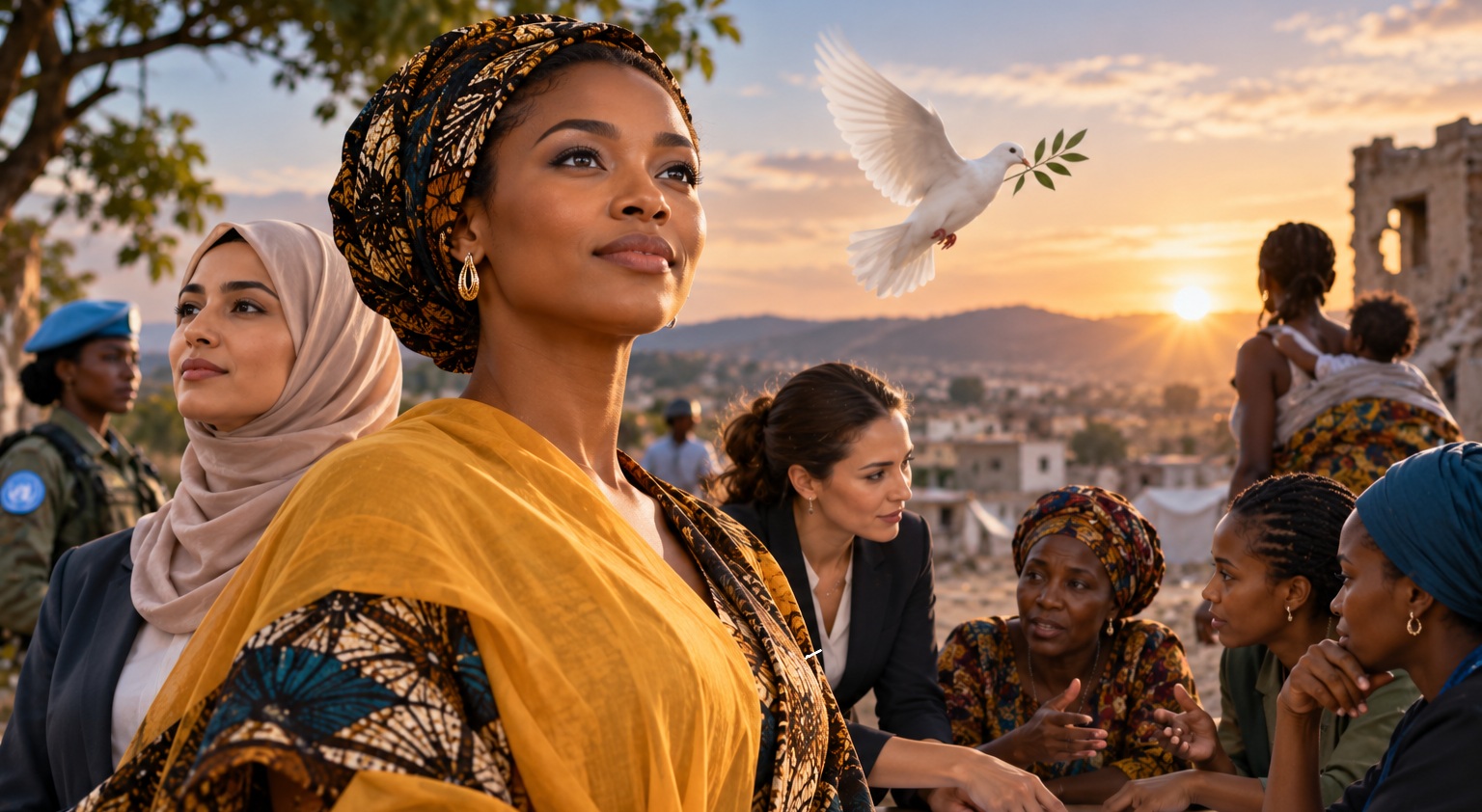
Across communities affected by instability, women are also mediating disputes, organising dialogue, supporting survivors, monitoring local tensions and helping families rebuild. Their leadership is often closest to the realities that formal peace processes struggle to capture.
Uganda offers a powerful example. UN Women reports that women’s representation on peace committees in targeted districts increased from 17 per cent in 2022 to 46 per cent in 2025. In 2024 alone, approximately 500 community-level conflicts were mediated or resolved through women working with the organisation.
These are not simply acts of community service.
They are acts of leadership.
A woman resolving a land dispute is exercising mediation and conflict-resolution skills. A woman bringing divided groups together is contributing to social cohesion. A woman identifying tensions before they become violence is participating in conflict prevention.
The distinction matters because the language used to describe women’s work often determines how that work is valued.
If women are described only as caregivers, volunteers or victims, their leadership can remain invisible. When the same work is recognised as mediation, governance, prevention and peacebuilding, women become visible as what they already are: decision-makers and agents of stability.
The Peace Table Still Does Not Reflect Her Contribution
This is where the global contradiction becomes difficult to ignore.
Women may be helping to prevent conflict in their communities, yet they remain significantly underrepresented in formal peace processes.
According to UN Women, women represented only 7 per cent of negotiators and 14 per cent of mediators in major peace processes globally in 2024. Women accounted for 20 per cent of signatories to peace agreements. These figures remain below the UN’s minimum one-third target for women’s participation.
UN Women also reports that only one in ten peace talks in 2024 included women negotiators.
The issue, therefore, is not simply whether women are present.
It is whether their knowledge and experience are being given the authority to shape outcomes.
A woman who has spent years working with displaced families may understand the consequences of a proposed settlement in ways that are invisible from a distant negotiating table. A woman who has mediated disputes over land, resources or family separation may recognise tensions that could threaten an agreement’s implementation.
Yet formal peace processes can still be dominated by traditional power structures.
That creates a profound disconnect between where peace is being built and where peace is being decided.
Investing in Peace Must Mean Investing in Her
This is where the 2026 theme becomes more than a commemorative message.
If the world is serious about investing in peace, it must invest in the women and organisations already doing the work.
UN Women has reported that less than 0.5 per cent of funding and technical assistance to conflict-affected countries is directed to women’s organisations.
The consequences of this underinvestment are becoming increasingly visible. A 2025 UN Women survey of 411 women-led and women’s rights organisations across 44 crisis-affected countries found that 90 per cent had experienced funding cuts. Nearly half—47 per cent—said they could be forced to shut down within six months if current funding levels continued.
This is more than a funding problem.
It is a peacebuilding problem.
When women-led organisations disappear, communities can lose organisations that provide protection, support survivors, document abuses, organise dialogue and connect vulnerable people to essential services.
Investment must therefore follow the leadership already taking place.
From a Seat at the Table to Power at the Table
For years, the conversation about women and peace has focused on giving women “a seat at the table.”
That remains important. But the conversation must go further.
What happens after she gets the seat?
Can she influence the agenda? Was she involved before the major decisions were made? Does she have access to negotiation teams and resources? Are her recommendations reflected in the final agreement? Are women-led organisations involved in implementation and reconstruction?
Presence without influence can become symbolic.
The goal must be meaningful participation and decision-making power.
Governments can create pathways for women to become negotiators, mediators, political leaders and peacebuilding authorities. Donors can provide sustained and flexible funding to women-led organisations. International institutions can make women’s meaningful participation a standard rather than an optional addition.
And media organisations have a role too.
We must tell women’s stories differently.
Women should not appear in coverage of conflict only as victims, survivors or recipients of humanitarian assistance. Their stories should also show them negotiating, organising, mediating, leading and making decisions.
Because storytelling shapes perception.
Perception shapes legitimacy.
And legitimacy can determine who is trusted with power.
Invest in the Woman Building Peace
On this International Day of Peace, governments, international institutions, donors and civil society organisations should look beyond the formal negotiating room and ask a more important question:
Who is already building peace where the consequences of conflict are being felt most directly?
Then invest in her.
Invest in her organisation. Invest in her training. Invest in her safety. Invest in her network. Invest in her ability to participate in formal processes. And invest in her capacity to influence the decisions that determine what peace will actually mean for her community.
Women should not have to spend years rebuilding communities after decisions have already been made about their future.
They should be part of making those decisions.
Peace Needs Her Leadership
The 2026 International Day of Peace reminds the world that peace is not created only through diplomacy. It is built every day by people who bridge divides, strengthen communities and create opportunities for cooperation.
Women are already doing that work.
From Angel Musiime and other women mediators in Uganda to women-led organisations working across conflict-affected communities worldwide, their leadership demonstrates that peace is not simply an agreement signed between powerful actors. It is something built through relationships, trust, resilience and action.
The question is no longer whether women can contribute to peace.
They already do.
The question is whether the world is prepared to invest in that contribution at the level required—and give women the authority to shape the decisions that determine what comes next.
Because if the world truly wants to invest in peace, it must invest in her.
And if women are trusted to build peace from the ground up, they must also have the power to help define it from the top.




Comments are closed.