By Blossom Ukoha
A young woman sees an announcement about a government-funded business programme on her phone. The opportunity could help her expand her small enterprise, but she does not know where to apply, whether she qualifies or when applications close. A few days later, the opportunity disappears from her feed. For her, the problem was not a lack of ambition. It was a lack of accessible, reliable information.
This is why access to information matters. Information can determine whether a woman knows about an opportunity, understands her rights, accesses a public service, makes an informed decision or participates in decisions that affect her family and community. On 28 September 2026, the world marks the International Day for Universal Access to Information under the theme “Upholding Information Integrity in the Digital Age: The role of access to information in addressing information disorder.” The United Nations says that in a digital environment filled with misinformation and disinformation, access alone is no longer sufficient; people also need information that is timely and reliable.
Information Is a Foundation for Women’s Empowerment
Universal access to information is recognised as part of the right to seek, receive and impart information and is closely connected to freedom of expression. UNESCO has been designated the custodian agency for SDG indicator 16.10.2, which tracks public access to information. According to the UN’s 2026 observance page, 141 countries and territories had a legal guarantee of access to information, while 123 participated in UNESCO’s 2025 Survey on Public Access to Information.
For women, however, having a legal right does not automatically mean having practical access. Information may exist but remain difficult to find, unavailable in accessible formats or languages, buried in complex government systems or shared through digital channels that some women cannot easily use.
The gender dimension is particularly important in an increasingly digital society. UNESCO reports that nearly 66 per cent of the world’s population is online, yet nearly 73 per cent of women surveyed have experienced online violence. UNESCO also reports that women represent only 12 per cent of AI researchers globally. These figures illustrate two sides of the digital challenge: women need meaningful access to information and technology, but they must also be able to participate safely in the systems that increasingly determine how information is produced and distributed.
The Information Gap Can Become an Opportunity Gap
Consider a woman farmer who does not know that agricultural grants are available, an entrepreneur who cannot find information about procurement opportunities, or a young woman who cannot identify where to obtain accurate information about education or healthcare.
In each case, information is connected to economic and social agency.
UN Women has highlighted that discriminatory social and economic systems can restrict women’s access to information, networks, jobs and assets. It also stresses the importance of collecting sex-disaggregated data and ensuring that women’s voices are amplified in decision-making spaces.
This is why information should not be treated simply as something women consume. Women must also have the opportunity to produce, interpret and distribute information.
The Digital Age Has Raised the Stakes
The internet has made information more accessible than at any previous point in history, but it has also made the information environment more complicated.
A false claim about a health service, an edited video about a public policy, a fraudulent business opportunity or misleading financial advice can circulate rapidly before reliable information reaches the same audience.
The UN’s 2026 theme therefore places information integrity at the centre of universal access. The United Nations identifies reliable official information, proactive disclosure, credible data, media and information literacy and responsible digital technologies as important components of a healthier information environment.
UNESCO’s current Director-General, Khaled El-Enany, has similarly placed information integrity within the wider challenge of ensuring that digital transformation serves people and communities. UNESCO states that information integrity is central to addressing major contemporary challenges, including climate change and the rapidly changing digital environment.
Former UNESCO Director-General Audrey Azoulay also warned about the consequences of unequal access. In her message for the International Day in 2018, she said that a lack of equal access to information is a “sure way to increase marginalization and rapid exclusion from the rest of the world.”
Her observation remains relevant to women today: when reliable information is inaccessible, exclusion can become harder to see because the opportunity itself may never become visible.
Women Must Be More Than Recipients of Information
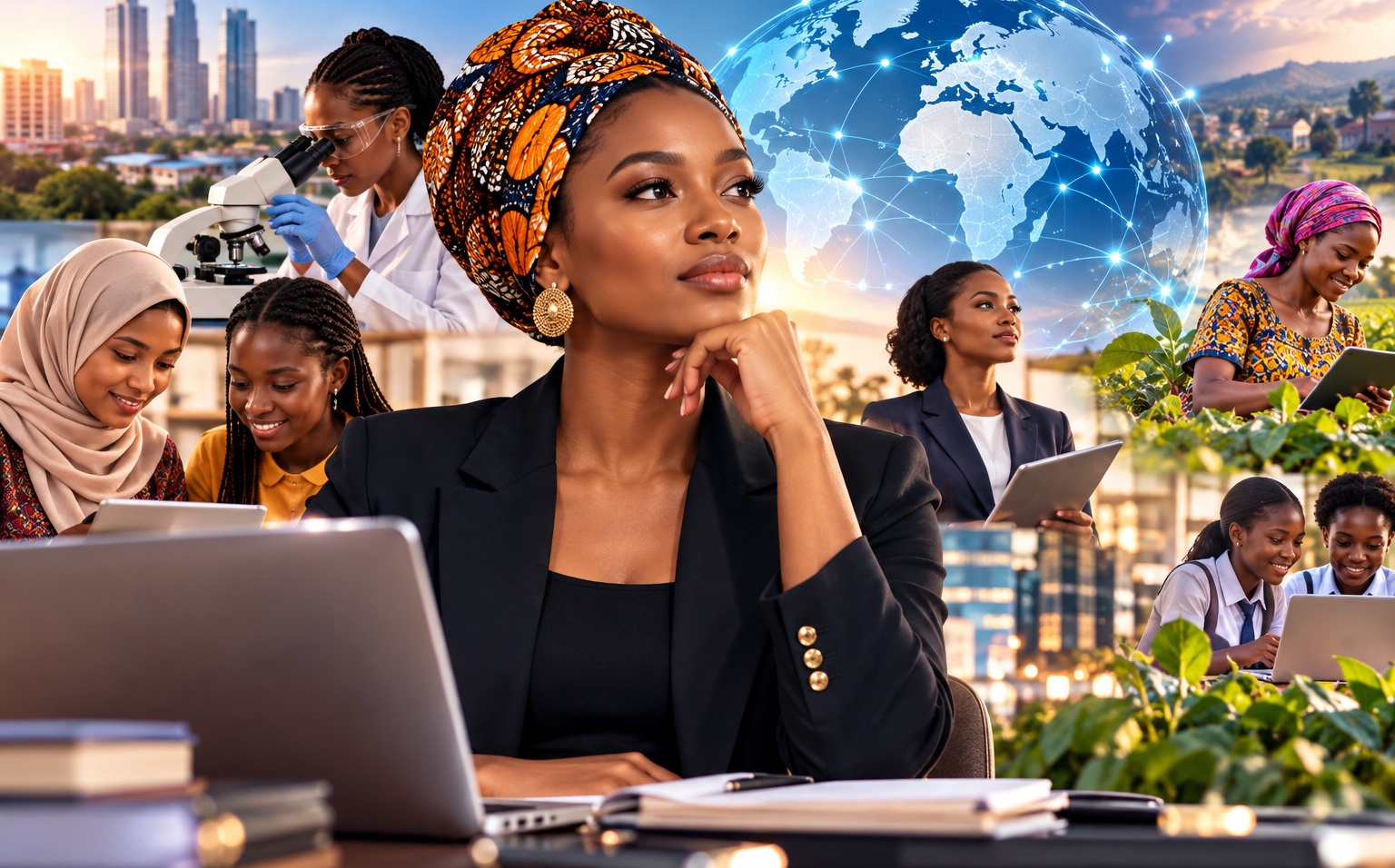
Building an inclusive information society also means creating space for women as journalists, researchers, scientists, technology professionals, policymakers, community leaders and information creators.
This matters because the people who produce information influence what becomes visible, whose experiences are documented and which issues enter public discussion. UNESCO’s work on media and information literacy emphasises the importance of enabling people to access, evaluate, use, create and communicate information effectively.
For women, that means moving beyond simply asking whether they can access the internet. The deeper questions are: Can they find trustworthy information? Can they understand it? Can they challenge inaccurate information? Can they use it to make decisions? And can they contribute information themselves?
From Access to Agency
International Day for Universal Access to Information is therefore more than a celebration of connectivity. It is a reminder that information can influence who participates, who benefits and who has the knowledge required to act.
The challenge for governments, institutions, media organisations and technology companies is to make reliable information more accessible, understandable, safe and inclusive. For women and girls, this includes strengthening digital and media literacy, improving access to public information, expanding meaningful digital participation and ensuring that information systems reflect their realities.
The global conference marking the 2026 observance is taking place from 28–30 September in Sierra Leone, hosted by UNESCO and the Government of Sierra Leone.
A future in which women can shape their economies, communities and institutions requires more than giving them a voice. They need access to the information that enables them to use that voice effectively.
The Conversation Continues
What can governments, institutions and communities do to ensure that every woman and girl has access to reliable information and the knowledge and confidence to use it?
Share this article and join the conversation on why information access is essential to women’s leadership, participation and progress.



Comments are closed.