

Blossom Ukoha
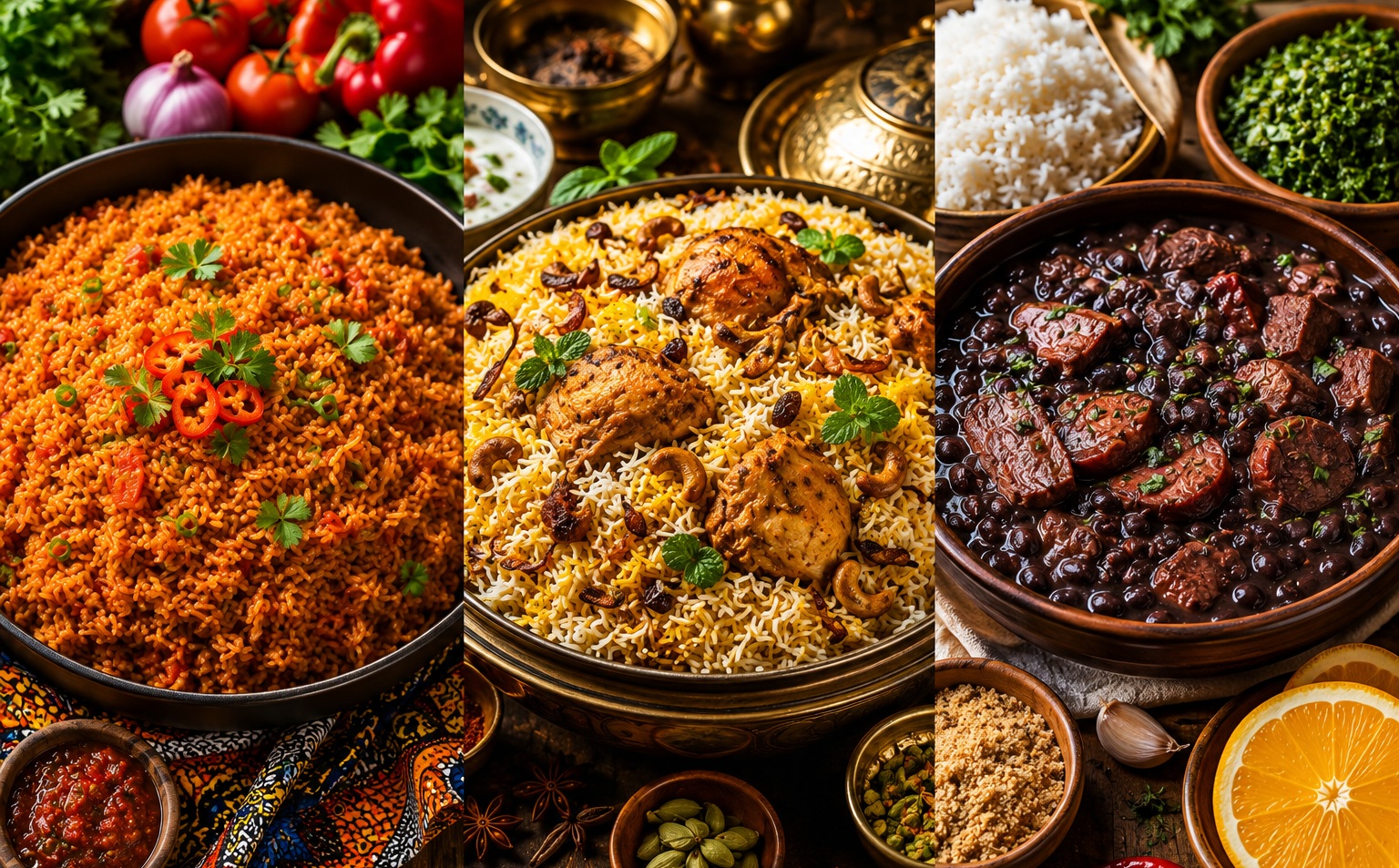
Imagine three women, miles apart, preparing dinner after a long day. In Lagos, one stirs a deeply seasoned tomato base before folding in rice. In Hyderabad, another layers fragrant rice with spiced chicken and seals the pot so the steam can do its work. In Rio de Janeiro, a third prepares a pot of black beans and meat to serve alongside steaming white rice, greens, farofa and orange.
Their kitchens look different. Their spices tell different stories. Their traditions come from different continents. Yet, at the centre of each meal is the same humble idea: take a simple staple, build flavour around it, and turn dinner into something much bigger than food.
Rice is one of the world’s great culinary connectors. More than 3.5 billion people rely on it as a significant part of their daily diet, and it contributes roughly one-fifth of global calories. Across Asia, Africa and Latin America, rice has become more than a crop; it is a foundation for family meals, celebrations, hospitality and cultural identity.
That is why jollof, biryani and feijoada belong in the same global conversation, even though they are not technically the same type of dish.
Jollof: The One-Pot Heart of West Africa
Few dishes generate as much affectionate rivalry as jollof rice. Nigeria, Ghana, Senegal and other West African countries have developed distinctive interpretations, with each claiming a special relationship with the dish.
The broader history is complex, but Senegal’s ceebu jën, a close relative within the region’s rice traditions, has an especially important cultural status. UNESCO inscribed ceebu jën on its Representative List of the Intangible Cultural Heritage of Humanity in 2021. In its official description, UNESCO calls ceebu jën “a traditional dish of rice and fish” and identifies it as a culinary practice originating in Senegal’s fishing communities, particularly Saint-Louis. The preparation traditionally combines rice with fish, vegetables, dried fish and other ingredients, while its culinary knowledge is passed down through generations.
Modern jollof has travelled far beyond West Africa. From restaurants in London and New York to family kitchens across the diaspora, the dish has become a powerful expression of African food culture.
And the secret does not necessarily require an elaborate kitchen.
The shortcut? Build the flavour base first. A well-cooked tomato, pepper and onion mixture can carry the dish. Once the rice is introduced, the pot becomes a one-dish meal with remarkable depth. For busy cooks, preparing the sauce in advance can turn a traditionally time-consuming meal into a practical weeknight option.
Biryani: When Rice Becomes an Occasion
If jollof is synonymous with one-pot comfort, biryani is proof that rice can also become theatre.
Its history stretches across Persianate and South Asian culinary traditions, with different regional versions developing over centuries. Today, there is no single biryani. Hyderabadi, Kolkata, Lucknowi, Malabar and Sindhi varieties demonstrate how communities have adapted the dish to local ingredients, religious traditions and cooking techniques.
Its popularity is hardly in doubt. According to Swiggy’s 2024 year-end report, the platform recorded 83 million biryani orders in India between January 1 and November 22, making it the most-ordered dish on the platform for the ninth consecutive year. That amounted to approximately 158 orders a minute, or about two every second.
Yet biryani can appear intimidating to the home cook. There are spices to toast, meat to season and rice to prepare.
The shortcut is not to abandon the technique but to simplify the preparation. Marinate the protein ahead of time, use a concentrated spice blend, prepare the aromatics in advance and cook the rice separately before layering. The result retains the spirit of biryani without demanding an entire afternoon in the kitchen.
Feijoada: Brazil’s Communal Pot
Then there is feijoada, Brazil’s beloved black-bean stew.
Unlike jollof and biryani, feijoada is not itself a rice dish. Its classic presentation, however, places it firmly within the global rice-table tradition: black beans and meat are served with white rice, collard greens, farofa and orange slices.
The dish’s history is layered, reflecting Portuguese culinary traditions, Brazilian ingredients and African influences. The first known printed reference to “feijoada à brasileira” appeared in Recife in 1827, in an advertisement for a restaurant serving the dish.
Its appeal lies in its generosity. Feijoada is made to be shared, particularly at weekend gatherings and social occasions.
The modern shortcut is simple: let the pot do the work. Canned or pre-cooked beans can reduce preparation time, while a pressure cooker can dramatically shorten the cooking process. The goal is not to erase tradition, but to make its flavours accessible to today’s busy households.
Three Dishes, One Global Lesson
Jollof, biryani and feijoada reveal something fascinating about global food culture: great cooking does not always begin with expensive ingredients. Sometimes it begins with a staple, a pot and a community’s accumulated knowledge.
Each dish also demonstrates how food travels and transforms. Rice can become smoky and tomato-rich in West Africa, fragrant and layered across South Asia, or the perfect companion to Brazil’s deeply seasoned bean stew. The ingredients change, but the purpose remains remarkably familiar: to nourish, gather and tell a story.
And perhaps that is the real shortcut.
You do not need to reproduce every traditional step to appreciate a dish’s cultural soul. You need to understand what makes it matter.
A pot of jollof is not simply rice and tomato. Biryani is not merely rice and spices. Feijoada is not just beans served beside rice.
They are edible histories, passed from one generation to another, carried across borders and continually reinvented in kitchens around the world.
In an increasingly globalised kitchen, the most exciting recipe may be the one that reminds us that, despite our differences, we have always found ways to gather around the same table.





Comments are closed.