By Blossom Ukoha
What happens when a girl born into poverty refuses to let her circumstances define the size of her dreams? For Dolly Rebecca Parton, the answer was extraordinary. She became one of the world’s most beloved entertainers, a prolific songwriter, a shrewd entrepreneur and a philanthropist whose generosity reached millions.
Born on January 19, 1946, in a one-room cabin in Locust Ridge, near Pittman Center, Tennessee, Dolly was the fourth of 12 children in a poor Appalachian farming family. Her father, Robert Lee Parton, was a tobacco farmer who could not read or write, while her mother, Avie Lee, filled the home with traditional ballads and hymns.
There was little money, but there was music. And from those humble beginnings, Dolly built a remarkable life that stretched across music, film, business and philanthropy.
Dolly died on August 25, 2026, at the age of 80, in Nashville, Tennessee, following a brief battle with cancer. She was surrounded by loved ones. Her passing marked the end of an extraordinary chapter, but not the end of her influence.
Here are eight things to know about the woman behind the legend.
She Turned Poverty Into the Beginning of Her Story
Dolly’s childhood was defined by financial hardship. Growing up with 11 siblings in a small cabin, she understood scarcity from an early age.
But poverty did not erase her ambition.
Music became both an escape and a language through which she understood the world. Encouraged by her musical mother, Dolly began writing songs as a child and performing while still young. By her early teens, she was already appearing on local radio and had performed at the Grand Ole Opry.
After high school, she moved to Nashville with a clear goal: to make a life in music.
She never forgot where she came from. Instead, she transformed her childhood experiences into some of her most enduring creative work.
She Was a Songwriter Before She Was a Superstar
While the world came to know Dolly as a singer and entertainer, she considered herself first and foremost a songwriter.
She wrote more than 3,000 songs throughout her career, creating music that would become part of the cultural fabric of several generations.
Among her best-known compositions are “Jolene,” “Coat of Many Colors,” “9 to 5” and “I Will Always Love You.”
The latter became an extraordinary example of the power of her songwriting. Originally written as a farewell to longtime collaborator Porter Wagoner, “I Will Always Love You” later became a global phenomenon when Whitney Houston recorded it for The Bodyguard.
Dolly’s ability to turn ordinary experiences into unforgettable stories was one of her greatest gifts.
She Built an Empire Beyond Music
Dolly Parton did not allow her success in music to become a ceiling.
She expanded into acting, television, theatre, publishing, business and tourism, proving herself to be as commercially astute as she was creatively gifted.
Her film career took off with 9 to 5, alongside Jane Fonda and Lily Tomlin. Dolly also wrote and performed the film’s hit title song, earning an Academy Award nomination.
She later appeared in films including The Best Little Whorehouse in Texas and Steel Magnolias.
In 1986, she opened Dollywood in Pigeon Forge, Tennessee. More than an entertainment destination, it became a major tourism attraction and employer while celebrating the culture and heritage of her Appalachian home.
Dolly understood something powerful about business: your roots can be an asset, not a limitation.
She Made Giving Back Part of Her Legacy
For Dolly, philanthropy was never simply something to do after becoming successful. It became part of what success meant.
In 1995, she launched Dolly Parton’s Imagination Library through the Dollywood Foundation. Inspired partly by her father’s inability to read and write, the programme provides free, age-appropriate books to children from birth to age five.
What began as a local initiative grew into an international literacy programme, distributing hundreds of millions of books to children across multiple countries.
She also supported education initiatives in her home community, contributed to disaster relief and health causes, and donated $1 million to Vanderbilt University Medical Center to support COVID-19 vaccine research.
Her philanthropy reflected a deeply personal philosophy: success means more when it creates opportunities for others.
She Redefined What a Woman Could Be
Dolly’s career unfolded in an entertainment industry where women often had to fight for control, recognition and financial independence.
She built a different model.
She owned her songs, developed businesses around her name, controlled her creative identity and remained deeply involved in the direction of her career.
She was simultaneously glamorous and business-minded, humorous and strategic, warm and fiercely independent.
Dolly also understood the power of authenticity. She never tried to hide her Appalachian accent, her femininity or her larger-than-life appearance.
Instead, she made them part of her brand.
Her lesson for women entrepreneurs and leaders remains powerful: you do not have to become someone else to become successful.
She Crossed Boundaries and Connected Generations
Dolly’s music travelled far beyond country music.
She successfully crossed into pop, rock, film and musical theatre while maintaining the identity that made her distinctive.
Her collaborations with artists across genres helped introduce her music to new generations, while her humour and openness allowed her to connect with audiences across cultural and political divides.
Her career also demonstrated remarkable longevity. She continued creating, performing and experimenting well into her later years, including the release of Rockstar in 2023.
Rather than allowing age to define what she could create, Dolly continued to reinvent herself.
She Never Took Herself Too Seriously
Behind the global fame was a woman who understood the power of humour.
Dolly frequently joked about her appearance, her hair and the elaborate image that became synonymous with her name. Her famous wit allowed her to laugh at herself while remaining firmly in control of her public identity.
Her humour was more than entertainment. It was part of her resilience.
She knew how to turn criticism into comedy, stereotypes into branding and attention into opportunity.
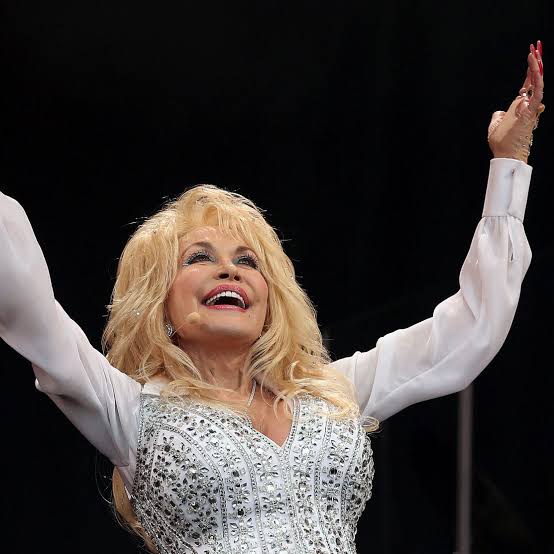
Even the legendary Dolly Parton look — the towering hair, rhinestones and glamorous costumes — became an unmistakable symbol of confidence.
She understood that being underestimated could sometimes be an advantage.
She Proved That a Legacy Can Be Bigger Than Fame
Perhaps the most important thing to know about Dolly Parton is that her greatest legacy cannot be measured by record sales or awards.
She wrote thousands of songs.
She sold more than 100 million records worldwide.
She achieved extraordinary chart success.
She became a film star.
She built Dollywood.
She received some of the highest honours in music, arts and culture, including induction into the Country Music Hall of Fame and the Rock & Roll Hall of Fame, the Kennedy Center Honors, the National Medal of Arts and the Jean Hersholt Humanitarian Award.
But beyond the accolades are the lives she touched.
There are children who discovered books through the Imagination Library. Communities that benefited from her investments. Artists who found inspiration in her songwriting. Women who saw in her an example of independence and possibility.
And there are millions who simply found joy in her music.
The Woman Behind the Legend
Dolly Parton’s story was never just a story about becoming famous.
It was about refusing to let humble beginnings determine the limits of one’s future.
She came from a family with little money but abundant music. She entered Nashville as a young woman with a dream and eventually built a global career on her own terms.
She transformed hardship into art, creativity into enterprise and success into service.
That may be why her story resonates so deeply.
Dolly did not simply rise from poverty to fame. She carried the lessons of poverty with her, remembering the importance of family, education, opportunity, kindness and giving.
Her husband of nearly 60 years, Carl Dean, died in 2025. They had no children together, but Dolly remained deeply connected to her extended family and was famously the godmother of Miley Cyrus.
Now, as the world remembers her, the rhinestones and the big hair may be among the first images that come to mind.
But behind them was something far more enduring: a woman who knew where she came from, understood what she could become and used her success to help others dream bigger.
Dolly Parton leaves behind songs that will continue to be sung, businesses that will continue to grow, stories that will continue to be told and books that will continue to reach children.
Her life reminds us that greatness does not always begin with privilege.
Sometimes, it begins in a one-room cabin with a song, a dream and the courage to believe that there is more waiting beyond the horizon.
Dolly Parton found that horizon and spent much of her life helping others see it, too





Comments are closed.