
“Women themselves have not even understood that [violence] is not the cost of participating in politics.”— Sandra Pepera, National Democratic Institute
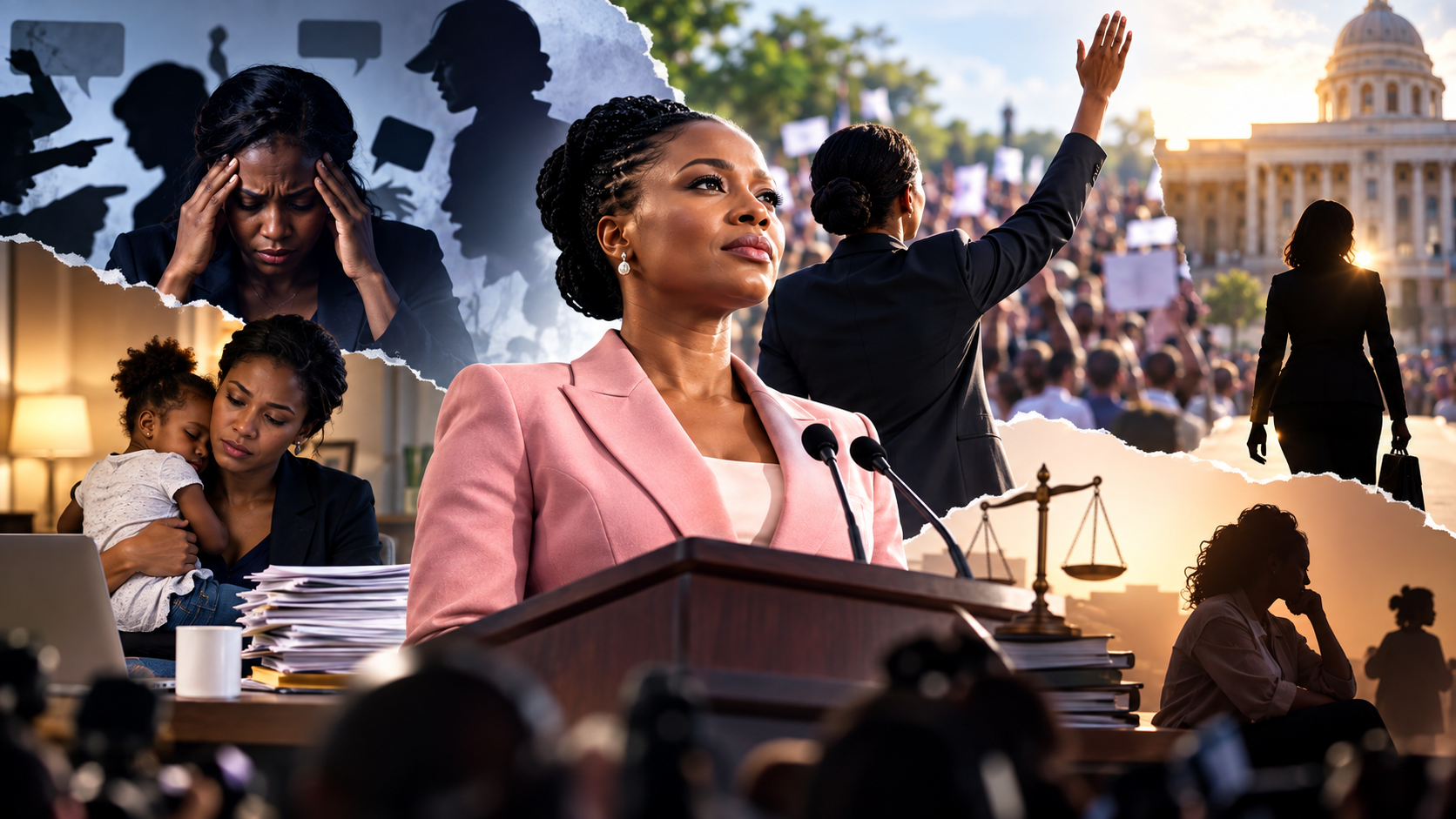
Running for office is expensive for everyone. But for women, the true price is often higher, more layered and largely invisible in official campaign accounts. Beyond nomination fees, posters, rallies and campaign staff, women may face additional costs related to security, transport, childcare, lost income, online abuse, sexual harassment, threats against family members and the constant pressure to prove that political ambition does not make them selfish or neglectful.
That is why Sandra Pepera’s observation is so powerful. Violence, intimidation and harassment are too often treated as unavoidable “costs of politics,” rather than barriers that disproportionately push women out of public life. For many female candidates, campaigning demands not only money but also safety, time, emotional resilience, family support and a willingness to endure intense public scrutiny.
These hidden costs help explain why women remain under-represented in political leadership, even in countries with progressive constitutions, electoral reforms and gender quotas. Official campaign records may show spending on advertising or transport, but rarely capture the cost of hiring security, paying for childcare, rebuilding a reputation after a gendered smear campaign or losing support after challenging powerful party interests.
The question is not simply how much does it costs to run for office? It is what does a woman have to pay that never appears on the campaign balance sheet?
The Data Behind the Hidden Bill
A comparative study published in the European Journal of Political Research in 2025, covering more than 7,000 candidates across 16 countries and 28 elections, found that female candidates operated with significantly lower campaign budgets than men. The average gap was approximately €3,110, with women spending about €5,170 compared with €8,280 for men. The disparity persisted across electoral systems and political ideologies.
In Kenya, the gap can become deeply personal. Campaign spending ceilings set by the Independent Electoral and Boundaries Commission for the 2027 elections reach as high as Sh181.3 million in Nairobi. Yet women often have fewer personal assets, smaller donor networks and greater pressure to self-finance or stretch limited resources. One former candidate told the Daily Nation that male gubernatorial rivals spent between Sh300 million and Sh600 million while she competed with far fewer resources.
A 2025 Westminster Foundation for Democracy study on the cost of politics in South Africa found that candidates’ personal campaign spending ranged from R17,000 to R1 million, with a median of R50,000. For women, however, some expenses extended beyond ordinary campaign costs. Candidates reported paying for personal security during late-night meetings and drivers who helped them manage childcare responsibilities.
Globally, women may also depend more heavily on smaller individual donations and less on personal wealth. Data from the Center for American Women and Politics shows that men tend to dominate self-financing, while women are more likely to rely on broader networks of individual contributors.
The result is a paradox: women may have strong public support but enter elections with fewer financial resources and greater personal costs.
Safety and Violence: The Cost That Never Appears on a Balance Sheet
For women in politics, security is often not optional.
Violence against women in politics includes online sexualised abuse, threats, stalking, intimidation, physical attacks and threats against family members. These experiences can affect women’s willingness to campaign, remain visible or seek office at all.
A 2021 study by the Inter-Parliamentary Union and African Parliamentary Union found that nearly half of women parliamentarians surveyed in Africa had experienced online sexist attacks. In Kenya, research involving women who contested the 2022 elections found that only two of 29 respondents reported no online violence. Others faced threatening calls, physical intimidation and attacks during party primaries.
These risks create expenses rarely classified as campaign spending. A woman may hire security, avoid certain routes, pay for safer accommodation or travel with companions. She may also reduce her online presence, even though social media is an important campaign tool.
The cost is both financial and political. When a woman spends time responding to threats instead of meeting voters, avoids public events because of safety concerns or withdraws from social media because abuse becomes unbearable, violence has directly weakened her campaign.
Calling these experiences merely “the cost of politics” normalises a barrier that disproportionately affects women.
Family, Care and Reputation
Campaigning rarely follows a nine-to-five schedule. Candidates attend evening meetings, travel across constituencies, appear at weekend events and spend long periods away from home.
For women, these demands often collide with unpaid care work, which remains disproportionately their responsibility. Entering politics may require them to find—and personally finance—ways to replace the care they normally provide.
Cultural expectations can make this even harder. Female candidates may be expected to prove that political ambition has not made them neglectful mothers or wives. Their marriages, families and personal relationships can become campaign material. One Kenyan aspirant described being accused of using politics as a route to divorce.
Women are also scrutinised for their clothing, relationships, parenting, appearance and personal history in ways male candidates may not experience to the same degree. Managing this scrutiny requires careful image management and significant emotional labour.
Party Gatekeeping and the Double Cost
Election rules may appear gender-neutral, but political gatekeeping often is not.
Women can face expensive nomination processes, weaker access to party structures, limited donor networks and assumptions that male candidates are more “electable.” Even where parties offer fee waivers or gender concessions, women may still be expected to demonstrate that they have enough personal wealth to run competitive campaigns.
In Nigeria, high nomination and expression-of-interest fees have historically created major barriers for women seeking tickets from leading parties. Women may be encouraged to participate while still facing financial expectations that make genuine competition difficult.
This creates a double cost. A woman may spend money securing a nomination, building a campaign team and mobilising supporters, only to receive less party support than a male rival. If she is replaced, denied resources or pushed aside despite winning a primary, her financial investment may be lost.
So may her time, political momentum, credibility and willingness to contest again.
The Emotional Price
Another cost rarely appears in political research: the psychological burden of constantly defending one’s right to belong.
Male candidates are often judged mainly on their records, ideologies and promises. Women may also be asked who is caring for their children, whether they are too ambitious or emotional, who is financing them, what their husbands think and what they are wearing.
Threats and harassment can consume women’s time and mental energy, forcing them to focus on personal safety rather than political work. That is a political cost, even if it never appears on an expense report.
The Way Forward: Changing the Political Ledger
Recognising these hidden costs is only the first step. The next is to remove them.
Governments must strengthen public financing mechanisms that give women a realistic opportunity to compete, while electoral bodies must enforce transparent and equitable campaign rules. Political parties must make nomination processes more transparent, allocate resources fairly and hold perpetrators of harassment and intimidation accountable.
Safety must also become part of the infrastructure of political participation. Women candidates should have access to effective reporting mechanisms, security support and legal protection against threats, sexual harassment and political violence—both online and offline.
Caregiving cannot remain a private burden silently carried by women who choose to serve the public. Parties and political institutions should consider practical measures such as childcare support, family-friendly campaign structures and meeting schedules that do not systematically penalise candidates with caregiving responsibilities.
But the responsibility does not rest with institutions alone.
Voters, journalists, civil society organisations and political leaders all have a role in changing the culture surrounding women in politics. A woman’s competence should matter more than her marital status, motherhood, appearance or personal life. Political ambition should be treated as a contribution to public life, not as evidence of poor character.
Women can also strengthen the political pipeline by building networks, supporting other female candidates, sharing resources and refusing to normalise abuse.
The goal should not simply be to help more women survive political campaigns. It should be to build political systems in which women can compete, lead and govern without paying an additional price for being women.
The financial cost of campaigning can be measured. The hidden cost is counted in sleepless nights, lost family time, damaged reputations, money spent on protection and talented women who decide that political participation costs too much.
It is time to change the ledger and make the price of public service fairer for everyone.





Comments are closed.