“The rise of women to the highest offices of government is not merely a political achievement; it is a testament to the progress of democracy and the limitless potential of women’s leadership.”
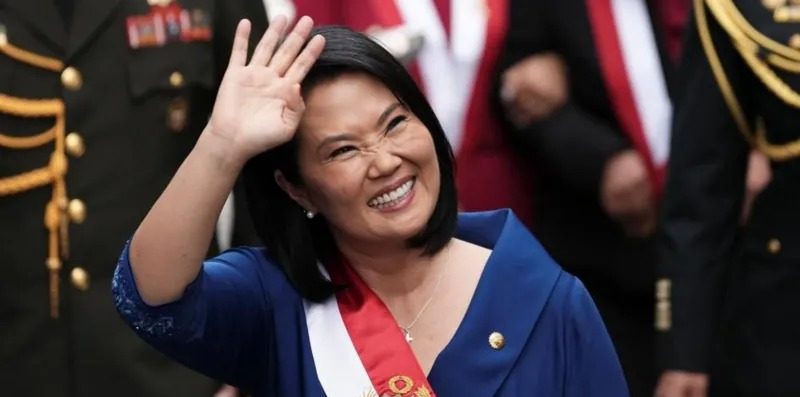
History was made on 28 July 2026 when Keiko Sofía Fujimori Higuchi shattered one of Peru’s most enduring political barriers by becoming the country’s first woman elected president through a democratic popular vote. Her inauguration on Peru’s Independence Day marked not only a personal triumph after three unsuccessful presidential bids but also a defining moment for women’s political leadership in Latin America.
Assuming office during one of the most challenging periods in Peru’s recent history, Fujimori inherited a nation grappling with political instability, economic uncertainty, rising insecurity, and declining public confidence in government. As Peru’s 10th president in just over a decade, she now shoulders the responsibility of restoring stability, strengthening democratic institutions, revitalising the economy, and rebuilding trust among Peruvians.
For Keiko Fujimori, the presidency represents the culmination of more than two decades in public life. From serving as Peru’s youngest first lady at the age of 19 to becoming a congresswoman, party leader, and one of the country’s most prominent political figures, her journey has been defined by resilience, perseverance, and an unwavering determination to lead her nation. Her election is not only a personal milestone but also a historic breakthrough that underscores the growing influence of women in shaping the political future of Latin America.
Early Life and Education
Keiko Sofía Fujimori Higuchi was born on 25 May 1975 in Jesús María, Lima, Peru. She is the eldest daughter of former Peruvian President Alberto Fujimori, who served from 1990 to 2000, and Susana Higuchi, both of Japanese descent. As a third-generation Nikkei Peruvian (Sansei), she belongs to one of Peru’s most prominent families of Japanese heritage.
She attended Colegio Sagrados Corazones Recoleta in Lima before continuing her education in the United States. Fujimori studied at Stony Brook University before earning a Bachelor’s degree in Business Administration from Boston University in 1997. She later obtained a Master of Business Administration (MBA) from Columbia University, further strengthening her academic foundation in business and leadership.
At just 19 years old, Fujimori unexpectedly entered the national spotlight when she became First Lady of Peru in 1994 following the separation of her parents. After her mother was removed from the role amid public disputes with the Fujimori administration, Keiko assumed the ceremonial position and remained First Lady until her father’s government ended in 2000. During this period, she championed several charitable initiatives, including the Foundation for the Children of Peru and the Peruvian Cardio-Infant Foundation, both dedicated to improving the lives of vulnerable children and supporting healthcare programmes.
Building a Political Career
Keiko Fujimori formally entered elective politics in 2006, when she was elected to the Congress of Peru representing Lima. She received a record number of votes under a Fujimorista alliance, demonstrating her growing political influence and the enduring appeal of the Fujimori political movement.
Determined to build an independent political platform, she founded and became the long-time leader of the conservative political party Fuerza Popular (Popular Force), established between 2009 and 2010. Under her leadership, the party evolved into one of Peru’s most influential political organisations, while Fujimori herself became the leading figure of Fujimorismo, a movement that advocates economic liberalisation, strong public security, and conservative governance.
Her pursuit of the presidency was marked by extraordinary persistence. She contested four presidential elections, narrowly losing the run-off in 2011 to Ollanta Humala, in 2016 to Pedro Pablo Kuczynski, and in 2021 to Pedro Castillo. Despite these setbacks, she remained a dominant force in Peruvian politics, continuously rebuilding her political base and maintaining her position as the country’s leading opposition figure.
Her perseverance finally paid off during the 2026 presidential election, when she defeated left-wing candidate Roberto Sánchez in one of the closest elections in Peru’s democratic history. Fujimori secured approximately 50.1 percent of the vote, prevailing by fewer than 50,000 votes out of more than 18 million ballots cast. The victory secured her place in history as Peru’s first woman elected president through a democratic popular vote.
Leading Peru through Uncertain Times
Keiko Fujimori was inaugurated on 28 July 2026, coinciding with Peru’s 205th Independence Day celebrations. She assumed office at a time when the country faced political polarisation, economic challenges, institutional instability, and growing concerns over crime and public safety.
Recognizing these pressing national issues, her administration outlined an ambitious agenda focused on restoring security, strengthening democratic governance, encouraging private investment, stimulating economic growth, expanding employment opportunities, and improving essential public services. Her government has also prioritized combating organised crime, enhancing internal security, and implementing social programmes aimed at improving the quality of life for Peru’s citizens.
In her inaugural address, President Fujimori called on Peruvians to move beyond years of political division and work together toward national renewal. She pledged to rebuild confidence in public institutions, foster inclusive economic development, and create a more stable and prosperous future for generations to come.
A Historic Presidency
Keiko Fujimori’s election represents more than a personal political achievement; it marks a historic milestone for women’s leadership in Peru and across Latin America. By becoming the first woman democratically elected to lead the Republic of Peru, she has broken one of the nation’s highest political glass ceilings and demonstrated that perseverance, experience, and public service can redefine the boundaries of leadership.
As her administration begins, expectations remain high. Peruvians will look to her leadership to deliver stability, strengthen democratic institutions, stimulate sustainable economic growth, and address the complex social and security challenges facing the nation. The success of her presidency will ultimately be measured not only by policy outcomes but also by her ability to unite a diverse country and inspire confidence in Peru’s democratic future.
Amazons Watch Magazine warmly congratulates Her Excellency President Keiko Sofía Fujimori Higuchi on her historic election as the first democratically elected female president of the Republic of Peru. Her remarkable journey of resilience, determination, and public service serves as an inspiration to women and girls across Peru, Latin America, and the world. We wish her a successful tenure marked by peace, inclusive development, economic prosperity, and transformational leadership as she leads Peru into a new chapter of its democratic history.





Comments are closed.