By Blossom Ukoha
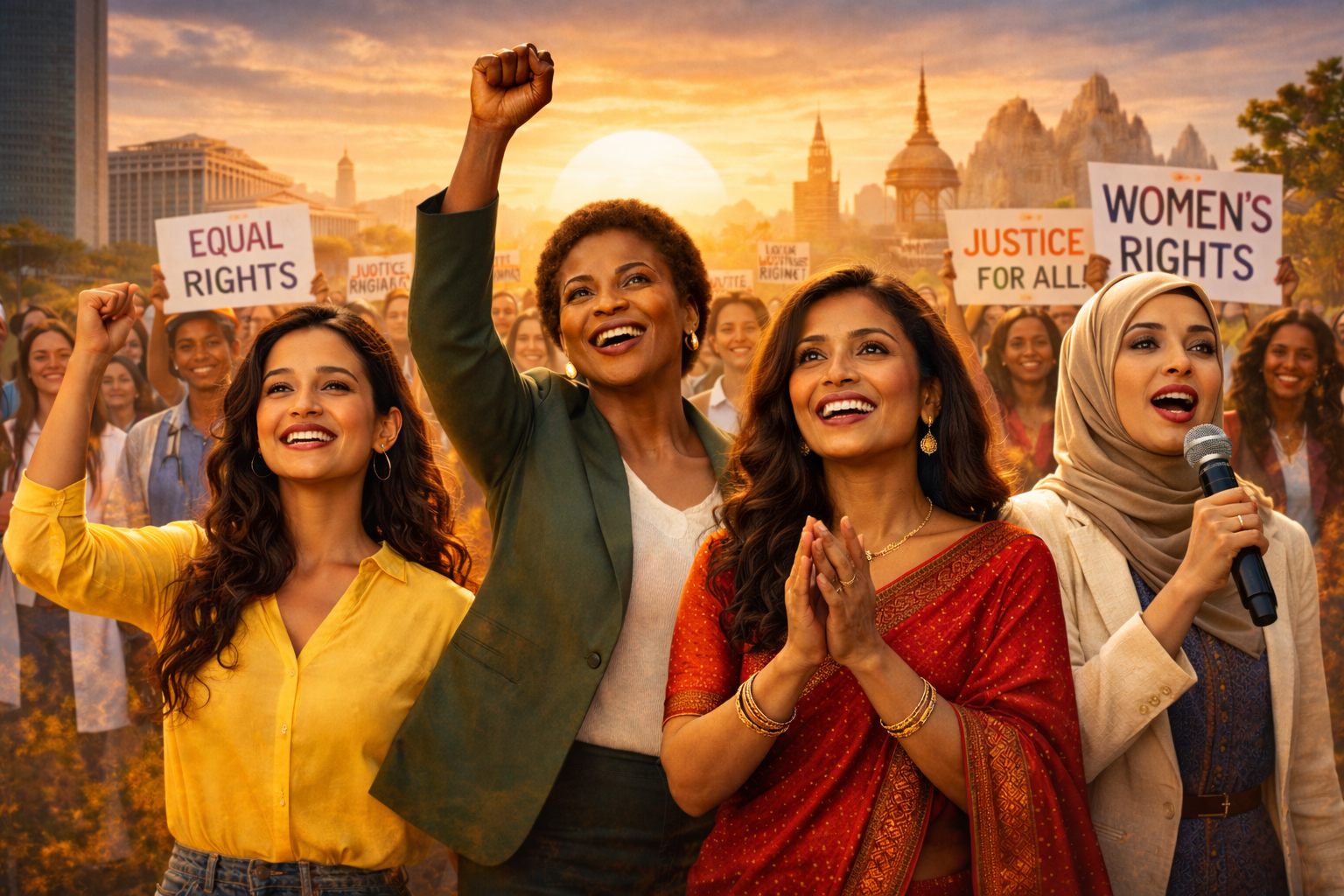
“We have never been so close to achieving gender equality, and never closer to losing it.” These words from Sima Bahous, delivered in her official statement for International Women’s Day 2026 on behalf of UN Women, capture the urgency of the moment. In addition to the global “Give to Gain” campaign, the United Nations has emphasized the theme “Rights. Justice. Action. For All Women and Girls,” calling on governments, institutions, and communities to dismantle the structural barriers that continue to prevent women and girls from achieving full equality.
For many women around the world, the struggle for equality is not an abstract debate, it is a lived reality. Consider the story of Maria, a young woman from a small coastal town in Latin America. Growing up, she watched her mother wake before dawn each day to sell food at a roadside stall while caring for five children. Despite the challenges surrounding her, Maria dreamed of becoming a teacher. When financial hardship nearly forced her to leave school at sixteen, she refused to give up. Studying late into the night under dim electric lights, Maria persevered and eventually earned a scholarship to attend university. Today, she teaches in the same community where she grew up, mentoring young girls who are navigating the same difficult path between ambition and circumstance.
Maria’s story reflects a broader global reality: women everywhere continue to overcome immense barriers in pursuit of opportunity, dignity, and equality.
Women Transforming the World
Across the world, women are reshaping societies in profound ways. They are leading movements for justice, strengthening economies, advancing scientific discovery, and championing democratic values. Yet despite decades of advocacy and policy reform, gender equality remains an unfinished global project. The theme “Rights. Justice. Action. For All Women and Girls” reminds the international community that progress alone is not enough; sustained action is required to dismantle the systems that continue to perpetuate inequality.
Political Leadership: Progress with Persistent Gaps
In political leadership, women have made historic gains. As of 2026, women hold approximately 27.5 percent of seats in national parliaments worldwide, a significant improvement from 11.3 percent in 1995. Countries that have implemented gender quotas have demonstrated stronger results, with women occupying about 31 percent of parliamentary seats, compared with fewer than 17 percent in countries without such measures. These figures demonstrate that targeted policies can accelerate progress.
Yet the path to equality remains long. Women currently serve as heads of state or government in only 25 countries worldwide, and fewer than one in four cabinet ministers are women. More than 100 countries have never had a female head of state, highlighting the persistence of structural barriers in political leadership. Violence, intimidation, and harassment against women in politics also continue to undermine participation, discouraging many from entering public life.
Economic Participation: Unlocking Women’s Global Potential
Economically, women are indispensable contributors to global development. Women now account for roughly 42 percent of the global workforce, yet participation remains uneven. While approximately 80 percent of men are active in the labor force, women’s participation globally ranges between 50 and 53 percent. Closing this gap could boost global economic output by as much as 20 percent, demonstrating the enormous potential of women’s full participation in economic life.
Despite these contributions, economic inequality persists. Women earn, on average, 52 cents for every dollar earned by men, and the global gender pay gap remains around 20 percent. In many regions, women still face barriers to accessing credit, property rights, and safe working conditions. While legal reforms have improved gender equality in many countries, enforcement often remains weak, leaving millions of women without meaningful protection.
Health and Well-Being: Progress with Urgent Challenges
Education offers one of the most encouraging areas of progress. Globally, gender parity has largely been achieved in primary education, and women now surpass men in tertiary enrollment in many countries. Women account for approximately 45 percent of tertiary students worldwide, compared with 39 percent for men. Education has empowered millions of women to pursue careers in business, governance, science, and public service.
However, disparities remain in specialized fields and leadership positions. Women represent only 35 percent of graduates in science, technology, engineering, and mathematics (STEM) worldwide. Although women dominate leadership roles in early childhood education, they remain underrepresented in senior academic leadership and research institutions.
Health outcomes for women have also improved significantly over the past two decades, particularly in maternal health. Global maternal mortality has declined substantially since 2000, with about 260,000 maternal deaths recorded in 2023. Nevertheless, maternal deaths still occur at alarming rates, approximately one woman every two minutes, with the majority occurring in fragile and conflict-affected regions where access to healthcare remains limited.
Gender-based violence remains one of the most urgent challenges facing women worldwide. An estimated one in three women globally has experienced physical or sexual violence in her lifetime. In 2024 alone, approximately 50,000 women were killed by partners or family members, representing one femicide every ten minutes. In humanitarian settings, the risks are even higher, with nearly 70 percent of women experiencing gender-based violence.
Despite these sobering realities, women continue to lead transformative change across societies. They are advocating for justice, strengthening democratic institutions, and driving innovation in communities across the globe.
A Call to Action: Turning Commitment into Change
For Amazon’s Watch Magazine, International Women’s Day 2026 represents both a celebration of progress and a call for urgent action. Achieving meaningful gender equality requires bold reforms and sustained investment.
Governments must strengthen policies that guarantee women’s representation in political leadership through electoral reforms, gender quotas, and protections against violence in politics. Economic policies must address structural barriers by expanding access to childcare, financial services, digital tools, and safe workplaces. Greater investment must also be directed toward preventing gender-based violence, particularly as less than 0.2 percent of international development aid currently supports prevention efforts.
Equally important is the need for stronger gender data systems to track progress toward Sustainable Development Goal 5, which aims to achieve gender equality and empower all women and girls by 2030.
International Women’s Day 2026 is, therefore, not only a celebration but also a moment of responsibility. Women’s resilience, leadership, and determination continue to shape a more equitable world. When women are empowered, economies grow stronger, institutions become more inclusive, and societies flourish.
The path toward equality may still be long, but stories like Maria’s, and millions of others, prove that change is not only possible; it is already underway. The challenge now is to ensure that progress accelerates so that the promise of rights, justice, and action for all women and girls becomes a reality everywhere.



Comments are closed.