
By Blossom Ukoha
What does it take to transform global health systems into spaces of justice, dignity, and equity? For Dr. Irehobhude O. Iyioha, the answer lies at the powerful intersection of law, race, and human rights, an intersection she is now shaping on a global scale.
In March 2026, Irehobhude O. Iyioha was appointed as the inaugural holder of the UNESCO Chair on Health, Race and Human Rights at the University of British Columbia. This landmark appointment is more than a personal milestone. It signals a growing global commitment to addressing racialised health inequities through rigorous research, policy innovation, and legal reform.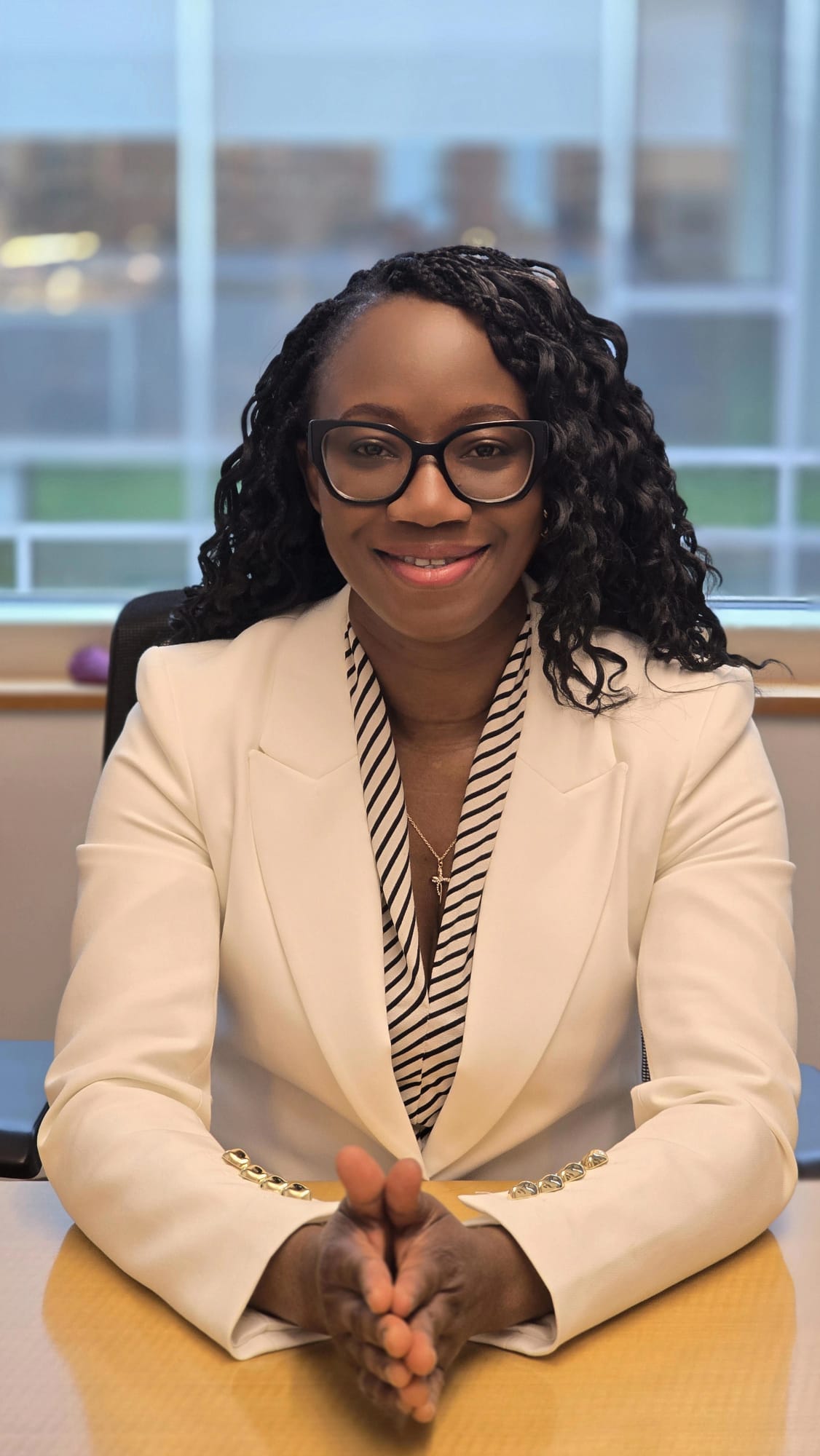
A Historic Academic Milestone
The creation of this UNESCO Chair marks a significant institutional achievement. Established through a formal agreement between UBC President Benoit Antoine Bacon and UNESCO, it is the first UNESCO Chair at UBC and only the second of its kind within a law school in Canada.
This distinction positions UBC as a leading global hub for interdisciplinary research focused on health justice. Under Iyioha’s leadership, the Chair will serve as a platform for advancing evidence based solutions to systemic inequities, particularly those affecting racialised communities.
Her own words capture the urgency of the moment. “Now is the time.” At a period marked by global health disparities, post pandemic recovery challenges, and increasing pressures on democratic systems, her work responds directly to some of the most pressing issues of our time.
Redefining Health Through a Legal Lens
At the core of Iyioha’s work is a critical question. How do legal systems shape health outcomes? The mandate of the UNESCO Chair reflects this inquiry, focusing on how law can both advance and hinder human rights within healthcare systems.
Her research agenda tackles racial inequities in health outcomes, develops legal frameworks for anti-racism, and promotes policies that center dignity and social justice. By bridging law and public health, Iyioha is helping to redefine how societies understand access to care, not as a privilege, but as a fundamental human right.
This approach is particularly significant in a global context where systemic barriers continue to marginalise vulnerable populations. Through data driven research and policy advocacy, her work aims to dismantle these barriers and create more inclusive health systems.
An Academic Career Rooted in Impact
Beyond this new role, Iyioha holds key academic positions that underscore her influence. She serves as an Associate Professor at the Peter A. Allard School of Law and is the inaugural Hon. Selwyn Romilly Professor of Race and Access to Justice at UBC, an endowed professorship that recognizes excellence in advancing equity through legal scholarship.
Her academic work spans multiple disciplines, including feminist legal studies, health law, human rights, international humanitarian law, and critical legal theory. This interdisciplinary foundation allows her to approach complex global challenges with depth and nuance.
Before joining UBC, Iyioha built a strong academic and professional profile through roles at the University of Alberta and her work as a clinician and consultant at the University of Abuja Law Clinic in Nigeria. These experiences ground her scholarship in both theory and practice, ensuring that her research remains connected to real world impact.
Global Recognition and Influence
Iyioha’s contributions have not gone unnoticed. In 2025, she was awarded the King Charles III Coronation Medal, recognising her outstanding work in human rights advocacy. She has also received honors such as the World Congress on Medical Law Award for her research on the intersection of criminal law and public health.
Beyond academia, she is a prolific writer and speaker, engaging audiences across disciplines and geographies. Her work extends into creative writing as well, reflecting a lifelong passion for storytelling that began during her childhood in Nigeria. This blend of academic rigor and creative expression adds a unique dimension to her voice as a scholar and advocate.
A Voice for Equity in a Changing World
What sets Iyioha apart is not only her expertise but her commitment to equity. She has consistently worked to create opportunities for marginalised and underserved populations, contributing to legal initiatives that promote fairness and inclusion.
Her leadership comes at a time when conversations about race, health, and justice are gaining global urgency. The COVID 19 pandemic exposed deep inequalities within healthcare systems, disproportionately affecting racialised communities. In this context, Iyioha’s work offers both critique and solutions, challenging existing systems while proposing pathways for reform.
Why This Moment Matters
The establishment of the UNESCO Chair on Health, Race and Human Rights represents more than an academic development. It is a call to action. It underscores the need for collaborative, interdisciplinary approaches to some of the world’s most complex challenges.
For Africa and the global diaspora, Iyioha’s appointment carries additional significance. As a Nigerian Canadian scholar, she brings a perspective that bridges continents, cultures, and experiences. Her work amplifies the voices of communities that have historically been overlooked, ensuring that global health policies reflect diverse realities.
A Call to Advance Justice through Knowledge
Dr Iyioha’s journey is a powerful reminder that research is not just about knowledge. It is about impact. It is about using scholarship to challenge injustice, influence policy, and improve lives.
For academic institutions, policymakers, and emerging scholars, the message is clear. Invest in research that matters. Support interdisciplinary collaboration. Elevate voices that bring new perspectives to global challenges.
And for young women across Africa and the diaspora, her story stands as both inspiration and invitation. There is space to lead, to innovate, and to shape the future of global systems.
In a world searching for more just and equitable solutions, Dr Irehobhude Iyioha is not only contributing to the conversation, she is helping to define it.




Comments are closed.