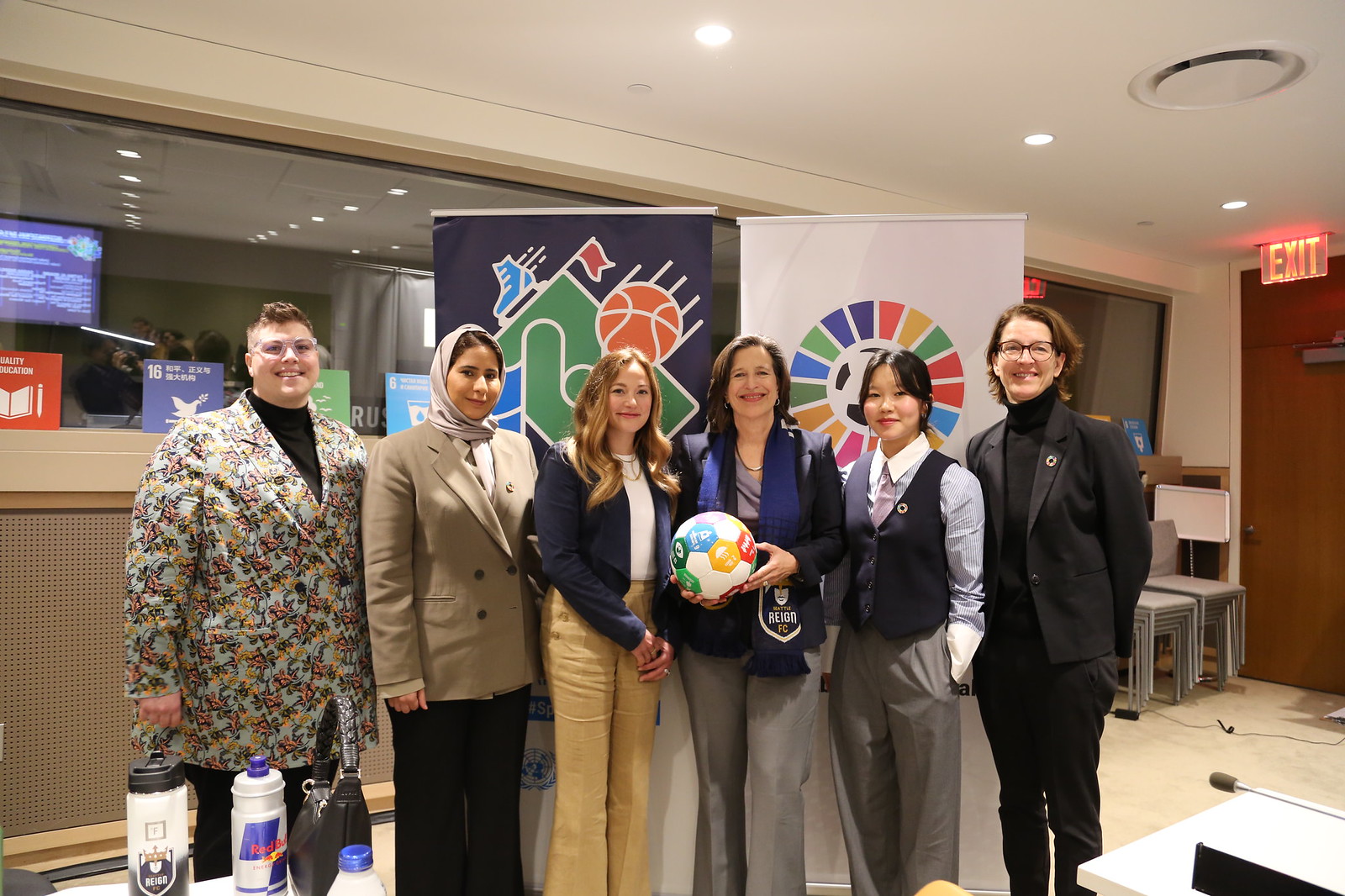
On a modest community field in Latin America, a young girl once stood at the edge of a football pitch, hesitant, unsure if she belonged. The space felt unfamiliar, even unwelcoming. But with encouragement from a local sport for development programme, she stepped forward. Weeks turned into months, and uncertainty transformed into confidence. She began to lead drills, speak up in school, and support other girls finding their voice. What started as a game became something far greater, a pathway to self-worth, leadership, and possibility.
Her story mirrors the lived experiences of millions of women and girls across the world. It is this quiet yet powerful transformation that sits at the heart of the 2026 theme for the International Day of Sport for Development and Peace, designated by the United Nations as “Sport: Building Bridges, Breaking Barriers.” For women, this theme is not abstract. It is deeply personal, profoundly necessary, and globally urgent.
Reclaiming Space through Sport
Sport has long been a male dominated arena, shaped by unequal access, limited visibility, and deeply rooted cultural norms. Yet, across continents, women and girls are steadily reclaiming this space. They are not only participating, they are redefining the narrative.
The 2026 theme highlights sport’s unique ability to connect across cultural, social, economic, and gender based. For women, these divides are often layered and persistent. Sport becomes a bridge, linking them to opportunity, to community, and to a renewed sense of identity.
Aligned with the United Nations’ 2030 Agenda for Sustainable Development, sport plays a critical role in advancing gender equality, health and wellbeing, reducing inequalities, and peaceful societies. For women and girls, it offers more than physical activity. It provides safe spaces where confidence is built, voices are amplified, and leadership is nurtured.
Why This Day Matters for Women and Girls
Since its proclamation in 2013, the International Day of Sport for Development and Peace has underscored sport as a tool for human rights and social progress. For women and girls, its significance is even more profound.
Sport equips girls with essential life skills, resilience, teamwork, discipline, and leadership. It challenges harmful stereotypes, confronts gender based violence, and opens doors to education and economic empowerment. In fragile and divided communities, it fosters dialogue, trust, and inclusion.
Yet, despite these benefits, the journey toward equality in sport remains uneven.
The Reality Behind the Progress
Data from global institutions such as UN Women and UNESCO reveal a persistent gap.
By the age of 14, girls drop out of sport at twice the rate of boys. In some regions, dropout rates climb as high as 49 percent during adolescence. The reasons are complex and interconnected: lack of safe spaces, limited access to facilities, social stigma, body image concerns, and a shortage of visible role models.
Opportunities remain unequal. In certain systems, girls have over a million fewer opportunities to participate in organised sport compared to boys. Media visibility is also disproportionately low, with only 15 percent of sports coverage dedicated to women. Leadership remains imbalanced, with women holding just one in four positions in international sports federations.
Even more concerning are safety challenges. According to UNESCO, 21 percent of women athletes report experiencing some form of sexual abuse in sport during childhood, highlighting an urgent need for stronger safeguarding systems.
These realities remind us that while progress is visible, it is far from complete.
Signs of a Global Shift
Despite these challenges, there is undeniable momentum. The global sporting landscape is beginning to reflect a more inclusive future.
At the Paris 2024 Olympic Games, women achieved near gender parity in participation for the first time in history. Looking ahead, the Milano Cortina 2026 Winter Olympics will mark another milestone, with women representing 47 percent of athletes and a growing share of events through mixed competitions.
Programmes led by UN Women, such as the One Win Leads to Another initiative, have demonstrated measurable impact. Thousands of girls in Brazil and Argentina have developed leadership skills, confidence, and agency through structured sport programmes.
Similarly, initiatives supported by the International Olympic Committee continue to expand opportunities for girl’s worldwide, integrating sport with education, life skills, and safe participation frameworks.
New global partnerships, including the 2025 collaboration between UN Women and the International Working Group on Women and Sport, signal a renewed commitment to accelerating gender equality. Platforms such as the upcoming IWG Global Summit 2026 will further amplify advocacy and action.
Beyond Participation: Building Leaders and Communities
The true power of sport lies not only in participation but in transformation. Girls who engage in sport consistently demonstrate higher levels of confidence, improved decision making, and stronger leadership capabilities.
In many communities, sport becomes a safe entry point into broader social change. It encourages girls to stay in school, delays early marriage, and equips them with skills that translate into economic independence. It also fosters peace, bringing together individuals from diverse backgrounds and creating shared experiences that bridge divides.
When women rise through sport, they do not rise alone. They uplift families, communities, and future generations.
A Call to Action: From Momentum to Movement
The 2026 theme calls for more than recognition. It demands action.
Governments must invest in inclusive policies that guarantee equal access to sport for girls and women, ensuring safe facilities, trained coaches, and supportive environments. Educational systems should integrate sport as a core component of development, not an optional activity.
Sports institutions must address leadership gaps by promoting women into decision making roles and committing to equitable representation. Media organisations have a responsibility to elevate women’s sport, increasing visibility and reshaping public perception.
The private sector must recognise the immense social and economic value of investing in women’s sport, while development partners and civil society must continue scaling programmes that have proven impact.
Above all, safeguarding must be prioritised. Every girl deserves to participate in sport without fear, in environments that are secure, respectful, and empowering.
In alignment with this vision, the Amazons Watch Magazine calls on African governments, global institutions, and private sector leaders to move beyond commitments and take decisive action by investing in safe, inclusive sporting spaces for women and girls, amplifying the visibility of women’s sport, and championing policies that place women at the center of leadership and decision making in the global sports ecosystem. The magazine further urges stakeholders to leverage the momentum of 2026 as a turning point to institutionalise sport as a strategic tool for gender equality, peacebuilding, and sustainable development across Africa and beyond.
Conclusion: A Future Reimagined
“Sport: Building Bridges, Breaking Barriers” is more than a theme. It is a vision of a world where every girl can step onto a field, a court, or a track and know she belongs.
The United Nations, UN Women, and UNESCO all affirm one truth sport is one of the most powerful tools we have to advance gender equality and build peaceful, inclusive societies.
The progress is real. The impact is visible. The momentum is growing.
Now is the time to go further, to invest deeper, and to act boldly.
Because when women and girls rise through sport, they are not just breaking barriers. They are building a more equal, more connected, and more compassionate world.




Comments are closed.