Nine nurses in Chiapas are in delicate condition after launching a hunger strike May 1 when negotiations with state health authorities went off the rails. The strike, the second in two months by Chiapas nurses, is to call for the reinstatement of laid-off coworkers, payments to suppliers and the resupply of the medical clinics where they work. They claim the state government failed to live up to the agreement made after the first hunger strike, which came to an end April 15. The striking nurses have set up their camp once again at the entrance of the Rafael Pascacio Gamboa hospital in the state capital of Tuxtla Gutiérrez. Spokeswoman María Espinoza reported that the health of her colleagues is “delicate,” and that all are showing the effects of “wasting syndrome,” with symptoms such as weakness, stomach pain and headaches, nausea, diarrhea, blurry vision and others. Two of the striking nurses…
Chinese Woman Introduces New Method to Deal with Denmark Oyster Invasion
Chinese woman comes up with a hot (and spicy) idea to deal with Denmark’s oyster invasion A video of a Chinese woman cooking Sichuan-style oysters in Denmark has gone viral online, adding another ingredient to the Nordic country’s “oyster diplomacy” in China. Bian Miaomiao, a native of the southwest city of Chengdu who now lives in Arhus with her Danish husband, shared on social media her story about collecting 150kg of fresh oysters in four hours, and cooking them the Sichuanese way for European friends who traditionally ate their shellfish raw. Bian tried several recipes, including stir-fried, barbecued and cooked in an omelette. Referring to Sichuan cuisine’s reputation of being spicy, Bian said her Danish friends were at first shocked by the signature hot and numbing flavour of the dishes but in no time loved them. Her post attracted a number of likes, comments and retweets, including those by the…
Rwanda First Lady Identifies the Need to Bridge Digital Gender Divide
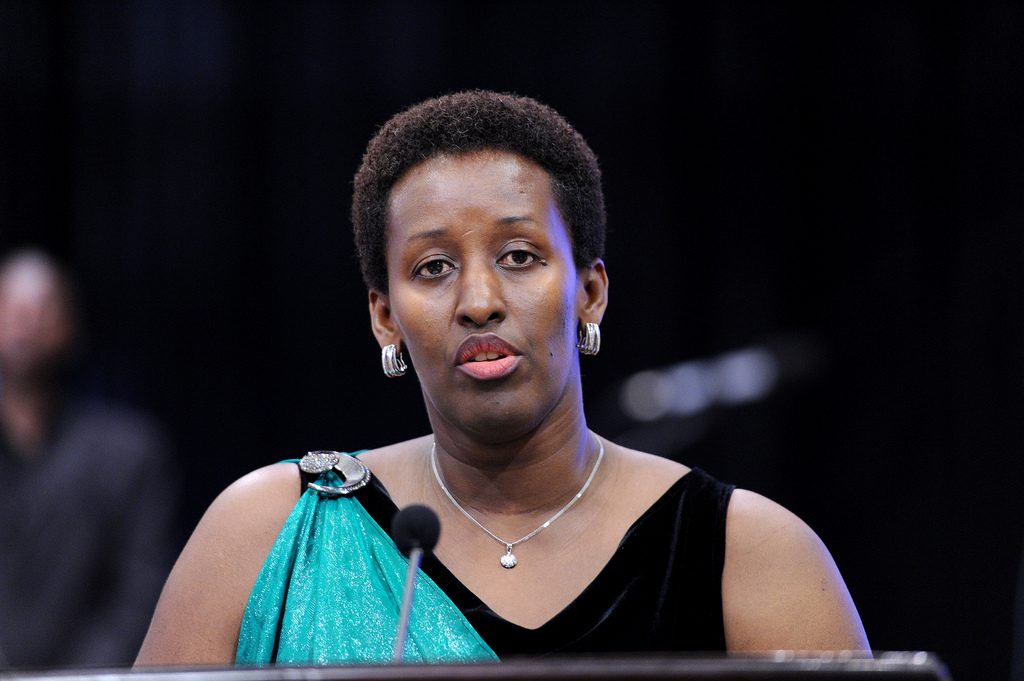
By: Julius Bizimungu First Lady Jeannette Kagame and other representatives of governments and international organisations who attended the just concluded Transform Africa Summit have expressed the need for strategic interventions to bridge the gender digital divide. They were speaking during the inaugural Smart Africa Women’s Summit at the three-day Transform Africa Summit which concluded yesterday in Kigali. Mrs. Kagame said that Smart Africa goals cannot be achieved without the involvement of women and girls and that to achieve it concerted efforts of all parties are required. “We, as citizens of the world, are called to leverage our diverse positions to join governmental and non-governmental efforts for the inclusion of women and girls in the heart of the current ICT revolution,” she said. The First Lady congratulated all the participants that made it possible to draft the Smart Africa Women Declaration which is set for implementation, adding that she looked forward…
Miss USA Reveals Surprising Insights into Challenges of Women in STEM
Nuclear scientist Kára McCullough was crowned Miss USA. The Washington D.C. native also had some words to speak on feminism, including her views on the state of women in science, technology, engineering, and medicine (STEM). Answering a question about what she thinks of feminism, McCullough surprised more than a few listeners. “As a woman scientist in the government, I’ve liked to lately transpose the word ‘feminism’ to ‘equalism,’” she stated. “I try not to consider myself, like, ‘Oh I don’t really care about men [feminist].’” “But one thing I’m going to say is,” McCullough stressed, “women we are just as equal to men when it comes opportunity in the workplace. And I say first-hand, I have witnessed the impact that women have in leadership in the medical sciences as well as just in the office environment. So, as Miss USA, I would hope to promote that type of leadership responsibility…
Saudi Arabia Set to Give Women More Freedom as it Looks Beyond Oil
By: Zahraa Alkhalisi Saudi Arabia is taking steps to give women more freedom as it seeks to overhaul its economy. King Salman has ordered a review of laws that still make it hard for many women to work, travel, undergo medical procedures and go to university without the permission of a male relative or spouse, human rights organizations said this week. The review could last three months. “The order, if adequately enforced, could end arbitrary guardian consent requirements imposed on women by government officials,” Human Rights Watch said Tuesday. The Saudi government has not yet published an official decree setting out in detail which laws could be eased, and there have been conflicting reports in Saudi media. That likely reflects the very sensitive nature of any such change. Deputy crown prince Mohammed Bin Salman is leading a bold plan to break the kingdom’s reliance on oil, which requires a…
Dubai Human Rights Seeks Bail for Woman in Controversial Jail Case
A woman who was arrested on charges of entering the UAE illegally through a border has been languishing in a Dubai jail for three years after two East European countries refused to allow her entry. The Dubai Human Rights is seeking to resolve the issue and has approached the United Nations High Commissioner for Refugees (UNHCR). Brigadier Dr. Mohammed Al Murr, Director of General Department of the Human Rights of Dubai Police, said that the Dubai Human Rights is in touch with a number of consulates of these countries. The UNHCR is also currently in contact with concerned Abu Dhabi authorities to find a solution to the problem. Al Murr said in 2011, the 27-year-old entered the country on a tourist visa, using the passport of an East European country. She did not leave the UAE even after her visa expired, and was arrested and deported. In 2014, she entered…
BRAZIL: Over 12,000 Women Are Daily Victims of Violence
Details from Datafolha’s latest study, “Visible and Invisible: The Mistreatment of Women in Brazil,” reveal that roughly 12,000 women are victims of some form of violence each day in Brazil. Each hour some 503 women are victims of a moral offense, physical violence or unwanted touching. Two out of three Brazilians have witnessed these acts and other forms of aggression against women. The most common form of harassment, according to the survey, is disrespectful comments on the streets. The study was commissioned by the Brazilian Forum of Public Safety and undertaken between February 11 and 17. Approximately 2,000 people were surveyed, of which over 1,000 were women. Ben Hur Viza, a federal district judge ruling on cases of violence against women, stated that oftentimes victims don’t file reports due to fear of being considered culpable or blamed for the attack. “Why did he attack you? Why didn’t you say no…