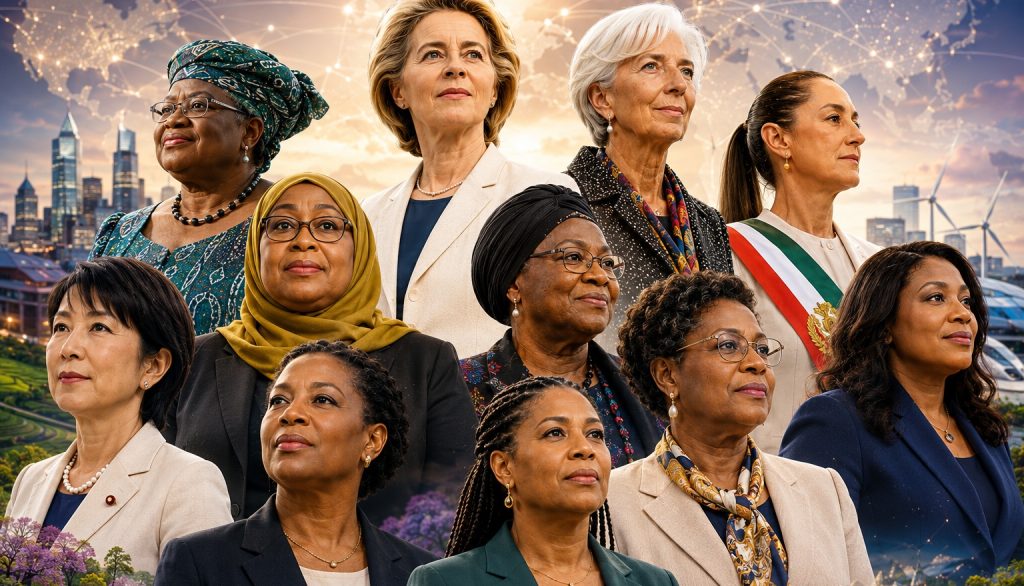
When Russia’s invasion of Ukraine plunged Europe into one of its greatest geopolitical and energy crises in decades, uncertainty spread across governments, businesses, and financial markets. Yet amid the turbulence, European Commission President Ursula von der Leyen delivered a message that reflected the mindset of exceptional leaders. “We simply cannot accept being shaken around by the seismic change that we are facing,” she said. “The starting point here is to face the world as it really is.” Her words were more than political rhetoric. They reflected a pattern found in many of today’s most influential women leaders, a willingness to confront reality, inspire confidence, and transform uncertainty into opportunity. Whether leading nations, multinational corporations, or global institutions, women such as Ursula von der Leyen, Ngozi Okonjo-Iweala, Christine Lagarde, Samia Suluhu Hassan, Netumbo Nandi-Ndaitwah, Judith Suminwa Tuluka, Mary Vilakazi, and Mpumi Madisa have demonstrated that leadership is built on character long…
Why the World’s Most Influential Women Think Beyond Politics
By Blossom Ukoha The world’s most influential women are redefining the meaning of leadership. While politics remains one of the most visible avenues of public service, the ability to shape economies, direct technological innovation, influence financial systems and drive social progress increasingly extends beyond elected office. Today, influence is exercised through governments, corporations, financial institutions, philanthropic organisations and technology companies, reflecting a broader shift in where global power resides. According to the 2025 edition of Forbes’ World’s Most Powerful Women, the 100 women on its annual ranking collectively command approximately US$37 trillion in economic power, up from an estimated US$33 trillion in 2024. Forbes also estimates that they influence the lives of more than one billion people, while the top five women alone account for nearly US$27 trillion in economic influence and impact approximately 765 million people. These figures illustrate that leadership in the twenty-first century is increasingly measured by…
The Politics of Being a Woman in Power
By Blossom Ukoha In 2026, the image of power is evolving, but not nearly at the pace required for true equality. Across the globe, more women are stepping into leadership positions in politics, business, and civil society, yet the systems they enter remain deeply shaped by historical gender imbalances. To be a woman in power today is to exist within a paradox, where progress is visible but equality remains incomplete. Power, as it currently exists, is not neutral. It carries the weight of tradition, bias, and long-established norms that women must constantly navigate and, in many cases, challenge in order to lead effectively. The Numbers Behind the Narrative The data tells a compelling story about how far the world has come and how far it still needs to go. As of January 2026, women hold approximately 27 percent of parliamentary seats globally. While this reflects steady progress over the years,…
Laura Stein Makes History as South Australia’s First Female Chief Justice
“Her elevation to the position of Chief Justice will come as no surprise to anyone who has worked alongside her.” — Kyam Maher, Attorney-General of South Australia History was made in Australia’s judiciary on 15 January 2026 with the announcement of Justice Laura Stein as the new Chief Justice of South Australia, effective 19 February 2026. Her appointment marks a defining moment, not only for the state, but for gender representation within one of the country’s oldest and most respected legal institutions. Justice Stein succeeds Chief Justice Chris Kourakis, who announced his retirement in December 2025 after an influential 13-year tenure as Chief Justice and more than 17 years on the Supreme Court bench. In nearly 170 years since the establishment of the Supreme Court of South Australia, Stein becomes the first woman to ascend to its highest judicial office, an achievement that quietly but powerfully reshapes the landscape of…
International Day of Democracy: Celebrating the Women Who Lead, Legislate, and Transform the World
“The future of democracy is written not only in ballots, but in the courage of women who refuse silence.” As the world marks the International Day of Democracy 2025 under the theme “From Voice to Action,” one truth rings clear: the story of democracy is incomplete without women. For generations, women across continents have pushed against barriers of exclusion, prejudice, and systemic silencing. Today, their presence as presidents, prime ministers, ministers, and grassroots organizers is not just symbolic, it is the oxygen that sustains inclusive governance. From Struggles to Seats of Power The journey has not been easy. Democracy has never been gender-neutral. For centuries, women were denied the most basic democratic right, the vote. When suffragists in the United States, United Kingdom, and beyond took to the streets in the early 20th century, they were dismissed, mocked, and jailed. In many countries, it took until the late 20th or…
The New Faces of African Politics – When They Lead, History Listens
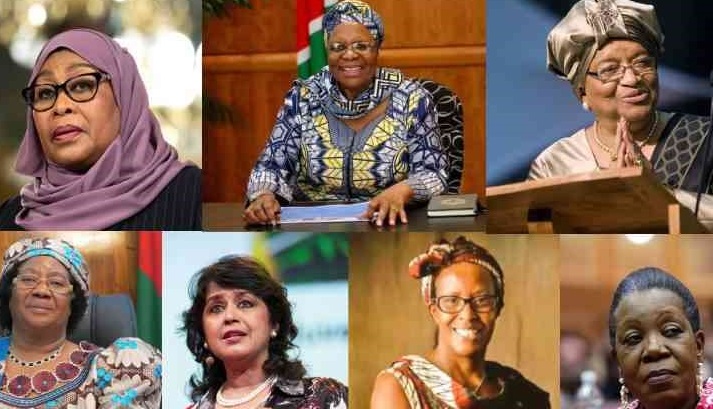
The sharp crack of heels cutting through the marble echoes through the corridors of power across Africa; a wave of change flowing across different parts of Africa. These are not just footsteps, they are the measured strides of a revolution in motion, carried by women who have refused to accept that leadership is a man’s domain. They carry briefing books and baby bottles; they read budget lines and bedtime stories. The moment a decision is finalised, they rise. Not as an exception, but increasingly as a force. This is what governance in heels across Africa entails; uneven, hard-won, sometimes symbolic, often substantive, always consequential. The Changing Face of African Leadership African politics is undergoing a profound transformation. Across the continent, women are shattering glass ceilings, challenging traditional power structures, and redefining what it means to govern. From boardrooms to parliament halls, from local councils to presidential palaces; African women are…
Leading with Vision: Aminata Kane’s Rise to the Top of Africa’s Digital Economy
In a bold and transformative step toward deepening financial inclusion in Africa, Visa has appointed Aminata Kane Ndiaye as Senior Vice President and Head of Western and Central Africa, effective September 4, 2025. This landmark appointment positions her to lead Visa’s newly established sub-regional team overseeing 23 markets from four strategic offices, Abidjan, Accra, Kinshasa, and Lagos. With this role, Aminata enters a new chapter in her career, yet remains firmly rooted in her lifelong mission: leveraging technology to empower people, especially women and youth, across the continent. It is a mission she embodies not just with strategy, but with heart. A Trailblazer with Purpose From the moment she entered the corporate world, Aminata Kane has walked a path defined by courage, innovation, and an unwavering commitment to inclusive growth. Her academic journey took her from HEC Paris to the MIT Sloan School of Management, and her leadership acumen has earned…