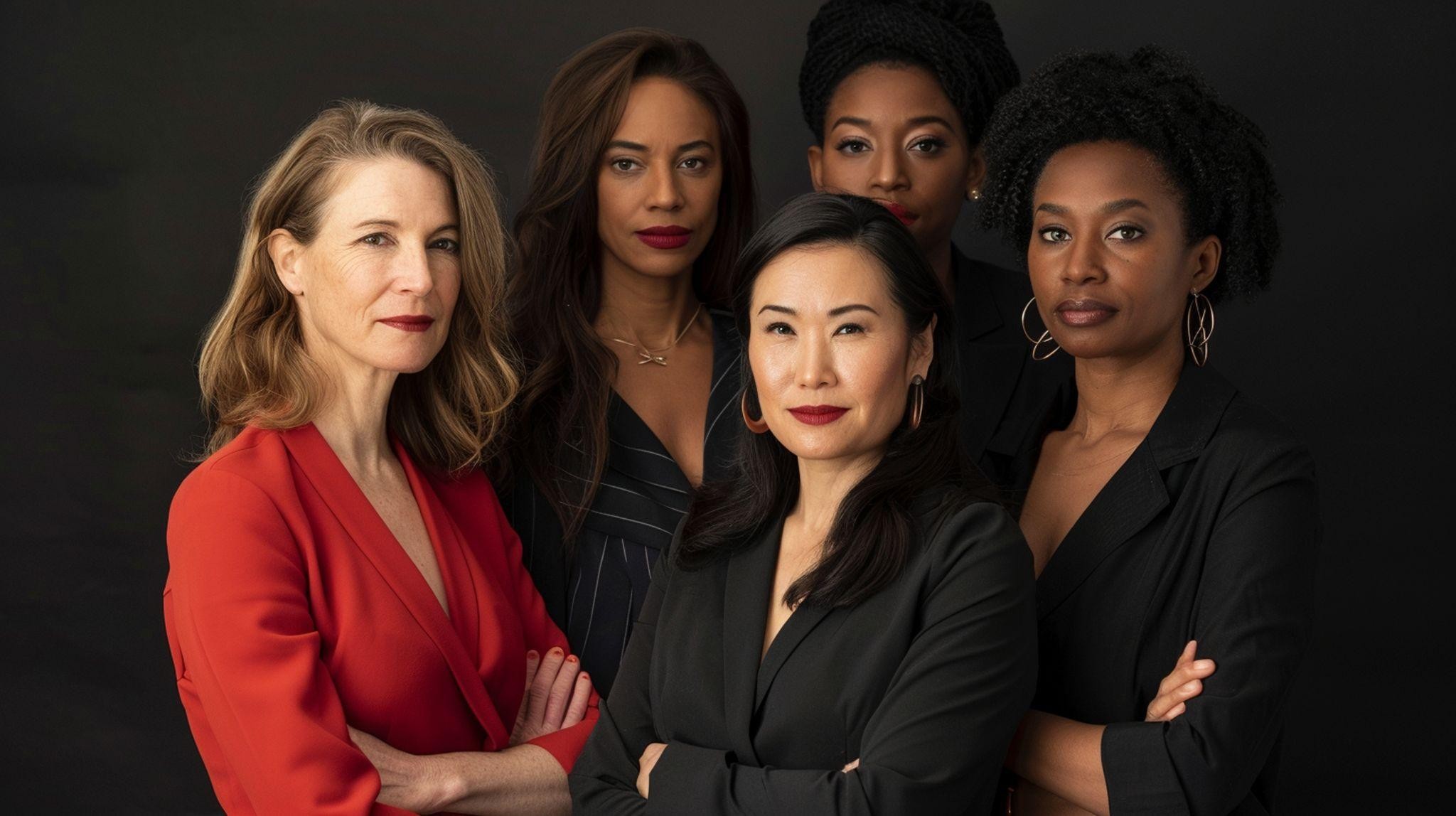
She walked into the boardroom, her heels clicking against the polished floor. The room was filled with men in dark suits, their eyes scanning her as if she were an unexpected guest rather than the leader of the meeting. One of them smirked, leaned back in his chair, and whispered to his colleague, “Let’s see if she can handle this.”
Oh, she handled it.
By the end of the meeting, her strategy had not only silenced the skeptics but set the company on a trajectory for record breaking growth. She didn’t need to say, “I told you so.” Her success had already done the talking.
This is not just one woman’s story. It’s the story of millions of women who have been doubted, dismissed, or deemed unfit for roles they were born to lead. From corporate boardrooms to political offices, scientific labs to sports arenas, women around the world have faced the same obstacles. And each time, they’ve responded with the same unshakable resolve: “Watch me.”
The Lies Women Were Told
For centuries, society crafted narratives that kept women in predefined roles, caregivers, assistants, supporters, but never the main players. Women were told they were too emotional to lead, too delicate for science, too soft for business, too nurturing for politics.
Yet, the numbers tell a different story. Women make up 47.7% of the global workforce, yet hold only 29% of senior management positions. (World Economic Forum, 2023) In STEM, despite their rising numbers, women occupy just 28% of leadership roles. (UNESCO, 2023) In politics, only 26.5% of parliamentary seats globally are held by women. (IPU, 2024).
These statistics don’t reflect women’s capability, they reflect the barriers placed in their way. But cracks are forming in the glass ceiling, and those who once underestimated women are now witnessing a revolution.
Changing the Face of Leadership
For years, leadership was a boys’ club, and any woman who dared to enter was met with resistance. But today, women are running the boardrooms, founding billion-dollar companies, and leading industries once dominated by men.
Women-led businesses generate twice as much revenue per dollar invested compared to those led by men (BCG, 2023), yet only 2.3% of venture capital funding goes to female-led startups (Harvard Business Review, 2023). Despite this, they continue to succeed, proving that leadership isn’t about gender but vision, resilience, and results.
A vivid example is the growing number of women CEOs at major global corporations. In 2024, more women are leading Fortune 500 companies than ever before, with female CEOs making up 10.4% of the list. This is still a small goes to female-led startups (Harvard Business Review, 2023). Despite this, they continue to succeed, proving that leadership isn’t about gender but vision, resilience, and results percentage, but the numbers are rising, and the impact is undeniable. Women in executive roles prioritize inclusivity, employee well-being, and sustainable growth, which has led to long-term success for many organizations.
In science and technology, the myth that men are “naturally better” at math, coding, or engineering is crumbling. Women now make up 33% of the global scientific workforce (UNESCO, 2024), and the number of women in engineering and tech degrees has increased by 50% in the last decade. But despite these advancements, they remain underrepresented in executive roles, showing that talent has never been the issue, opportunity has.
The Political Power Shift
Politics, one of the toughest arenas for women, is also changing. More women than ever are in presidential and prime ministerial positions, and female representation in parliaments has risen by 8% in the last decade. (IPU, 2024) Women leaders are passing groundbreaking policies on gender equality, education, and economic reform, proving that governance thrives when women have a seat at the table.
Studies have shown that countries led by women often have stronger economic growth, lower corruption levels, and better healthcare policies. The COVID-19 pandemic highlighted this nations with female leaders had some of the lowest mortality rates and most effective public health responses.
Even in countries where women face significant political resistance, they continue to rise. In Africa, female parliamentarians are driving change, with Rwanda leading the world in gender representation, where 61% of parliamentary seats are held by women.
The message is clear: When women lead, societies thrive.
Shattering Expectations in Sports and Media
The world of sports was once a men’s game. Women athletes were sidelined, underfunded, and underpaid. But today, they are dominating global competitions and demanding equal pay, media coverage, and sponsorship deals. The 2023 Women’s World Cup broke viewership records, proving that women’s sports are just as thrilling, and profitable as men’s. The final match had over 2 billion viewers, making it one of the most watched sporting events in history. This is not just about visibility; it’s about respect, recognition, and financial equality.
Tennis legends, marathon runners, and Olympic champions are speaking out, pushing for pay parity, better training facilities, and increased investment in women’s sports. And they’re winning. The U.S. women’s soccer team fought a six-year battle for equal pay and they won.
In entertainment and media, women are also reclaiming their space. Female directors, producers, and authors are reshaping narratives, telling stories that challenge outdated norms. Hollywood’s top grossing films increasingly feature female protagonists, and female artists dominate global music charts. The message is clear: Women are no longer waiting for opportunities—they are creating them.
The Next Generation of Trailblazers
As these women break barriers, they are paving the way for the next generation, girls who will grow up seeing women in power as the norm, not the exception. Global literacy rates for women have risen to 87%, and more young women are entering fields once dominated by men.
Mentorship programs and leadership initiatives are helping close gender gaps, ensuring that the next wave of female leaders won’t have to fight the same battles. The goal is no longer just breaking barriers—it’s eliminating them entirely.
Education is playing a major role in this shift. Girls’ enrollment in STEM programs has increased by 35% worldwide, and more universities are creating initiatives to support female entrepreneurs and innovators. These investments will create a ripple effect, ensuring that the progress made today does not fade tomorrow.
The Revolution is Now
Women have spent centuries being told what they can and cannot do. But those days are over. They are leading nations, building empires, winning championships, revolutionizing industries, and making history.
And the best part? They are just getting started.
So, to the women reading this:
If you have ever been underestimated, prove them wrong.
If you have ever been told you don’t belong, take up space.
If someone doubts your abilities, let your success be your response.
Because the women of today are not waiting for permission. They are looking at the world and saying, “Watch me.



Comments are closed.