
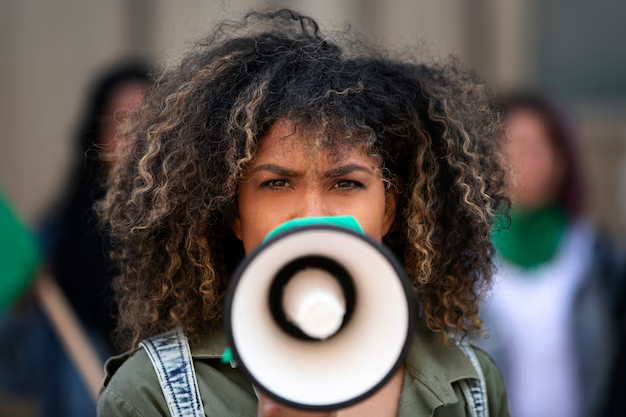
What does a queen look like when there is no throne, no jewels, no crown?
In the silent corners of crisis, where hunger bites harder than words and bullets drown out lullabies, women rise. They do not wear regalia; instead, they carry water jugs, cradle infants, and organize communities on the brink of collapse. Their crowns are invisible, made of resilience and sacrifice. Their kingdoms are refugee camps, bombed-out schools, and fragile villages. Without them, there would be no survival, no healing, and no fragile hope. These are the “Queens Without Crowns,” unsung guardians of humanity whose power is measured not in titles, but in lives saved.
So why does the world still fail to see them?
The Global Picture of Women in Conflict
By the end of 2024, over 114 million people worldwide had been forcibly displaced due to conflict, violence, and persecution (UNHCR). Women and children account for nearly 70% of this population. In crisis zones, women are not only victims of displacement and loss but also silent anchors of survival, organizing food distribution, mediating disputes, and safeguarding cultural continuity. Doctors Without Borders notes that in many refugee camps, women-led councils are the first responders to health and safety crises, often stepping in where state structures and international aid cannot reach. Yet their work remains invisible in global narratives dominated by political leaders and military actors.
Holding Communities Together in Syria
In Syria, where over 12 million people have been displaced, women have emerged as frontline mediators. Um Warda, a 47-year-old mother in Idlib, became an informal “judge” in her community after governance collapsed. Without training, she convenes women, elders, and youth to resolve disputes ranging from property rights to access to humanitarian aid. Her community calls her “the woman who stopped the knives,” because her mediation prevented armed young men from taking justice into their own hands. While war destroys, women like her prevent societies from disintegrating altogether.
Invisible Healers in South Sudan
South Sudan remains one of the world’s most fragile states, with 9.4 million people, three-quarters of the population requiring aid (ReliefWeb, 2025). Amid famine, floods, and conflict, women form the backbone of local responses. Mary Nazca, a nurse in Bentiu camp, runs a makeshift clinic supported by the International Rescue Committee. Her tent receives hundreds of mothers daily seeking malaria treatment for their children. Beyond medicine, she teaches water purification, breastfeeding in malnutrition-prone conditions, and psychosocial support for children traumatized by war. As Mary puts it, “We are not soldiers with guns. But we fight every day with knowledge, with care, with patience. That is our battlefield.”
Afghanistan: Silent Architects of Peace
Afghan women, despite systemic repression, continue to act as peace builders. In provinces like Herat and Bamiyan, they have organized “kitchen peace committees.” These gatherings act as forums where grievances are aired, girls’ education is defended, and trust is rebuilt. Though excluded from official peace negotiations, research shows peace agreements are 35% more likely to last 15 years when women are involved (Council on Foreign Relations, 2024). Afghan women, without crowns or titles, are keeping alive the possibility of reconciliation.
The Case of Congo’s “Mama Shujaa”
In the Democratic Republic of Congo, often called the “rape capital of the world,” violence against women is systemic. Yet here, too, women rise as protectors. The “Mama Shujaa” (Hero Women) initiative documents women who protect orphans, establish safe houses, and challenge militia leaders. One, Mama Christine, created hidden passageways that helped over 300 women escape militia-held zones between 2020 and 2023. With no international funding or media spotlight, she risked her life to save others.
Women as Crisis Anchors
- 70% of displaced populations are women and children (UNHCR, 2024).
- In refugee camps, women lead up to 60% of food distribution networks (IRC).
- Women’s participation in peace processes increases the likelihood of a durable peace by 35% (CFR, 2024).
- In conflict zones, women spend three times more hours daily than men on unpaid survival labor (ReliefWeb).
These numbers reveal not just hardship but the scale of women’s invisible labor sustaining communities.
The Emotional Weight of Silent Leadership
To understand their resilience, one must look beyond statistics. In Lebanon, Syrian mothers sew clothes not just for warmth but to stitch back dignity. In Somalia, women run underground schools for girls despite bans. In Yemen, mothers barter jewelry to buy medicine for neighborhoods. This quiet strength is transformative; it turns survival into proactive leadership in the midst of chaos.
Media Blind Spots and Global Recognition
Mainstream reporting often portrays women in conflict as passive victims. Yet, as Al Jazeera’s Women & War series shows, they councils to protect orphans and prevent child marriages. Their leadership is structural, not symbolic. Recognition are breadwinners, negotiators, teachers, and peace-builders. Humanitarian photographer Lynsey Addario observed: “Everywhere I go, I see women holding the line. But when history is written, their names vanish.” It is time to reverse this erasure.
Queens Without Crowns: Why Recognition Matters
Recognition is not vanity; it is necessity. When women are seen as leaders, resources shift. Donors fund them. Policies include them. Communities protect them. Recognition moves women from the margins of “helpers” to the center as decision-makers. As one MSF advocate put it: “If women stopped today, refugee camps would collapse by tomorrow.” This truth echoes from Syria to South Sudan. In Lebanon, Syrian women run underground clinics. In Nigeria’s Borno State, displaced women’s groups form councils to protect orphans and prevent child marriages. Their leadership is structural, not symbolic.
Recognition is not about applause—it is about shifting resources and rewriting policies. When we crown these invisible queens with visibility, survival transforms into dignity.
Crowning the Invisible
How do we honor these queens without crowns? Through recognition, investment, and transformation:
- Amplify Their Voices – Media, NGOs, and policymakers must bring women’s stories to the center of global discourse.
- Fund Women-Led Initiatives – Women’s groups receive less than 1% of humanitarian aid, though closest to the ground. Redirecting resources is not charity, its strategy.
- Integrate Women at Peace Tables – Excluding them ignores proven wisdom. Equal participation must replace token seats.
- Educate Future Generations – Rewrite history to include these heroines so their courage inspires future leaders. Honoring them means restructuring systems of recognition, resources, and memory. Only then can crowns be placed on those who have carried nations on their shoulders in silence.
The Legacy of Queens Without Crowns
In every conflict zone, women embody resilience not as a buzzword but as a lived reality. Their thrones may be refugee tents, their scepters cooking pots or medical kits, their palaces crumbling villages. Yet their reign ensures life continues against all odds. As the world debates global security, these women quietly secure humanity’s survival. To honor them is not just justice; it is wisdom. For in their stories lies the blueprint for building peace, dignity, and hope in the most fragile corners of our world.




Comments are closed.